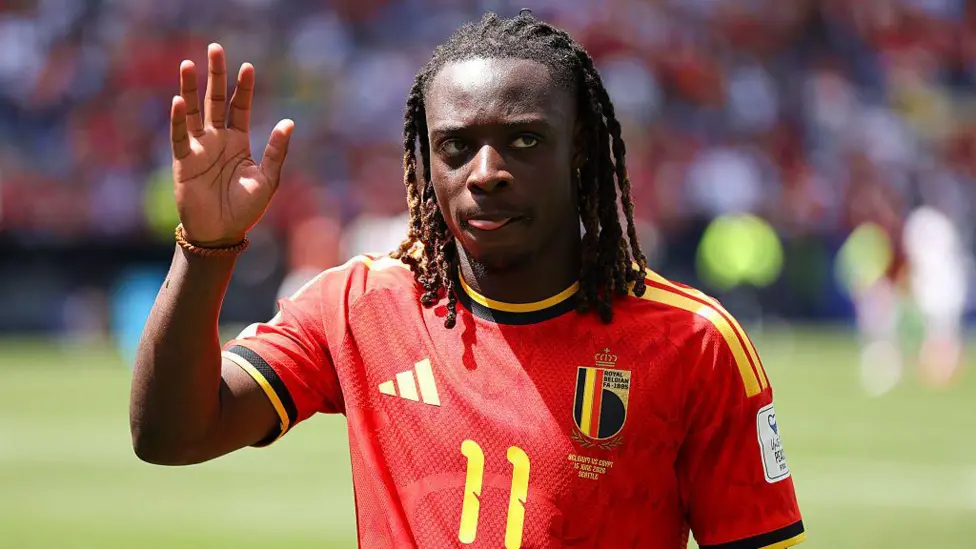
Belgium and Manchester City winger Jeremy Doku has received strong support from across football after facing criticism for saying he would leave the World Cup to attend the birth of his first child.
The 24-year-old recently revealed that family comes first and said he hoped to be with his wife, Shireen, when she gives birth next month, even if Belgium are still competing in the tournament.
The debate began after L’Equipe presenter France Pierron criticised Doku’s position.
She said fathers are “completely useless” during childbirth and described the experience as a “disgusting moment”.
The comments triggered widespread criticism.
L’Equipe later apologised and said the remarks did not reflect its values. Pierron also issued an apology, while reports in France said she would not host her programme on Monday.
Doku featured in Belgium’s opening 1-1 draw with Egypt but missed the goalless game against Iran because of illness.
His wife is expected to give birth during the second week of July. That could coincide with the World Cup quarter-finals if Belgium reach that stage.
“If you ask me what I want, my answer is that nobody wants to miss the birth of their first child,” Doku told Reuters.
“But I also know that football involves many other considerations. I know the federation supports its players and understands their situations. We’ll see what we can do.”
England striker Ollie Watkins, who has two children, defended Doku’s decision.
“It only happens once, welcoming your first child to the world, and it is a blessing,” Watkins said.
The Professional Footballers’ Association (PFA) also said players should be supported when balancing football with important family moments.
“Supporting players as people, not just athletes, is an important part of creating a healthy professional working environment,” a spokesperson said.
The Fatherhood Institute also backed Doku.
Deputy chief executive Jeremy Davies told BBC Sport that footballers should not be treated solely as entertainers at the expense of family life.
FIFA regulations guarantee maternity leave for female players, but there are no specific rules on paternity leave.
Several players have previously missed matches to be with their families.
Fabian Delph left England’s World Cup camp in 2018 for the birth of his daughter. Manchester City midfielder David Silva also missed games after the premature birth of his son.
Former Manchester United goalkeeper David de Gea was granted extended leave in 2021 after becoming a father.
Others have been unable to attend births. Norway defender Leo Ostigard recently watched the birth of his son through FaceTime while at the World Cup.
Ruben Neves also witnessed the birth of his third child by phone during the Covid-19 pandemic because travel restrictions prevented him from returning home.
Former Brentford and Tottenham manager Thomas Frank said family should always take priority.
“Football is the most important of not important things, so it is not important at a time like this,” he said.
“To see your wife or partner give birth is one of the biggest things you will experience. I think it is so important to be there.”
Frank said he always encouraged players to attend the birth of their children and believes Doku would be making the right decision if he leaves Belgium’s camp.
“When he comes back, he will be absolutely on top of the world,” he added.
