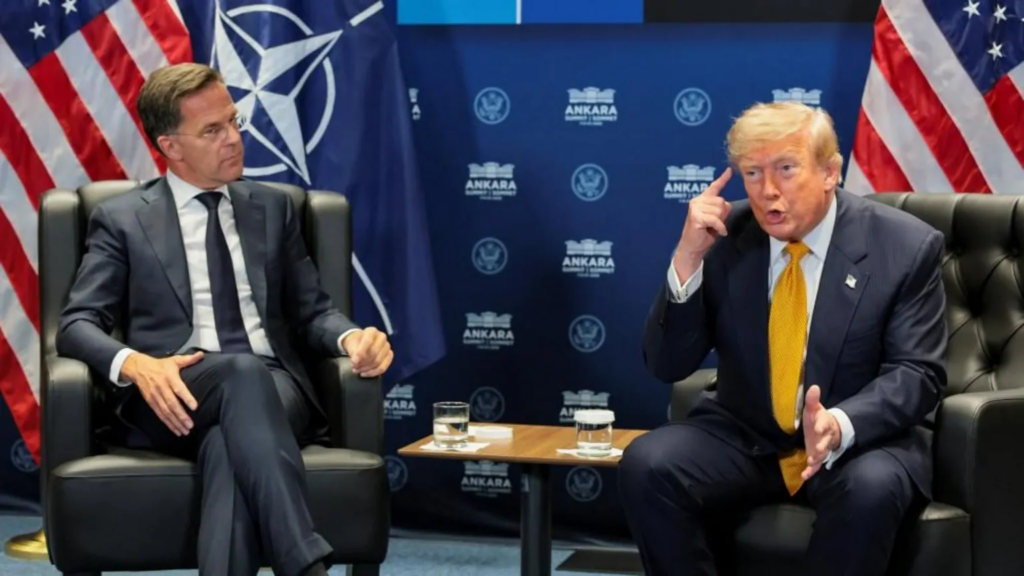
US President Donald Trump has declared the ceasefire agreement between the United States and Iran “over” after both countries exchanged fresh military strikes, marking the most serious escalation since an interim deal was reached in June.
Speaking ahead of a NATO summit in Turkey, Trump accused Iran’s leadership of acting in bad faith and questioned the value of continuing diplomatic negotiations.
“I think it’s over. I don’t want to deal with them anymore they’re scum … they’re led by sick people and they’re vicious, violent people,” Trump said.
Trump dismisses further talks
The US President said American negotiators could continue discussions with Iran if they wished, but he no longer believed negotiations would achieve meaningful results.
“We make a deal. They go outside, talk to the press, they say ‘we never even talked about it’. There’s something wrong with them. They’re cuckoo. As far as I’m concerned, it’s over.”
He added that continuing negotiations would be a waste of time.
“Frankly, I don’t want to waste my time with them. Now, I’ll let our wonderful negotiators keep talking if they want, but I don’t see it.”
“As far as I’m concerned, it’s just a waste of time dealing with them. They’re liars.”
Fresh military exchanges
The latest confrontation began after three oil tankers were attacked in the Strait of Hormuz.
The US Central Command (CENTCOM) said it launched what it described as “powerful” strikes in response.
Iran later announced that it had targeted US military facilities in Bahrain and Kuwait in retaliation for the American attacks.
The United States also revoked its temporary suspension of sanctions on Iranian oil exports, adding another layer of pressure on Tehran.
Iran accuses US of violating agreement
Iran’s parliamentary speaker, Mohammad Bagher Ghalibaf, accused Washington of breaching the Memorandum of Understanding (MoU) signed in June.
He said the United States had violated the agreement through military operations in southern Iran and actions relating to the Strait of Hormuz.
“The era of bullying and extortion is over. It leads nowhere. We don’t fold,” Ghalibaf said.
Ceasefire under strain
The interim agreement, signed on June 17, called for an immediate end to military operations and guaranteed the safe passage of commercial vessels through the Strait of Hormuz.
Under the deal, Iran also pledged to use its best efforts to ensure the safe movement of commercial shipping for 60 days.
However, the agreement has faced repeated challenges.
The United States launched strikes on Iran on June 25 after an Iranian projectile struck a cargo vessel in the Strait of Hormuz. Both sides later agreed to de-escalate tensions on June 29, but negotiations on a permanent settlement have remained fragile.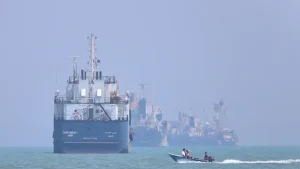
Uncertain future for diplomacy
Talks aimed at reaching a lasting agreement were paused following funeral ceremonies for Iran’s late Supreme Leader, Ayatollah Ali Khamenei, who was killed during the opening phase of the US-Israel strikes on Iran.
When asked whether negotiations would resume after the funeral, Trump gave a blunt response.
“I don’t care.”
The renewed hostilities have increased uncertainty in the region and prompted a sharp reaction in global energy markets, with oil prices rising by about 6% following Trump’s comments, although prices remain below the levels recorded during the complete closure of the Strait of Hormuz.
