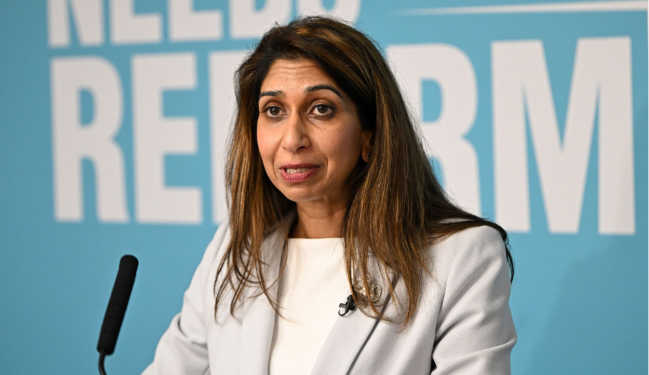
Former British Home Secretary Suella Braverman has sparked controversy after suggesting that Ghana and other former British colonies should compensate the United Kingdom instead of seeking reparations for slavery and colonialism.
Her comments come as Ghana and several African countries continue to push for reparative justice over the transatlantic slave trade and the lasting effects of colonial rule on African societies and the descendants of enslaved people.
Braverman rejects reparations calls
In a post on X, Braverman argued that the British Empire made significant positive contributions to many parts of the world.
“The British Empire did so much good for the world.”
While acknowledging that slavery was morally wrong, the former Conservative politician said modern-day Britain should not be held financially responsible for actions committed centuries ago.
“Of course, slavery was abhorrent, but to expect the British people of the 21st century to pay for actions that took place in the 18th century has no basis in law.”
Braverman, who joined the far-right Reform UK party earlier this year, said any discussion on reparations should instead focus on what Britain contributed to its former colonies.
Calls for former colonies to pay Britain
Braverman argued that Britain’s investments during the colonial era helped establish institutions that later became the foundation of modern democracies.
“If the government is seriously thinking about this, then former colonies should pay the British back for the considerable investment, effort, and contribution that this country made, which laid the foundations for many flourishing democracies today.”
Her remarks have added to the ongoing global debate over reparations for slavery and colonialism.
Ghana leads reparations campaign
Braverman’s comments come shortly after the United Nations General Assembly adopted a Ghana-sponsored motion calling for renewed international action on reparative justice for the transatlantic slave trade.
The resolution, presented by President John Dramani Mahama on March 25, 2026, received the backing of 123 UN member states.
The motion urges countries to engage in structured dialogue and take concrete steps to acknowledge and address the enduring social, economic and cultural consequences of slavery and the transatlantic slave trade.
Ghana has consistently advocated for reparations, arguing that the historical injustices of slavery and colonialism continue to have lasting impacts on African nations and people of African descent around the world.
