The United Nations’ International Maritime Organization (IMO) has announced plans to evacuate more than 11,000 sailors stranded in the Gulf following months of disruption caused by the conflict involving the United States, Israel and Iran.
IMO Secretary-General Arsenio Dominguez said the operation would be carried out in collaboration with Iran, Oman, the United States, other coastal states and stakeholders in the maritime industry.
According to him, all necessary safety assurances have been secured to allow ships to navigate safely during the evacuation process.
“We have secured the necessary safety guarantees and have thoroughly verified the conditions for safe navigation to support these operations,” Dominguez said.
US and Iran still divided over terms of peace agreement
Although Washington and Tehran signed a memorandum of understanding last week aimed at ending hostilities, disagreements remain over its implementation.
The United States maintains that the agreement includes provisions allowing the International Atomic Energy Agency (IAEA) to inspect Iran’s nuclear programme.
President Donald Trump claimed on social media that Iran had accepted extensive nuclear inspections.
However, Iranian authorities insisted that facilities bombed by the US and Israel last year would not be accessible to UN inspectors.
Iranian President Masoud Pezeshkian also reiterated that Tehran would not negotiate over its defensive capabilities.
During a visit to Pakistan, he said Iran would “never negotiate with anyone, under any circumstances, ever, about our defensive capabilities.”
Pakistan’s Prime Minister Shehbaz Sharif added that ballistic missile issues were not part of discussions between the US and Iran.
Rubio rejects Iran’s proposed fees
Since reopening the Strait of Hormuz last week, Iran has repeatedly indicated that it intends to impose what it describes as maritime service fees on ships using the waterway.
The proposal has drawn strong opposition from Washington.
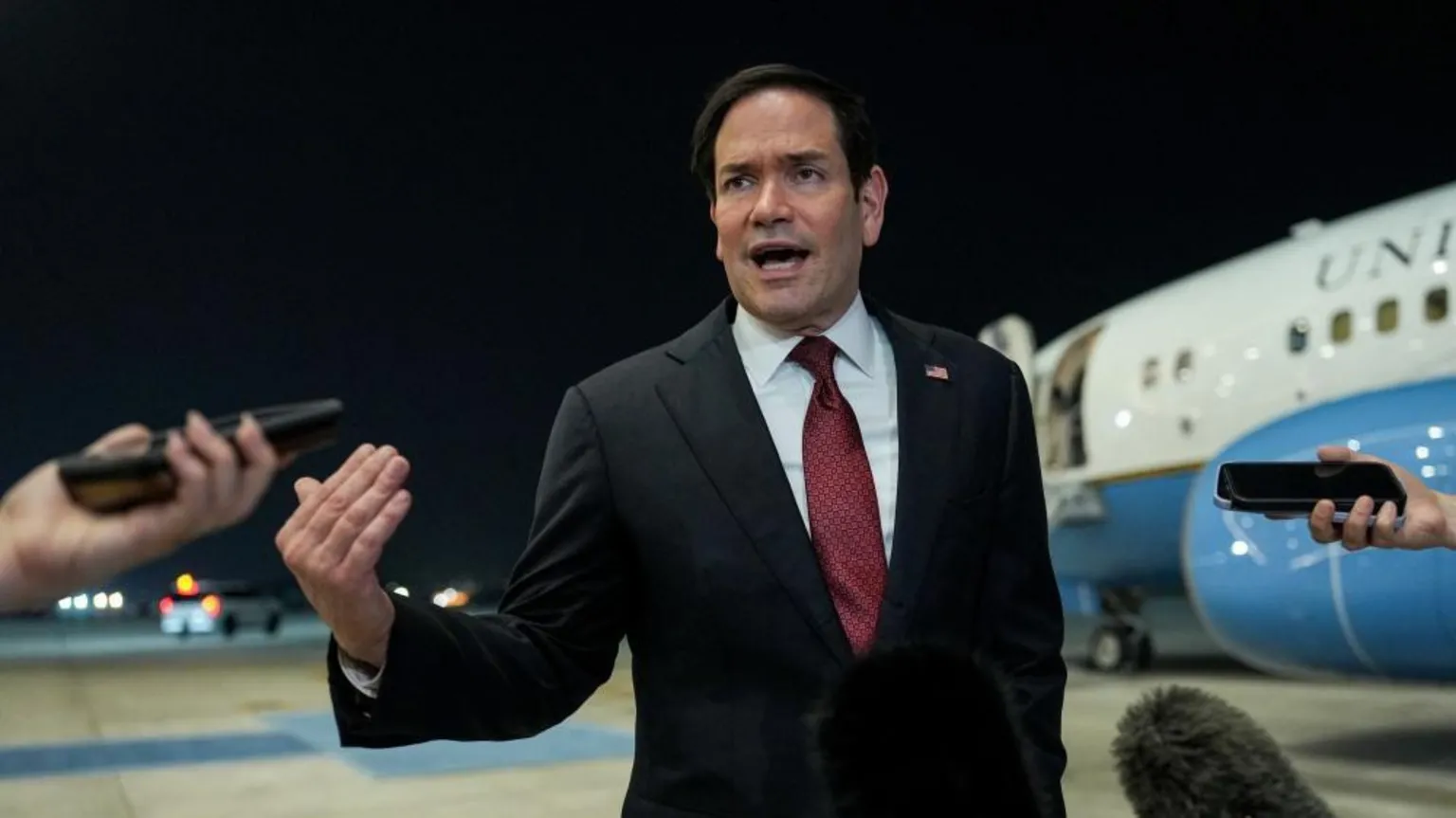
US Secretary of State Marco Rubio, who began a Gulf tour on Tuesday, said international law does not permit any country to charge tolls or fees on the strategic shipping route.
“It’s an international waterway. No country is allowed to charge tolls or fees on an international waterway. That’s existing international law,” Rubio said during a visit to the United Arab Emirates.
He added that countries across the region shared Washington’s position.
Evacuation depends on safe passage
The IMO said the success of the evacuation mission depends on the continued opening of the Strait of Hormuz.
Dominguez described the operation as an important step toward restoring maritime security and ending attacks on civilian vessels.
“After months of hardship and distress for thousands of innocent seafarers, and negative impact on the whole world, I welcome with deep satisfaction the peace agreement concluded between the United States and Iran,” he said.
The organisation revealed that two temporary navigation corridors could be used, with ships receiving individual instructions. It also plans to publish daily updates on the number of vessels leaving the region safely.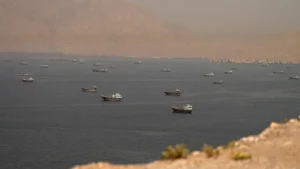
Shipping traffic still below normal levels
Iran effectively closed the Strait of Hormuz after hostilities escalated in February, sending global oil prices above $100 per barrel and disrupting shipments of energy and key commodities.
Since the waterway reopened, maritime traffic has gradually resumed.
According to maritime intelligence firm Kpler, at least 172 vessels have passed through the strait, including 42 ships on Saturday alone. However, daily crossings remain significantly below the pre-conflict average of about 138 vessels.
Ship-tracking data analysed by BBC Verify also showed that more than 200 oil tankers were waiting inside the Strait of Hormuz on Tuesday, underscoring the continued impact of the crisis on global trade.
