
Close Menu
    What's Hot

    Only 11.8% of Ghana’s private schools teach local languages, new report reveals

    June 9, 2026

    Heavy rains flood Weija Highway, leaving motorists stranded in hours-long gridlock

    June 9, 2026

    Citizen sues Government over MPs’ share of District Assemblies Common Fund

    June 9, 2026
    X (Twitter) Instagram YouTube TikTok
    Yocharley
    X (Twitter) Instagram YouTube TikTok
    • Home
    • General News
    • Entertainment
    • Business
    • Sports
    • Technology
    • International News
    Yocharley
    Home » WHO raises Ebola risk in DR Congo to ‘very high’
    Africa

    WHO raises Ebola risk in DR Congo to ‘very high’

    By Constance AwunorMay 25, 2026No Comments3 Mins Read
    Share
    Facebook Twitter LinkedIn Pinterest Email Copy Link

    The World Health Organization (WHO) has raised the public health risk from the ongoing Ebola outbreak in the Democratic Republic of Congo (DRC) from “high” to “very high”.

    WHO Director-General Tedros Adhanom Ghebreyesus announced the revised assessment on Friday, warning that the outbreak continues to worsen in the conflict-hit eastern region of the country.

    “We are now revising our risk assessment to very high at the national level, high at the regional level, and low at the global level,” he said during a briefing in Geneva.

    According to the WHO, the outbreak has recorded 750 suspected cases and 177 suspected deaths. So far, 82 cases and seven deaths have been laboratory confirmed in the DRC.

    The outbreak is linked to the rare Bundibugyo species of Ebola, which has no approved vaccine and kills roughly one-third of infected patients. Unlike the more common Zaire strain of Ebola, there are limited medical tools available to contain Bundibugyo outbreaks.

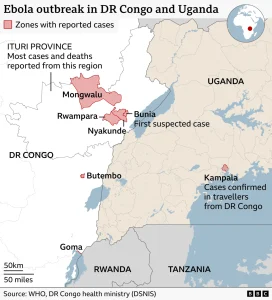
    The WHO also confirmed two cases and one death in neighbouring Uganda involving travellers from the DRC, though officials described the situation there as stable.

    Scientists at University of Oxford are developing a new vaccine candidate based on the same technology used for the AstraZeneca Covid-19 vaccine. Researchers hope clinical trials could begin within two to three months.

    Animal testing is already underway in Oxford, while the Serum Institute of India is expected to mass-produce the vaccine once medical-grade material becomes available.

    Another experimental Bundibugyo vaccine is also being developed and could be ready for testing within six to nine months. WHO research adviser Dr Vasee Moorthy described it earlier this week as “the most promising”.

    The WHO declared the outbreak a public health emergency of international concern on Sunday, although officials said it had not reached pandemic status.
    Health authorities are also struggling with insecurity and mistrust in the war-ravaged region, where some Ebola cases have been detected in rebel-controlled areas.

    Tensions boiled over this week after angry relatives set fire to sections of Rwampara General Hospital near Bunia in Ituri province after health workers refused to release the body of an Ebola victim because of contamination risks.

    “They started throwing projectiles at the hospital,” local politician Luc Malembe Malembe told the BBC. “They even set fire to tents that were being used as isolation wards.”

    Police fired warning shots to disperse the crowd, while medical workers were later placed under military protection.

    Fear continues to spread across affected communities as deaths rise.

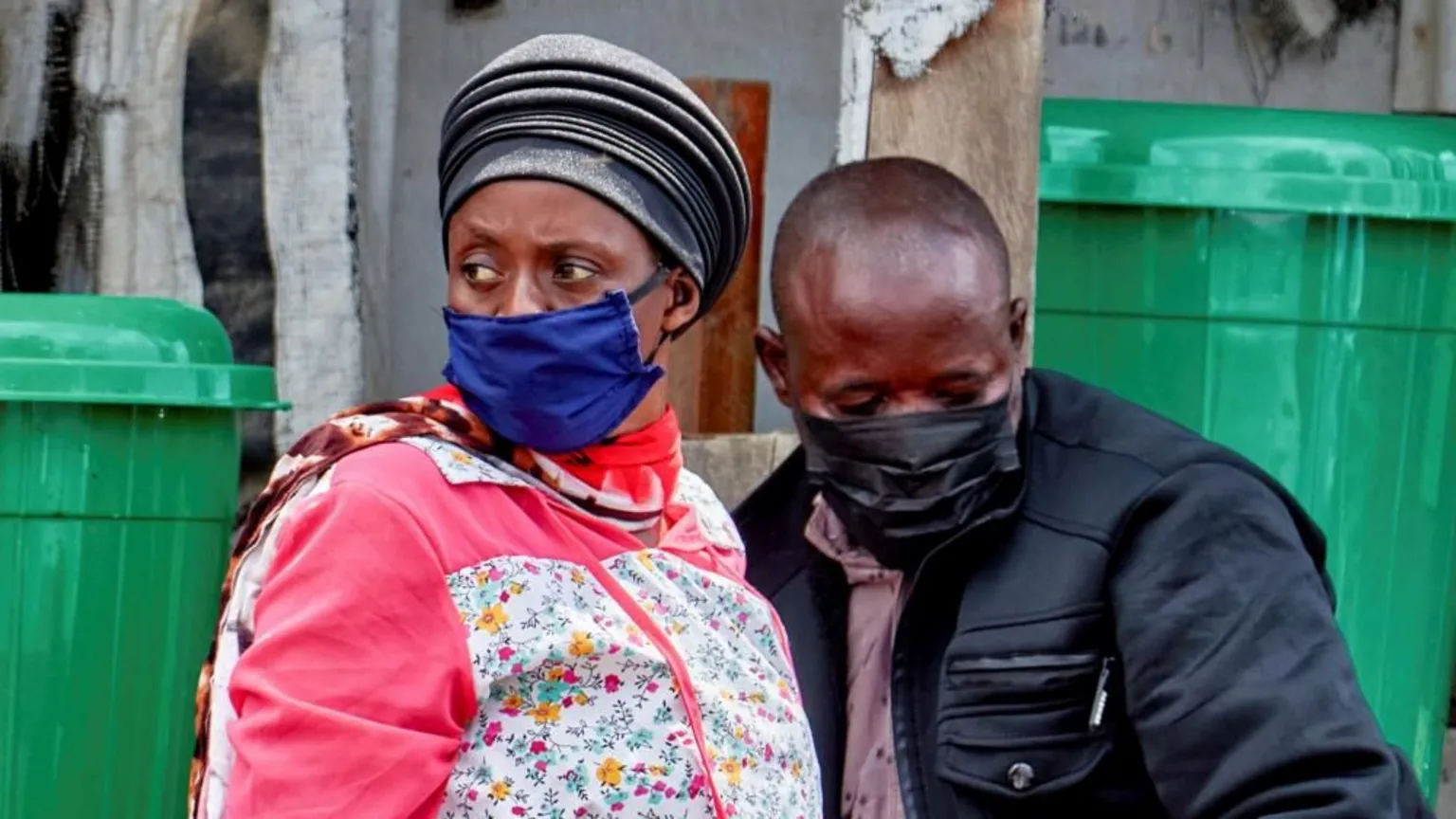
    “Ebola has tortured us,” a young taxi rider in Rwampara told the BBC. “I am scared because people are dying very fast… we are really afraid.”

    Another resident, Fred Kiza, said the fear among locals was understandable given the severity of the outbreak.

    #WHO Africa Health Bundibugyo Ebola Disease Outbreak DR Congo Ebola Global Health Oxford University Tedros Adhanom Ghebreyesus Uganda
    Previous ArticleUS orders most green card applicants to apply abroad
    Next Article NADMO donates 115 life jackets to Banda-Bongase residents
    Avatar photo
    Constance Awunor

    Constance Awunor specializes in business, finance and economic developments across Ghana and beyond. She focuses on market trends, entrepreneurship and policies affecting young professionals and emerging industries. Her writing simplifies complex financial topics, empowering readers to stay informed and make smarter decisions. Constance graduated from University of Cape Coast with a degree in Communication Studies. Connect with her at constance@yocharley.com

    Related Posts

    Featured

    France’s Macron to address reparatory justice conference in Accra

    June 9, 2026
    Featured Sports

    Iran secures US visas ahead of World Cup opener

    June 8, 2026
    Accident and Safety

    At least 19 dead after powerful earthquake strikes southern Philippines

    June 8, 2026
    Featured

    Trump walks out of NBC interview after clash over election claims

    June 8, 2026
    Africa

    African statistics offices are underfunded and understaffed — Government Statistician

    June 8, 2026
    Economy

    Ghana courts global investors in London with strong economic recovery pitch

    June 8, 2026
    Add A Comment
    Leave A Reply Cancel Reply

    Don't Miss

    Only 11.8% of Ghana’s private schools teach local languages, new report reveals

    By Constance AwunorJune 9, 20260

    A new report has revealed that only 11.8% of private and international schools in Ghana…

    Heavy rains flood Weija Highway, leaving motorists stranded in hours-long gridlock

    June 9, 2026

    Citizen sues Government over MPs’ share of District Assemblies Common Fund

    June 9, 2026

    One dead, JHS graduate missing after flood-related drownings in Twifo Atti-Morkwa

    June 9, 2026
    @2025 Yocharley, Designed by Adoit360.
    • Home
    • About Us
    • Contact Us
    • Terms and Conditions
    • Privacy Policy
    • Fact-Checking Policy
    • Editorial Policy

    Type above and press Enter to search. Press Esc to cancel.