
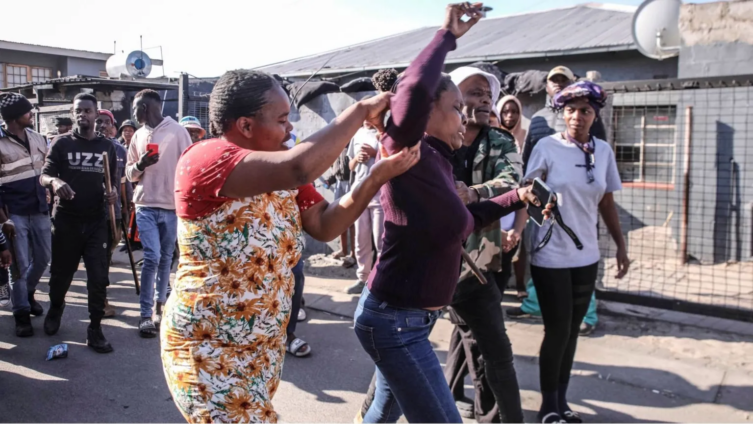
South Africa has rejected a petition filed at the International Criminal Court (ICC) by two Ghanaians seeking an investigation into alleged attacks on foreigners amid growing protests over undocumented migrants.
The South African government described the petition as “opportunistic” and argued that it does not meet the legal requirements for an ICC investigation.
The petition, submitted to the Hague-based court last week, claims the violence against migrants could amount to crimes against humanity. It also accuses South African authorities of failing to prevent the attacks and prosecute those responsible.
South Africa defends legal response
South Africa’s foreign ministry said the country’s judicial system remains capable of handling cases involving violence and unlawful acts.
The ministry said the petition falls short of the ICC’s legal threshold and maintained that offenders would be held accountable under South African law.
“South Africa remains steadfast in maintaining the rule of law,” the ministry said, adding that authorities would ensure that “those who perpetrate violence or unlawful acts are held fully accountable under our judicial system.”
The government also rejected accusations of intolerance, saying it “categorically rejects xenophobia, racism, homophobia, and intolerance and discrimination in all their manifestations.”
Ghana-South Africa tensions rise
Diplomatic tensions between Ghana and South Africa have increased following reports of attacks targeting foreign nationals.
Ghana recently became one of the first African countries to repatriate some of its citizens from South Africa after a new wave of anti-migrant protests.
The Ghanaian government has said one of its citizens was killed during the violence, a claim South African authorities have denied.
Other African countries, including Kenya, Malawi, Nigeria and Uganda, have also organised transport arrangements for citizens who want to leave South Africa.
Petition alleges systematic attacks
The ICC petition was filed by former Ghanaian government spokesperson on governance and security, Palgrave Boakye-Danquah, and security analyst Emmanuel Kotin.
The two petitioners accused South Africa of failing to address what they described as a “pattern of widespread and systematic attacks” against migrants.
“For years, African brothers and sisters have been killed, beaten and driven from their homes in South Africa,” they said in a statement.
They argued that the scale and repeated nature of the violence raised concerns about whether authorities had done enough to prevent, investigate and punish the alleged crimes.
The ICC has not publicly stated whether it will consider the petition.
Migrant protests and repatriations
The latest protests were driven by demands for tighter border controls and the removal of undocumented migrants, with some groups accusing foreigners of contributing to unemployment, crime and pressure on public services.
South African authorities said more than 53,000 foreign nationals have recently been deported or voluntarily returned to their home countries.
However, figures compiled by AFP from migrant home governments suggest that more than 160,000 people may have left South Africa in the past two months.
The United Nations has warned against blaming migrants for South Africa’s economic and social challenges.
Ramaphosa condemns attacks
South African President Cyril Ramaphosa has acknowledged public concerns about migration but condemned attacks against migrants.
He warned citizens against taking the law into their own hands and called for disputes to be handled through legal channels.
Leaders of the Economic Community of West African States (ECOWAS) have also condemned the reported attacks, describing the treatment of West African migrants as unacceptable.
The regional bloc urged South African authorities to act quickly to protect foreign nationals and prevent further violence.
South Africa, Africa’s most industrialised economy, has long attracted migrants seeking economic opportunities. Official figures show more than three million documented foreign nationals live in the country, excluding those without legal status.
