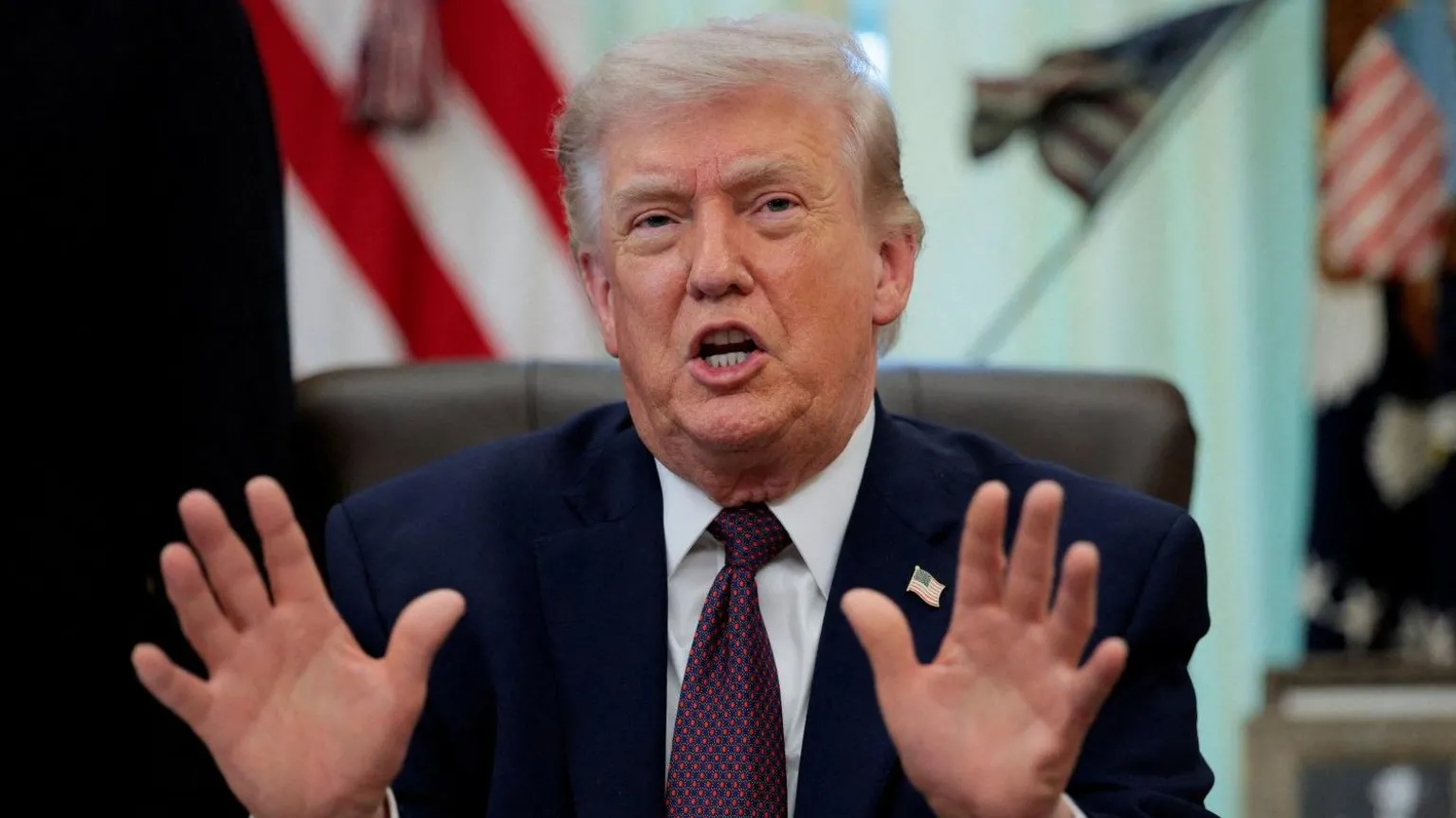
US President Donald Trump says he will speak directly with Taiwanese President Lai Ching-te about a possible arms sale. The move marks a sharp break from long-standing US diplomatic practice.
Direct contact between US and Taiwanese leaders has been avoided since 1979, when Washington severed official diplomatic ties with Taipei and recognised Beijing instead.
China claims Taiwan as part of its territory and has not ruled out using force to achieve reunification. Taiwan, however, operates as a self-governing democracy and rejects Beijing’s claim.
The US maintains unofficial relations with Taiwan and is legally bound under the Taiwan Relations Act to provide defensive weapons. At the same time, Washington tries to maintain diplomatic ties with China.
Trump said he intends to speak with Lai when asked about potential arms sales decisions.
He said, “I’ll speak to him. I speak to everybody… We’ll work on that, the Taiwan problem.”
He also described his relationship with Chinese President Xi Jinping as “amazing” following a recent summit in Beijing.
China’s foreign ministry said it “firmly opposes” any official exchanges between the US and Taiwan. It also warned against US arms sales to the island.
Beijing urged Washington to avoid sending what it called “wrong signals” to forces it views as supporting Taiwan independence.
Trump has not yet approved a proposed $14 billion arms package reportedly including air defence systems and anti-drone technology.
He said he would make a decision “over the next fairly short period” after discussions with both sides.
A report also suggested that China has delayed a planned visit by a senior Pentagon official, linking it to uncertainty over the arms deal.
Since taking office in 2024, Taiwanese President Lai Ching-te has pushed to strengthen Taiwan’s defence amid rising pressure from China.
He has described Taiwan as a “sovereign, independent democratic country” and insists peace in the Taiwan Strait must be preserved.
Taiwan’s foreign ministry said Lai would be open to discussions with Trump on maintaining stability in the region.
The US has sold defensive weapons to Taiwan for decades, despite the absence of formal diplomatic ties.
Previous administrations have avoided direct presidential-level communication with Taipei to avoid provoking Beijing.
Trump himself previously broke precedent in 2016 by speaking with then-Taiwanese leader Tsai Ing-wen after winning the election, drawing criticism from China.
