
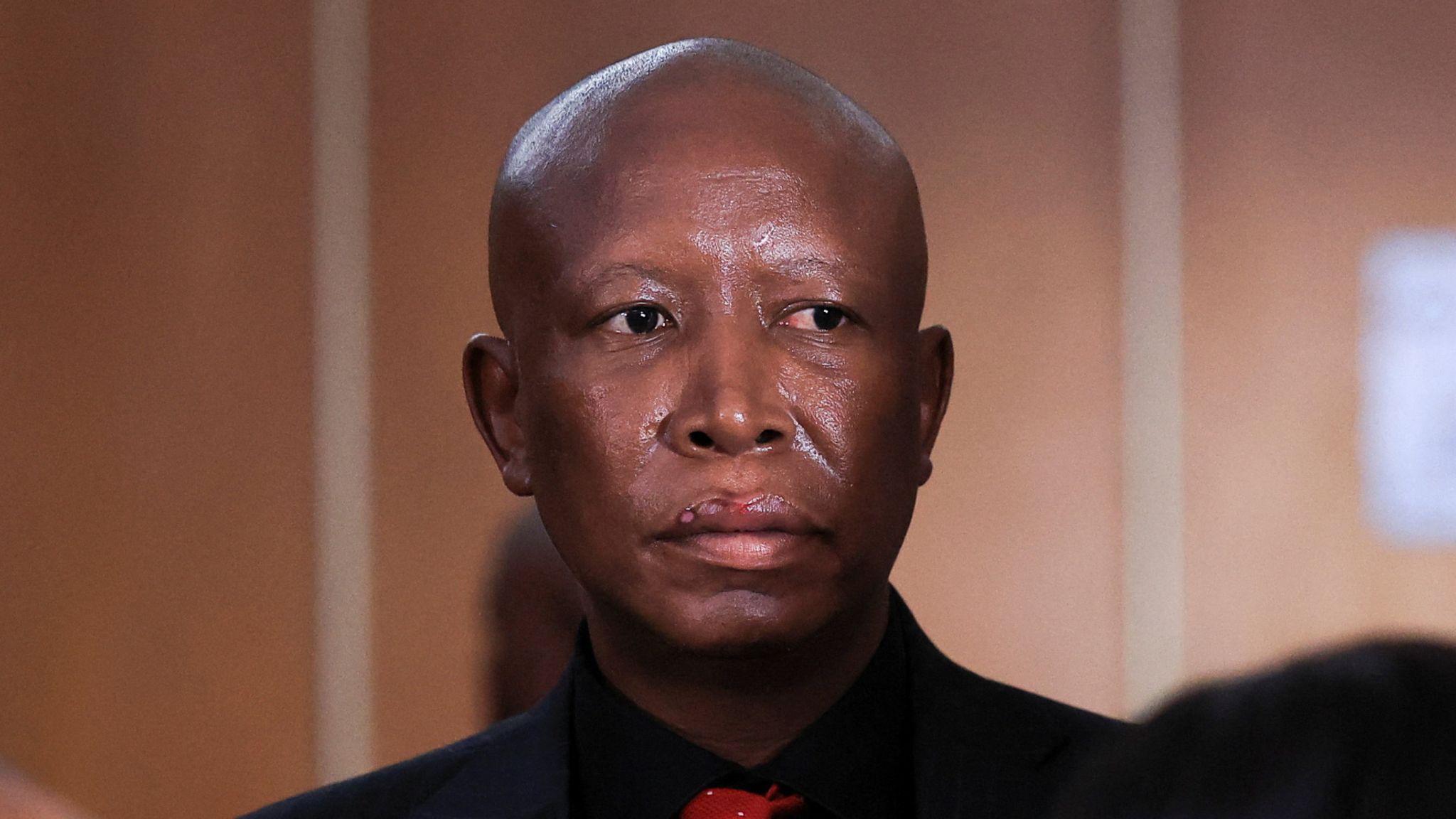
Julius Malema is one of Africa’s most controversial and influential political figures. Born on March 3, 1981, in Limpopo, South Africa, he rose from humble beginnings, raised by a single mother working as a domestic worker, to become a dominant voice in South African politics.
Malema first gained national attention as president of the African National Congress Youth League between 2008 and 2012, where his outspoken and often confrontational style made him both popular and polarizing.
After being expelled from the ANC, Malema founded the Economic Freedom Fighters (EFF) in 2013. The party quickly grew into a major opposition force, becoming one of the largest political parties in South Africa’s parliament.
The EFF promotes radical economic policies, including land expropriation without compensation, nationalization of mines and banks as well as redistribution of wealth.
These ideas have attracted strong support, particularly among young and economically disadvantaged South Africans frustrated by inequality.
Malema is widely known for his fiery rhetoric and confrontational approach. His speeches often challenge both the South African government and global powers, positioning himself as a champion of Black economic liberation.
However, his political career has been marked by repeated controversies, including hate speech rulings by South African courts, criticism over inflammatory chants and statements and clashes with political opponents and international figures.
Supporters see him as a fearless advocate for justice, while critics accuse him of deepening racial and political divisions.
In April 2026, Malema faced one of the most serious legal challenges of his career. He was sentenced to five years in prison for unlawfully firing a rifle during a political rally in 2018.
The conviction has major political implications. It could disqualify him from serving in parliament if upheld, threatens the leadership stability of the EFF and has intensified political tensions both locally and internationally
Malema has denied wrongdoing, claiming the case is politically motivated, and has filed an appeal, allowing him to remain free pending the outcome.
Despite legal troubles, Malema remains a powerful figure in South African politics. His support base largely includes:
- Young voters
- Unemployed citizens
- Communities frustrated with economic inequality
The EFF continues to command a significant share of the vote, maintaining its role as a key opposition party.
Malema’s future now hangs in the balance. If his conviction is upheld, it could mark a turning point in his political career and reshape South Africa’s opposition landscape.
However, if history is anything to go by, Malema has shown resilience in the face of controversy, often emerging even more influential than before.
Julius Malema remains one of the most compelling and divisive figures in modern African politics. Whether viewed as a revolutionary voice for economic justice or a polarizing populist, his impact on South Africa’s political discourse is undeniable.
As his legal battle unfolds, both supporters and critics will be watching closely to see what the next chapter holds.
