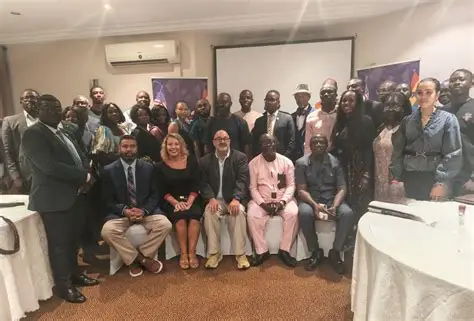
After years of collaboration, Ghana and the U.S. state of Nebraska have formalised a 10‑year agricultural partnership designed to transform livestock production and strengthen agribusiness ties between West Africa and the American Midwest.
Signed during the Ghana–Nebraska Spring Livestock Modernisation Partnership tour, the agreement brings together the Ministry of Food and Agriculture, EcoSyntra LLC, the Ghana–Nebraska Agribusiness Growth and Trade Relations Chamber, and Agrihouse Foundation. A 23‑member Ghanaian delegation engaged Nebraska farmers, agribusiness executives, researchers, and universities before the signing.
The framework covers strategic areas including:
- Livestock modernisation and dairy sector development
- Expansion of agricultural infrastructure
- Workforce and technical training
- Academic and research exchanges
- Climate‑resilient agriculture
- Agribusiness investment
Priority pilot projects will focus on modernising Ghana’s livestock and dairy industries, such as upgrading the Tulaku Cattle Market in Ashaiman, developing the Amrahia Dairy Processing Centre, establishing livestock traceability systems, demonstration dairy farms, training hubs, and expanding feed and grazing infrastructure.
The initiative also opens opportunities for Nebraska universities and experts to collaborate directly with Ghanaian stakeholders through training programmes, joint research, and demonstration projects. It aligns with Ghana’s Feed Ghana Programme, which seeks to improve livestock production, strengthen veterinary systems, and modernise animal husbandry.
Eric Opoku hailed the partnership as “more than an exchange of knowledge,” describing it as a commitment to advancing food security and resilient agricultural systems. He noted that Ghana spends nearly $100 million annually on imports of live animals and frozen meat, while dairy imports meet about 95% of domestic demand.
Alberta Nana Akyaa Akosa emphasised that the agreement reflects “years of sustained cooperation, trust, and shared purpose” between Ghanaian and Nebraskan institutions.
