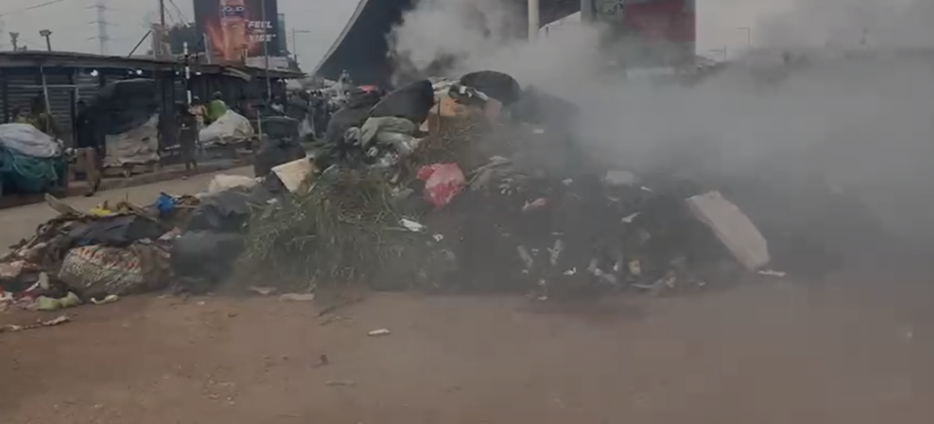
The Country Lead for the Clean Air Fund, Desmond Appiah, has criticised the burning of waste during the nationwide clean-up exercise, saying the practice undermines efforts to promote a cleaner and healthier environment.
Speaking on JoyNews’ The Pulse, Mr Appiah welcomed the national clean-up campaign but cautioned that disposing of collected waste through open burning creates another environmental challenge.
“We all received the news of the cleanup with a lot of joy because it’s a positive move… helping us to deal with some of the challenges that we haven’t dealt with the way we should have,” he said.
“But from the readings… it definitely shows that we are trying to solve one problem and creating another.”
Open burning contradicts air quality regulations
Mr. Appiah said the Environmental Protection Agency (EPA) recently introduced Air Quality Regulations that set out proper methods for managing waste. He argued that burning waste in the open is inconsistent with those standards.
He noted that because the clean-up exercise is being led by metropolitan, municipal and district assemblies, together with government officials, authorities should demonstrate good environmental practices.
“It is not a matter of just clearing the bushes or clearing the gutter and then setting fire to it or allowing fire to be set to it,” he said.
Air pollution affects entire communities
Mr. Appiah warned that the effects of open waste burning extend beyond the immediate area because air pollution can spread over long distances.
“Pollution travels… Air pollution is invisible,” he said.
He explained that open burning contributes to air pollution, increases the risk of non-communicable diseases and weakens public education campaigns aimed at discouraging indiscriminate waste burning.
The Clean Air Fund official called on authorities to stop burning waste collected during the exercise and instead dispose of it through environmentally approved methods.
He added that government institutions must lead by example if they expect citizens to comply with sanitation and environmental regulations.
