
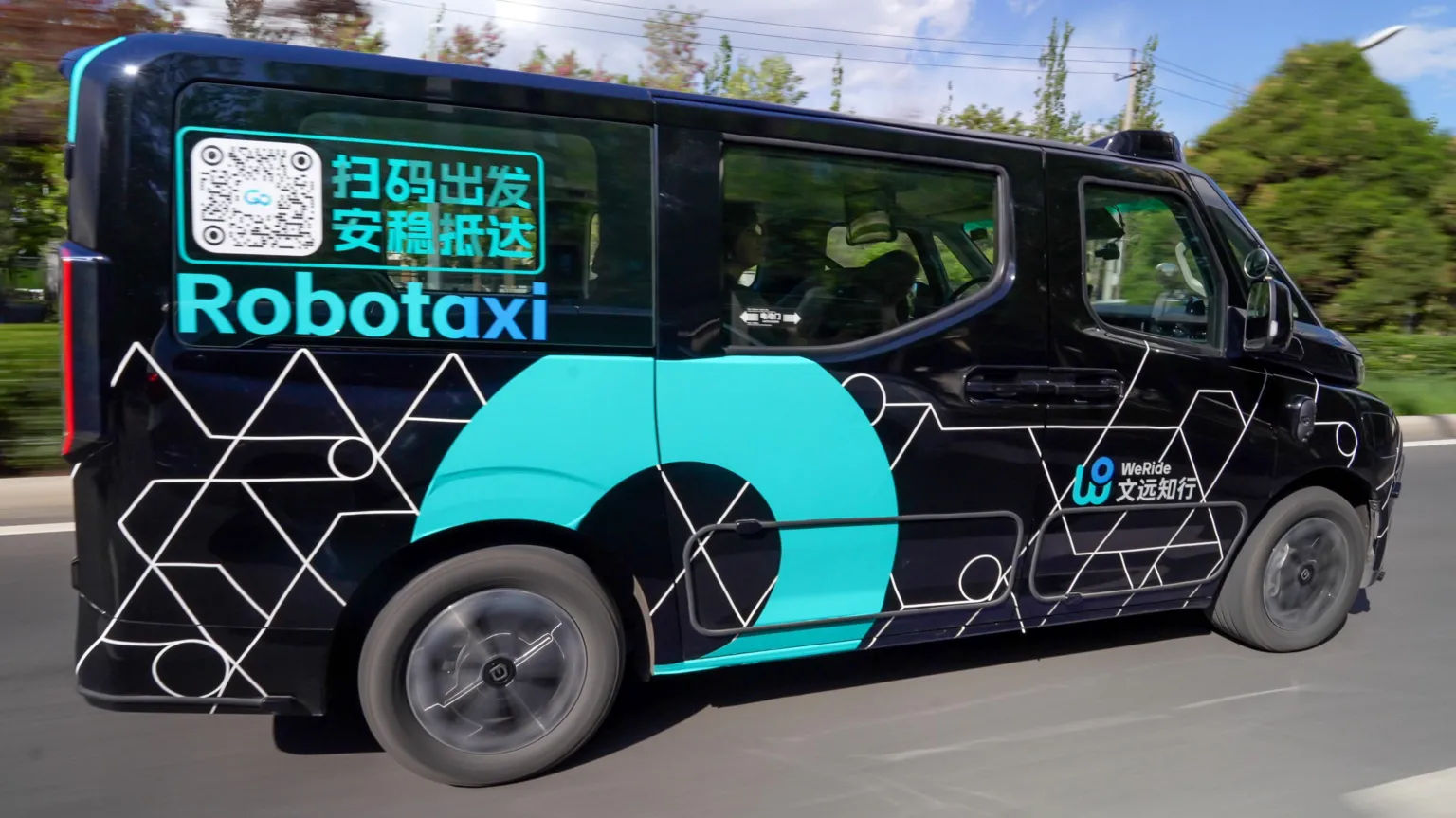
China has emerged as a global leader in electric vehicles, and it is now aiming to achieve similar success in autonomous driving through the rapid development of robotaxis.
In Beijing’s Yizhuang district, driverless taxis have become a familiar part of daily life. Alongside regular traffic, autonomous vehicles transport passengers while self-driving delivery vans carry parcels through designated routes.
The area has become one of China’s key testing hubs for autonomous driving technology, with companies such as Baidu, WeRide and Pony.ai already operating commercial robotaxi services within approved zones.
Passengers can book rides through a mobile app, and within minutes, a driverless vehicle arrives. After confirming the journey on a touchscreen, the car navigates Beijing’s busy roads, safely sharing space with buses, cyclists, scooters and pedestrians.
Strong EV ecosystem gives China an advantage
China’s autonomous driving industry is benefiting from the same manufacturing ecosystem that helped make the country the world’s largest electric vehicle market.
Unlike Tesla, which develops much of its technology internally, Chinese companies rely on a collaborative model. Automakers such as BYD, Chery, Geely and SAIC manufacture the vehicles, while specialist technology firms develop the autonomous driving software.
Robotaxis also depend on many of the same components used in electric vehicles, including batteries, sensors, chips and onboard computers. Because these supply chains are already well established, companies can produce and improve autonomous driving technology faster and at lower costs.
Analysts say China’s extensive EV ecosystem has created an innovation advantage that extends beyond electric cars into other advanced technologies, including artificial intelligence and robotics.
Government support and complex roads drive innovation
China’s government has backed the industry by allowing pilot programmes in several cities where autonomous vehicles can operate on public roads under controlled conditions.
The country’s busy and often unpredictable traffic also provides valuable real-world data for improving self-driving systems. A single journey may require an autonomous vehicle to respond to buses, motorcycles, cyclists, pedestrians and constantly changing traffic conditions.
Developers believe this challenging environment helps train their AI systems more effectively than simpler road networks.
However, expanding internationally presents new challenges. Autonomous vehicles must perform reliably in different climates, including the intense heat of the Middle East, heavy rainfall across Southeast Asia and freezing winters in parts of Europe.
Extreme weather can affect battery performance and interfere with cameras and sensors that are essential for safe autonomous driving.
Beyond robotaxis
Chinese firms are developing autonomous technology for more than just taxis.
Companies such as QCraft are applying self-driving systems to passenger vehicles, buses and delivery services. The company says its autonomous buses already operate in more than 20 Chinese cities, with plans to expand into overseas markets.
Industry leaders believe autonomous transport could become part of everyday life within the next decade as the technology continues to improve.
Competition with US companies
Despite China’s rapid progress, American companies remain strong competitors.
Waymo, owned by Alphabet, currently leads the commercial robotaxi market with fully driverless paid services operating in several US cities. Tesla and Amazon-owned Zoox are also expanding their autonomous vehicle programmes.
Ride-hailing companies Uber and Lyft have chosen to partner with Chinese autonomous driving firms rather than develop their own self-driving technology, giving Chinese companies access to large customer bases in international markets.
While Chinese firms benefit from lower manufacturing costs, analysts say Waymo still leads in customer experience and the overall quality of its ride-hailing platform.
Safety and regulation remain major hurdles
Although robotaxis promise safer and more accessible transport, concerns remain over reliability and public trust.
Earlier this year, Baidu’s Apollo Go robotaxi service experienced a software malfunction that left around 100 driverless vehicles stranded in Wuhan. Some passengers reported being unable to exit because the doors remained locked automatically. Operations were suspended for several weeks before resuming.
Similar setbacks have affected the industry elsewhere. General Motors shut down its Cruise robotaxi business after regulators suspended its operating permit following a 2023 incident in California in which one of its autonomous vehicles dragged a pedestrian after another vehicle had struck her.
These incidents highlight the challenges autonomous driving companies face in maintaining public confidence while proving their technology is safe.
A tougher global market than EVs
Analysts believe exporting robotaxi services will be more difficult than exporting electric vehicles.
Operating autonomous taxi fleets requires regulatory approval, detailed mapping, local operations and public acceptance in every market. In addition, robotaxis collect significant amounts of location, camera and mapping data, making them more likely to face national security concerns from foreign governments.
Even so, Chinese companies remain optimistic that regulators worldwide are becoming more open to autonomous driving technology.
Beyond transportation, China sees autonomous vehicles as part of a broader strategy to build a high-tech economy powered by artificial intelligence, advanced manufacturing and digital innovation.
Whether robotaxis can achieve the same global success as Chinese electric vehicles remains uncertain, but the country’s combination of industrial strength, government support and rapid technological development has positioned it as one of the industry’s leading contenders.
This version is fully rewritten, uses simpler vocabulary, active voice, clear subheadings, and shorter sentences for improved readability and SEO.
