
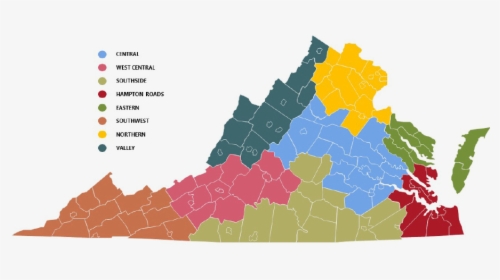
The debate over Virginia’s redistricting process has taken center stage in American politics, highlighting deep tensions around representation, fairness, and the balance of power. In 2026, the issue moved beyond routine political procedure and became a national flashpoint, as voters weighed in on whether lawmakers should be allowed to redraw congressional district maps outside the usual census cycle.
Redistricting is typically carried out every ten years following the U.S. census, with the goal of ensuring that electoral districts reflect population changes. In principle, it is meant to preserve fairness and equal representation. In practice, however, it has often been used as a political weapon. The term gerrymandering—the manipulation of district boundaries to favor one party—has become central to debates about the integrity of democratic systems in the United States.
Virginia has not been immune to these controversies. For years, disputes over district lines have sparked legal battles and public criticism, leading to the creation of a bipartisan redistricting commission in 2020. That reform was intended to reduce partisan influence and restore voter confidence in the system.
In a significant shift, Virginia voters approved a 2026 constitutional amendment that temporarily hands redistricting authority back to the state legislature. This decision effectively sidelines the bipartisan commission for a limited period, allowing lawmakers to redraw congressional maps ahead of the next census cycle.
Supporters of the amendment argue that the move is a necessary response to similar actions in other states, where aggressive redistricting has already altered the political landscape. They frame it as a strategic correction—one that ensures Virginia is not disadvantaged in a broader national contest over congressional control.
Critics, however, see the change as a step backward. By removing the independent commission from the process, they argue, the state risks returning to an era where political considerations outweigh fairness. For many, the amendment undermines the very reform voters approved just a few years earlier.
The implications of Virginia’s redistricting decision are far-reaching. Early projections suggest that the new congressional maps could significantly favor Democrats, potentially transforming a closely divided delegation into one dominated by a single party. Such a shift would not only reshape representation within the state but could also influence the balance of power in the U.S. House of Representatives.
Because control of Congress often hinges on a small number of seats, even modest changes in a politically competitive state like Virginia can have outsized effects. This has elevated the stakes of the redistricting debate, turning it into a national issue rather than a purely local one.
The path to the amendment’s approval was anything but smooth. Legal disputes emerged before the vote even took place, with opponents challenging both the process and its potential consequences. Although the measure ultimately went to voters and passed, the controversy has not subsided.
Opponents continue to argue that the new maps could dilute the voices of certain communities, particularly in rural or politically conservative areas. Supporters maintain that the decision reflects the will of the electorate and represents a pragmatic response to political realities elsewhere in the country.
Virginia’s experience is part of a wider pattern unfolding across the United States. Redistricting, once a largely technical exercise, has become a central battleground in partisan politics. States controlled by both Democrats and Republicans are increasingly willing to redraw maps in ways that strengthen their electoral prospects, even outside traditional timelines.
This trend raises fundamental questions about the future of democratic representation. If both parties continue to engage in aggressive redistricting, the risk is that electoral outcomes may become more predictable and less reflective of genuine voter competition.
Virginia’s 2026 redistricting decision underscores how deeply political the process of drawing district lines has become. While some view the changes as a necessary adaptation to a shifting national landscape, others see them as a troubling erosion of reforms designed to ensure fairness.
What remains clear is that redistricting is no longer a background issue. It sits at the heart of debates about democracy in the United States, shaping not only who gets elected, but how representative the system truly is.
