
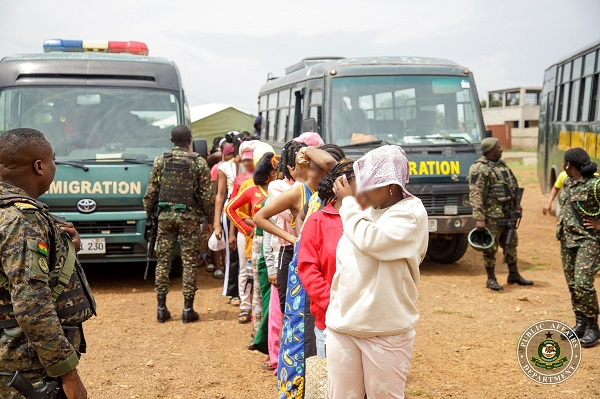
The Ghana Immigration Service’s (GIS) operation in Asankragwa is a striking example of how intelligence-led enforcement can directly disrupt trafficking networks. The fact that 112 women were rescued all between the ages of 12 and 38 and that 105 were confirmed as victims of human trafficking highlights both the scale of exploitation and the urgency of intervention.
The collaboration with embassies and community representatives to repatriate victims shows a deliberate effort to balance enforcement with humanitarian protection.
The operation focused on premises suspected of housing individuals for commercial sex, showing GIS’s reliance on intelligence rather than random raids.
With most victims being Nigerian, plus individuals from Benin and Cameroon, the case underscores how trafficking networks operate transnationally across West Africa.
Seven suspects are under investigation, and potential prosecutions could set a precedent for accountability. GIS’s coordination with embassies and diplomatic missions reflects the importance of cross-border cooperation in tackling trafficking.
By repatriating victims and pledging continued support, GIS is framing its work not just as enforcement but as protection of vulnerable persons.
This operation also fits into Ghana’s broader anti-trafficking strategy combining intelligence, law enforcement, and international collaboration to dismantle organized crime.
It’s worth noting that such actions are part of a larger pattern, Ghana has been strengthening its stance against transnational crimes like smuggling and trafficking, while also modernizing immigration systems (e.g., the recent e-Visa rollout).
