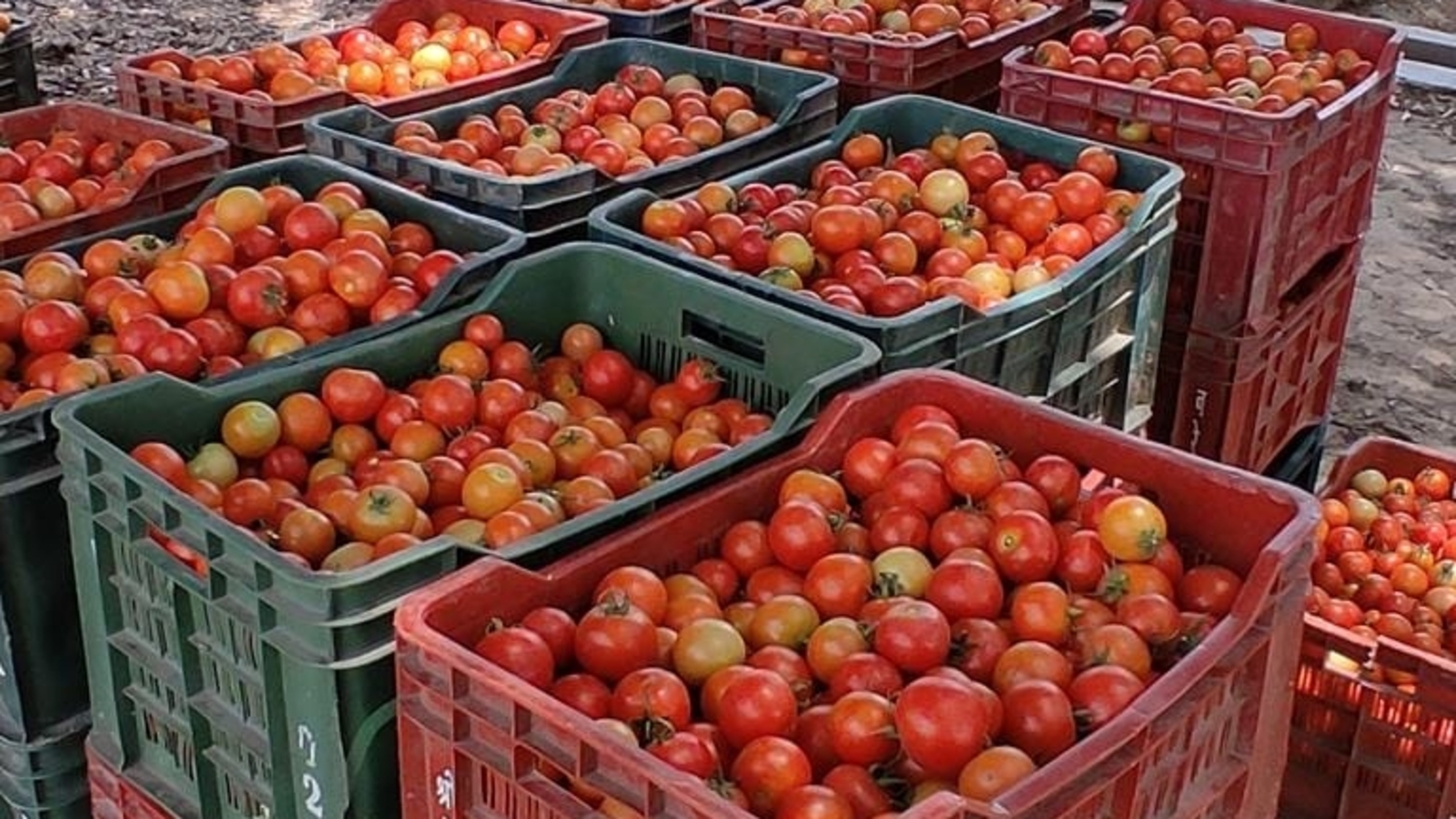
The Chief Executive Officer of Akuafo Nketewa, Dr Charles Nyaaba, has criticised recent government assurances on tomato supply, warning that communication alone will not avert a looming shortage unless farmers are actively involved in the response.
Speaking on Thursday, March 26, Dr. Nyaaba said producers are increasingly anxious about a potential supply gap between now and mid-May, stressing that uncertainty remains over where tomatoes will be sourced during the critical period.
“This is not about public relations. There is real concern among Ghanaians,” he stated, emphasising that farmers require clarity and direct engagement rather than broad assurances.
His remarks come in response to statements by the Minister for Food and Agriculture, Eric Opoku, who recently outlined plans under the Feed Ghana Programme aimed at boosting local tomato production and reducing reliance on imports.
The initiative seeks to significantly expand tomato cultivation—from 1,000 acres last year to 40,000 hectares this year—through the provision of improved seeds, plant protection products, irrigation support via boreholes, and partnerships with technical operators to secure markets for farmers.
However, Dr. Nyaaba argues that the success of such interventions depends on meaningful consultation with farmers, who remain central to production. He expressed concern that, despite the scale of the proposed measures, producers have yet to be directly engaged.
“Since this issue emerged, farmers have not been involved, and that raises questions about how the plan will be implemented,” he noted, adding that claims of mobilising over 100 communities for tomato cultivation have not been independently verified by stakeholders on the ground.
He also questioned the feasibility of the government’s assurances, particularly given Ghana’s heavy dependence on tomato imports from Burkina Faso during the lean season between December and May.
“What concrete measures have been taken between now and May to prevent shortages, especially if access to imports becomes constrained?” he asked.
Dr. Nyaaba further indicated that the situation has been compounded by reports of restrictions affecting Ghanaian traders—particularly women—who traditionally source tomatoes from Burkina Faso during this period.
He drew a clear distinction between infrastructure development and actual production, cautioning that investments in market facilities alone would not resolve supply challenges without a corresponding increase in output.
“There is a difference between building market centres and ensuring production. Without engaging farmers on how to scale up output, supply gaps will persist,” he explained.
While acknowledging government claims of pilot successes in several communities, as well as the establishment of Farmer Service Centres and a dedicated market near the University of Ghana bypass, he maintained that the absence of direct farmer participation undermines confidence in the initiative.
Dr. Nyaaba further criticised what he described as an overreliance on public messaging, arguing that sustained stakeholder engagement is essential to addressing the issue effectively.
“Communication alone will not solve the problem. What is needed is a coordinated national effort that directly involves farmers and provides clear support mechanisms,” he said.
He added that although farmers are taking steps to prepare for the next production cycle, a structured and inclusive approach is necessary to stabilise supply and prevent sharp increases in prices.
