The Minority in Parliament has criticised the government’s decision to secure a US$300 million loan from the World Bank, arguing that it signals a return to borrowing less than a year after Ghana exited the International Monetary Fund (IMF) programme.
The loan, approved by Parliament on Tuesday, July 21, will finance the Secondary Education Transformation for Access, Relevance and Results for Jobs (STARR-J) Project, which aims to eliminate the double-track system under the Free Senior High School (Free SHS) programme through infrastructure expansion and improved access to quality secondary education.
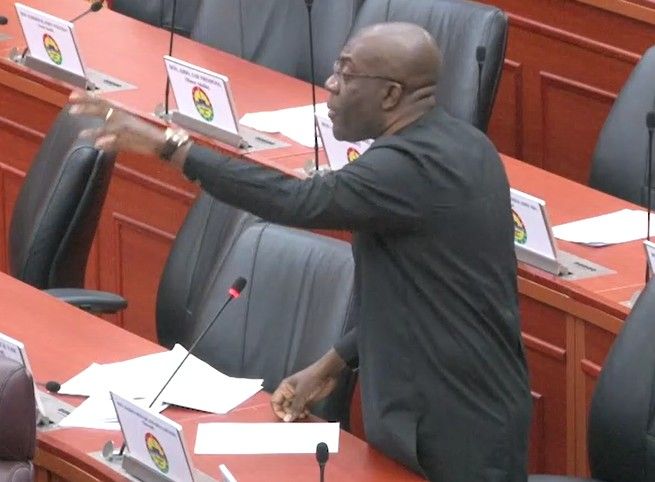
Speaking during the debate on the loan agreement, Deputy Ranking Member on Parliament’s Finance Committee, Dr Gideon Boako, said the government had resorted to borrowing because of poor revenue performance and weak fiscal management.
He argued that the country’s financial managers had failed to generate sufficient domestic revenue to fund critical national projects.
“We just exited the IMF Programme and for less than a year, we have begun to see Government resort to the debt market to finance critical investment in this country. It is happening so because the Finance Ministry and the managers of finances in this country are doing little to nothing to ensure that we are able to raise the needed revenue to finance critical investment in the country,” Dr. Boako said.
He further claimed that government revenue had significantly underperformed compared to expectations.
“If you look at the fiscal revenue from last year, there have been huge revenue underperformance on the part of government,” he added.
Minority raises concerns over fiscal management
Ranking Member on Parliament’s Economy and Development Committee, Kojo Oppong Nkrumah, also questioned the government’s fiscal management, accusing it of struggling to meet key financial obligations.
According to him, state-owned enterprises are increasingly undertaking quasi-fiscal activities, placing additional pressure on the central government.
“You are finding what the IMF warned about, the quasi-fiscal expenses. Look from the various state-owned enterprises, they are now embarking on quasi-fiscal expenses, spending the money on other things.
“It is that reason for which at the central treasury, they can’t find resources to pay for some of these priorities and they have gone back to the debt market,” he said.
Loan to support education reforms
Despite the Minority’s objections, Parliament approved the US$300 million International Development Association (IDA) credit facility between the Government of Ghana and the World Bank Group.
The funding will support the STARR-J Project, which seeks to improve access, relevance and quality in secondary education while helping to phase out the double-track system.
The project includes the construction of 10 new senior high schools, expansion of existing infrastructure, upgrading of 37 Science, Technology, Engineering and Mathematics (STEM) schools, and initiatives aimed at increasing equitable access to quality secondary education across the country.
Government says the project will strengthen the education sector by creating additional classroom capacity and improving learning outcomes while preparing students with skills required for the job market.
