
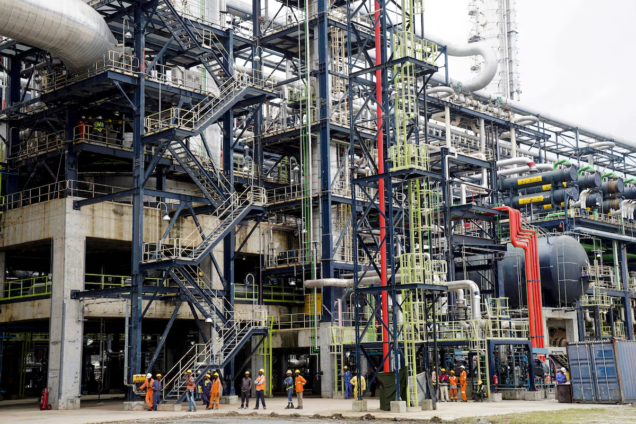
Dangote Group plans to finance its proposed 700,000-barrel-per-day oil refinery in Kenya through a combination of internally generated funds, bonds and an initial public offering (IPO), a senior company executive has disclosed.
The project is expected to become East Africa’s largest oil refinery and strengthen the region’s fuel supply by reducing its reliance on imported petroleum products.
Construction plans underway
Dangote Industries’ Vice President for Oil and Gas, Edwin Devakumar, said preparations for the project are already in progress.
He revealed that the company has selected a site on Kenya’s Lamu Island, completed preliminary planning and started engineering work.
“The site has been selected, soil tests are under way, and design and engineering work has commenced. Kenya was the choice from the beginning,” Devakumar told Reuters.
The refinery is expected to take about three years to complete and will supply refined petroleum products to Kenya and neighbouring countries.
Funding strategy
Devakumar said the refinery will be funded through a mix of internal cash flow, bonds and proceeds from a planned IPO.
Although he did not disclose the project’s exact cost, he indicated that the investment would be comparable to Dangote’s refinery in Lagos.
The Lagos refinery, built by Nigerian billionaire Aliko Dangote, cost more than $20 billion by the time it began operations in 2024.
The project was initially estimated at around $9 billion in 2013. However, costs increased significantly due to the relocation of the site, engineering challenges, currency depreciation, the COVID-19 pandemic and rising global inflation.
Expansion across Africa
The planned refinery forms part of Dangote Group’s strategy to expand fuel-processing capacity across the continent following the successful launch of its 650,000-barrel-per-day refinery in Nigeria.
It will also represent the company’s largest refining investment outside Nigeria.
Dangote had previously considered building the refinery in Tanzania’s port city of Tanga before selecting Kenya.
According to Devakumar, the decision was based on infrastructure, logistics and market considerations.
Once completed, the refinery is expected to improve fuel security in East Africa, support regional trade and reduce the region’s dependence on imported refined petroleum products.
