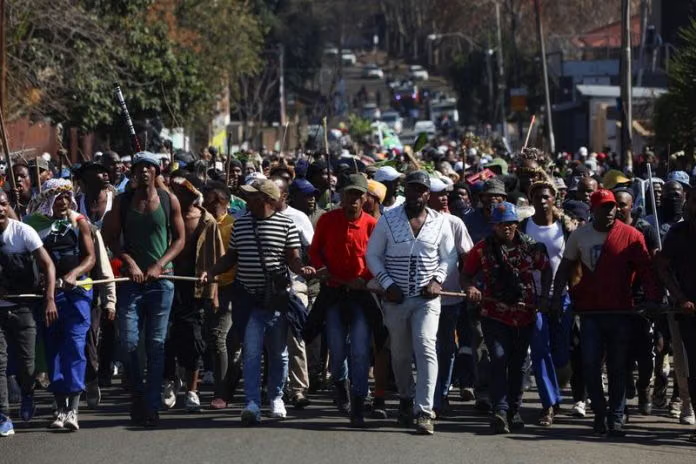
Anti-immigrant protesters marched through several South African cities on Tuesday after a self-imposed deadline for undocumented migrants to leave the country expired, with some demonstrations turning violent and triggering looting.
Thousands of African migrants had already fled parts of the country ahead of the protests, while many shops closed and foreign workers stayed home amid fears of unrest following months of growing anti-immigrant tensions.
At least four people have been killed during the unrest, while thousands of foreign nationals have been displaced from their homes. Many have also seen their businesses vandalised and property destroyed.
The leader of the anti-migrant movement, Jacinta Ngobese, said weekly demonstrations would continue until their demands were met.
“For the next six months, we are asking for our national resources to be used to take the illegal immigrants out of this country. From building to building — they must go,” she said during a march in the port city of Durban.
Many protesters blamed undocumented migrants for unemployment and economic hardship.
“People are not working, the jobs are being taken by illegal foreigners. It’s not fair,” said Silindile Xaba, 31, who joined the demonstration in Durban.
The protests have also drawn criticism after some politicians were accused of fuelling anti-immigrant sentiment ahead of South Africa’s local elections scheduled for November.
Although many marches remained peaceful, violence was reported in several areas.
In Thembisa, north of Johannesburg, protesters threw stones at police officers and suspected migrants, while sporadic gunfire was reported near the city’s central business district.
The Daily Maverick reported that police deployed tactical vehicles and fired shots in Benoni after protesters allegedly threatened officers.
In Soweto, protesters reportedly looted shacks belonging to foreign nationals, while police fired rubber bullets to disperse demonstrators in Pietermaritzburg near Durban.
Police confirmed that several suspected looters had been arrested but did not disclose the number of arrests.
Human rights groups have expressed concern that attacks often target migrants regardless of whether they are legally in the country.
Ahead of Tuesday’s demonstrations, witnesses said some landlords in Durban and Johannesburg illegally evicted foreign tenants to avoid their properties being attacked.
Reuters also reported that about 100 Congolese migrants were sleeping on the streets of Durban after being forced from their homes.
Authorities deployed thousands of police officers across the country, while the military remained on standby to assist if necessary.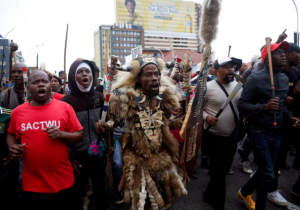
Deputy National Commissioner for Policing Tebello Mosikili said authorities have opened 103 criminal cases against anti-foreigner vigilante groups since March.
President Cyril Ramaphosa acknowledged public concerns about illegal immigration but condemned the violence.
“South Africans’ deep concerns about illegal immigration are real, and they deserve to be heard,” he said.
“But the right to protest does not allow people to threaten or intimidate others, or to engage in acts of vandalism or violence.”
South Africa has experienced recurring outbreaks of xenophobic violence since 2008, with migrants frequently blamed for unemployment, crime and pressure on public services. However, social scientists say there is little evidence to support those claims.
Despite an unemployment rate of about one-third of the population, South Africa remains Africa’s largest economy and continues to attract migrants from across the continent. According to Statistics South Africa (StatsSA), immigrants account for about three million people, or roughly four per cent of the country’s population.
