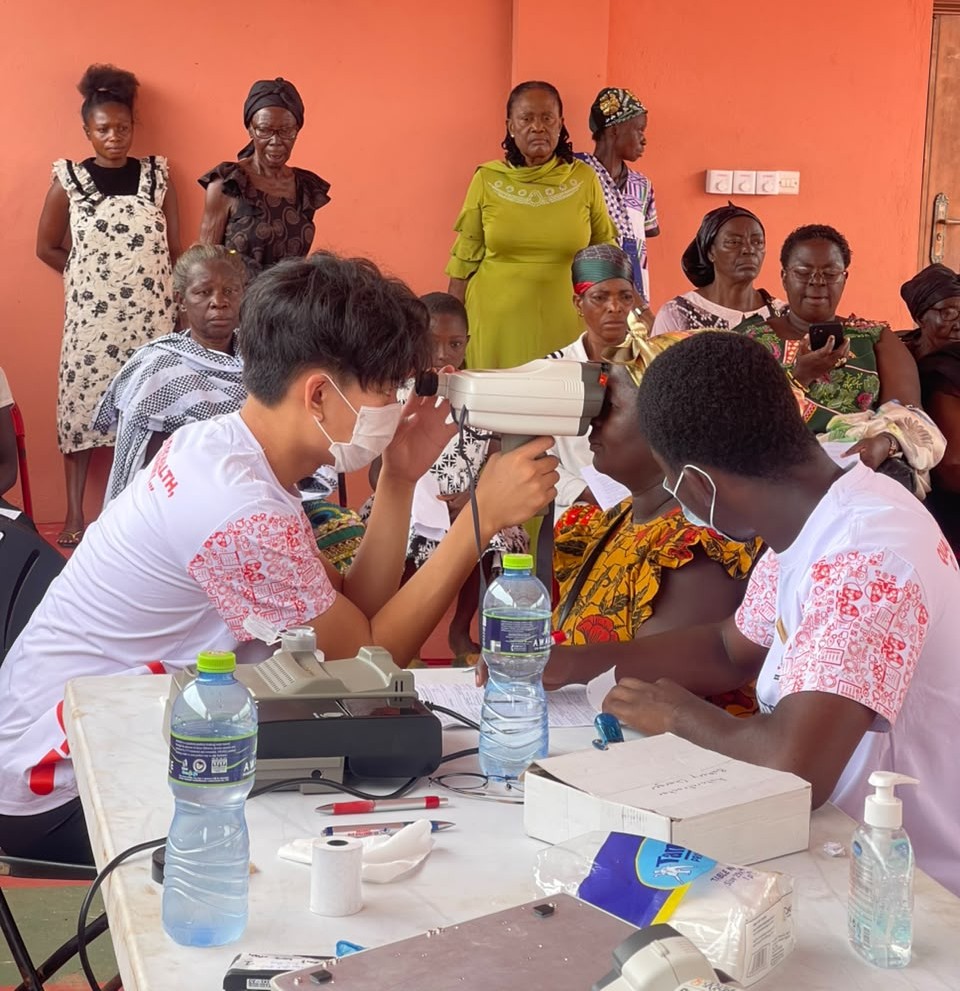
Health professionals and eye care advocates are calling for the National Health Insurance Scheme (NHIS) to include prescription glasses and low-vision aids in its benefits package following a free eye care outreach in the Bono Region that highlighted growing gaps in access to vision care.
The four-day outreach, organised by St. Ignatius Eye Centre in collaboration with 20/20 Mission, screened 867 people but was unable to attend to more than 500 others because of limited capacity.
The programme also received support from Rayjon Share Care and Restoring Vision, which donated eyeglasses and medical supplies. Beneficiaries received free eye examinations, prescription lenses, medications and referrals for specialised treatment.
Demand for Eye Care Continues to Grow
Lead optometrist and project manager for the outreach, Dr Christian Ntsiful Anderson, said the initiative focused on early detection, mass screening and referrals to help prevent avoidable blindness.
He explained that many of the conditions identified, including cataracts, presbyopia and uncorrected refractive errors, are treatable but often remain undiagnosed until they significantly affect vision.
Dr Anderson noted that the programme was led primarily by Ghanaian eye care professionals working alongside international volunteers, ensuring that local expertise remained at the centre of service delivery.
He added that information collected during the exercise would support Ghana-led research aimed at improving future outreach programmes and strengthening advocacy for policy reforms.
Shortage of Eye Care Professionals
Dr Anderson also highlighted the shortage of eye care professionals across the country, noting that Ghana remains below the World Health Organisation’s recommended optometrist-to-population ratio.
According to him, the challenge is particularly severe in rural communities where access to eye care services remains limited.
Beyond the shortage of specialists, affordability remains a major barrier for many patients who require corrective treatment after diagnosis.
Calls for NHIS Coverage Expansion
Chief Executive Officer of St. Ignatius Eye Centre, Dr Ignatius Yeboah, said while NHIS covers basic eye examinations, patients must still pay for prescription glasses and low-vision aids out of pocket.
He argued that expanding NHIS coverage to include these essential items would significantly improve access to vision care and reduce cases of preventable blindness.
“We can continue organising outreach programmes, but they only provide temporary relief. If we want to make lasting progress in reducing preventable blindness, prescription glasses must become affordable and accessible to every Ghanaian,” he said.
Economic Impact of Vision Loss
Organisers stressed that improving access to eye care is not only a health issue but also an economic necessity.
According to global estimates from the World Health Organisation and related studies, vision impairment contributes to hundreds of billions of dollars in lost productivity each year, with many cases linked to preventable or treatable conditions.
They noted that interventions such as corrective eyewear and cataract surgery rank among the most cost-effective healthcare investments, especially in low- and middle-income countries.
Plans for Future Outreach
St. Ignatius Eye Centre said the Bono Region outreach forms part of a broader effort to strengthen eye care services in underserved communities.
The organisation plans to expand future screening exercises, deepen partnerships with local institutions and support research aimed at improving access to vision care.
Organisers maintain that including prescription glasses and low-vision aids under NHIS remains the most important policy intervention needed to close Ghana’s vision care gap and ensure more people receive timely treatment.
