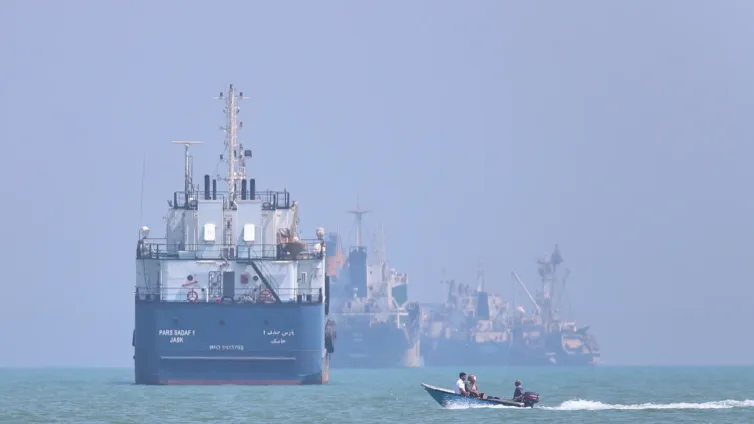
Iran has announced the reclosure of the Strait of Hormuz, one of the world’s most important oil and gas shipping routes, citing ongoing Israeli military operations in southern Lebanon and what it describes as a failure by the United States to uphold key commitments under a recent peace agreement.
According to Iran’s military, the decision was taken in response to continued Israeli attacks in Lebanon and what Tehran called a breach of the first clause of the end-of-war agreement signed between Iran and the United States.
In a statement carried by the state-owned Fars News Agency on Saturday, Iranian authorities warned that further measures could follow if hostilities continue.
The Strait of Hormuz serves as a critical transit route for a significant share of the world’s oil and liquefied natural gas exports. Iran previously closed the waterway earlier this year following US and Israeli strikes on its territory, a move that disrupted global energy markets and triggered concerns over supply security.
The reopening of the strait had been a central component of a recently signed memorandum of understanding between Tehran and Washington aimed at de-escalating tensions and ending the conflict.
Following Saturday’s announcement, an Iranian Foreign Ministry spokesperson urged the other parties to the agreement to fulfil their obligations.
“The other side must take the necessary measures as soon as possible, otherwise the entire agreement will be in jeopardy,” the spokesperson said.
The latest development comes after Israel launched a new round of airstrikes on southern Lebanon on Saturday, less than a day after a ceasefire was announced between Israel and the Iran-backed Hezbollah movement.
Lebanon’s civil defence agency reported that at least 16 people were killed and 12 others injured in strikes targeting the Nabatieh area.
The Israel Defense Forces (IDF) said the operation was carried out in response to more than 50 projectiles allegedly launched by Hezbollah from southern Lebanon overnight.
The IDF stated that its targets included rocket launch sites, weapons storage facilities and command centres used by the militant group.
The renewed tensions have raised concerns about the stability of the fragile ceasefire and the potential impact on global energy markets, with the closure of the Strait of Hormuz threatening to disrupt international oil and gas supplies once again.
