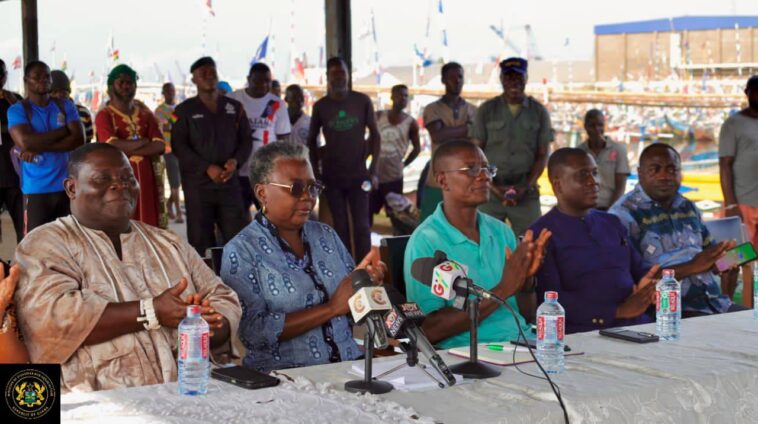
The Ministry of Fisheries and Aquaculture, in collaboration with the Fisheries Commission, has announced the 2026 closed fishing season, introducing a temporary ban on industrial fishing as part of efforts to restore declining fish stocks.
According to the directive, industrial trawlers will be barred from operating from July 1 to August 31, 2026, while semi-industrial (inshore) vessels will observe a one-month closure from July 1 to July 31.
The Ministry said the policy is based on scientific recommendations and aligns with global best practices aimed at replenishing marine resources and ensuring long-term sustainability in Ghana’s fisheries sector.
Marine artisanal canoe fishers have been exempted from the closure to protect livelihoods in coastal communities that rely heavily on small-scale fishing. However, they are still required to comply with existing fisheries regulations and observe traditional fishing holidays.
Authorities have warned against illegal, unreported and unregulated (IUU) fishing practices, including light fishing and the use of harmful chemicals or explosives, stressing that such activities threaten marine ecosystems and undermine conservation efforts.
Enforcement is expected to be stricter this year, with the Fisheries Enforcement Unit working alongside other state agencies to carry out nationwide monitoring, control and surveillance operations across landing sites and fishing zones.
The government says any individual or vessel found violating the closed season will face sanctions under the Fisheries and Aquaculture Act, 2025 (Act 1146).
The Ministry is also engaging Metropolitan, Municipal and District Assemblies, traditional leaders and fisher associations to boost awareness and encourage compliance.
Ghana’s fisheries sector has faced increasing challenges in recent years due to overfishing and environmental degradation, leading to declining catches and reduced incomes for many fishing communities.
Officials say the annual closed season remains a key strategy to rebuild fish stocks, and they will continue to assess its biological, social and economic impact to improve future policies.
