
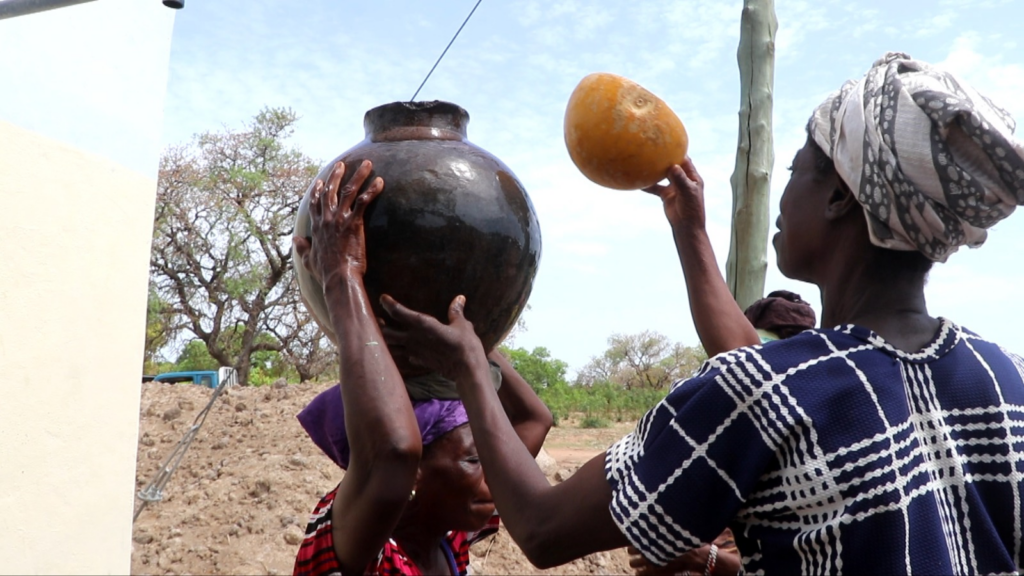
Residents of Paali in the Nadowli-Kaleo District of the Upper West Region now have access to clean water following the commissioning of a solar-powered mechanised borehole funded by Gbankor Bricks and Tiles (GBT).
The project was financed through proceeds from the local brick manufacturing company, set up by the Divisional Chief of the Kaleo Traditional Council, Naa Jamaa Matarah II, also known as Emmanuel Mwinila-Youri. It forms part of a community reinvestment model designed to support development initiatives in the area.
Speaking after the commissioning on Tuesday, April 5, Naa Matarah II explained that the business sets aside a portion of its revenue to fund local projects.
“Every single brick that we produce, five pesewas is reserved to support development in the community,” he said.
The Assembly Member for the Gbankor electoral area, Baga Wilfred, commended the initiative, noting that the borehole was completed within a month after water access was identified as a pressing need.
Residents welcomed the project with celebration. Janet Kuun-lonno, the Women’s Organiser, expressed appreciation on behalf of the community, while elders presented a sheep to the chief in recognition of his efforts.
The solar-powered system is expected to provide reliable and cost-free water supply, particularly easing the burden on women who often travel long distances to fetch water.
Naa Matarah II said the success of the brick factory was boosted by a contract from the Speaker of Parliament, Alban Sumana Bagbin, to supply 400,000 bricks for a wall project at Sombo Senior High School. This, he noted, helped expand operations and create jobs.
The factory currently employs 18 young people who earn monthly wages of GH¢1,500, along with performance-based bonuses.
Beyond the borehole, GBT has funded several community projects, including a library, an ICT centre with 18 computers, school furniture, and an annual reward scheme for basic school pupils.
The chief is also promoting the use of eco-friendly clay bricks as a sustainable alternative to conventional building materials. To showcase their durability, he built a roadside house using the bricks as a demonstration project.
He explained that the bricks offer natural cooling and do not require painting, making them cost-effective over time.
Looking ahead, Naa Matarah II believes wider use of local building materials could create jobs, reduce rural-urban migration, and help curb illegal mining by providing alternative livelihoods.
