
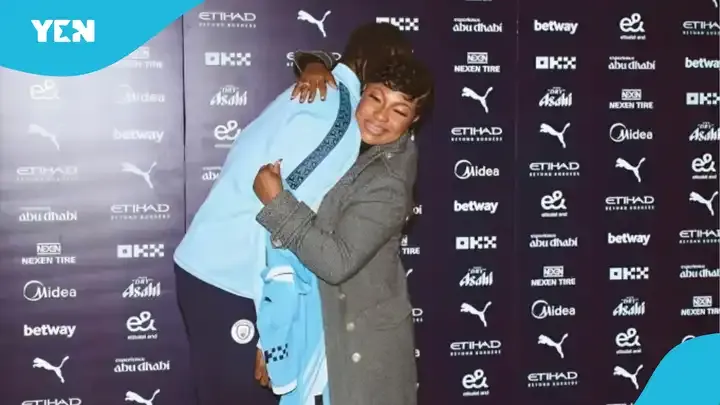
Ghanaian football has received a deeply emotional appeal from Dela Dzebu, mother of Antoine Semenyo, who is encouraging diaspora parents to guide their children toward representing Ghana despite the difficult realities of dual-national football decisions.
Speaking at an event, Dzebu reflected on the long and emotionally charged journey that led to her son committing his international future to the Ghana Black Stars over England. She described the experience as one shaped by uncertainty, identity struggles, and difficult family conversations.
“I don’t even have words because it’s been a very, very long journey, but it’s been amazing as well. I’m here today to tell you parents: it’s possible. If Antoine did it,” she said.
She admitted that raising a footballer in the diaspora is not easy, especially when young players are faced with competing national team choices and external pressure.
“Trust me, it’s hard. If anybody says it’s been easy, it’s not easy. But it’s possible. It is very possible,” she emphasized.
Dzebu recalled a defining moment when Semenyo asked her directly whether he should represent England or Ghana. She said the conversation reflected the confusion many dual-national players go through.
“I said you have to play for Ghana,” she recalled. “He asked why. Then I didn’t have any words. I was like, ‘Oh God, in Ghana nothing works.’ He said, ‘If nothing works, why do I have to play for Ghana?’”
She explained that her response came from a sense of identity and belonging rather than practical reasoning.
“You would feel proud to be part of the Ghanaian journey,” she said. “Football in the UK is about boots. Football in Ghana is about blood, pride, legacy, and roots.”
Dzebu also described the emotional pride she felt when she first saw Semenyo wear the Black Stars jersey, calling it a moment she will never forget.
“As a parent, what you feel when he wears that jersey for the first time and the crowd is roaring — you cannot put it in words. It’s amazing,” she said.
She further noted that many diaspora children struggle with identity as they grow up between two cultures and national affiliations.
“These kids are conflicted,” she explained. “As parents, you don’t want to be pushy, but you must encourage them. They need to understand where they come from.”
She concluded with a heartfelt message to diaspora families:
“Listen, you will never regret it. It’s amazing on a very grand scale.”
Her remarks continue to resonate widely, adding to ongoing discussions about diaspora talent, identity, and the emotional weight of representing Ghana on the international stage.
