
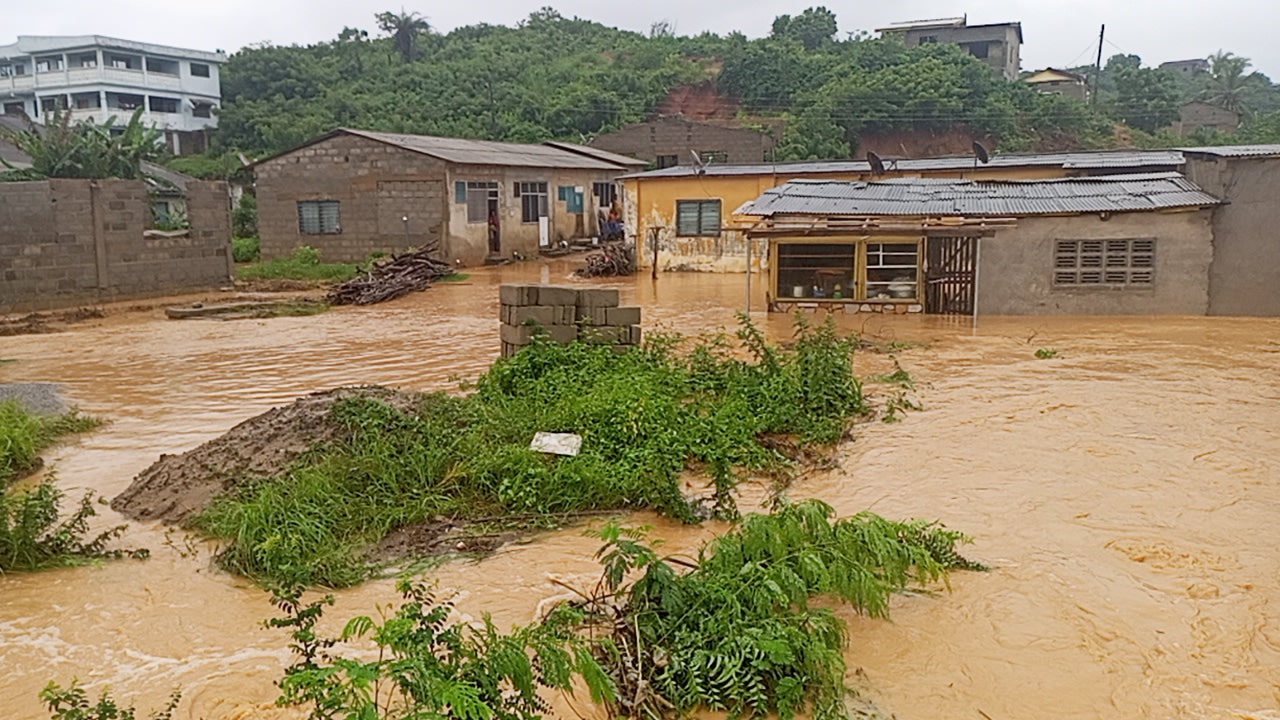
Flooding remains a recurring problem in Accra, especially during the rainy season. Heavy downpours often lead to waterlogged streets, property damage, and disruptions to daily life.
In recent days, parts of the city have experienced significant flooding, raising concerns among residents and authorities about preparedness and long-term solutions.
One of the biggest causes of flooding in Accra is inadequate drainage infrastructure. Many gutters are either too small, blocked, or poorly maintained, preventing water from flowing freely.
Indiscriminate dumping of waste into drains is a major issue. Plastics and other debris clog waterways, causing water to overflow during heavy rains.
Accra’s fast-growing population has led to unplanned development. Buildings are often constructed on waterways and flood-prone areas, reducing natural drainage paths.
Changing weather patterns have resulted in heavier and more unpredictable rainfall. This increases the risk of flooding, even in areas that were previously unaffected.
Flooding tends to impact several low-lying and densely populated areas in Accra, including:
- Kaneshie
- Odawna
- Alajo
- Adabraka
- Parts of East Legon
These areas often experience severe water accumulation after prolonged rainfall.
Floodwaters can destroy homes, shops, and vehicles, leading to significant financial losses.
Flooded roads cause heavy traffic and make commuting difficult, especially during peak hours.
Flooding increases the risk of diseases such as cholera and malaria due to contaminated water and stagnant pools.
In extreme cases, flooding can result in injuries or fatalities, particularly when people are caught in fast-moving water.
Authorities, including the National Disaster Management Organisation, often respond to flooding incidents by:
- Rescuing affected residents
- Providing temporary shelter
- Clearing blocked drains
There have also been ongoing efforts to improve drainage systems and enforce sanitation laws.
To stay safe during floods, residents should:
- Avoid walking or driving through flooded areas
- Stay indoors during heavy rainfall
- Disconnect electrical appliances
- Move valuables to higher ground
- Follow official weather updates and warnings
Preparedness can significantly reduce the risks associated with flooding.
To reduce flooding in Accra, experts recommend:
- Improving drainage infrastructure
- Enforcing proper waste management
- Preventing construction on waterways
- Investing in climate-resilient urban planning
Addressing these issues will require collaboration between government agencies, communities, and individuals.
Flooding in Accra continues to pose serious challenges, affecting lives, businesses, and infrastructure. While short-term responses help manage immediate impacts, long-term solutions are essential to prevent recurring disasters.
With better planning, awareness, and collective action, the city can work toward reducing the risk of flooding in the future.
