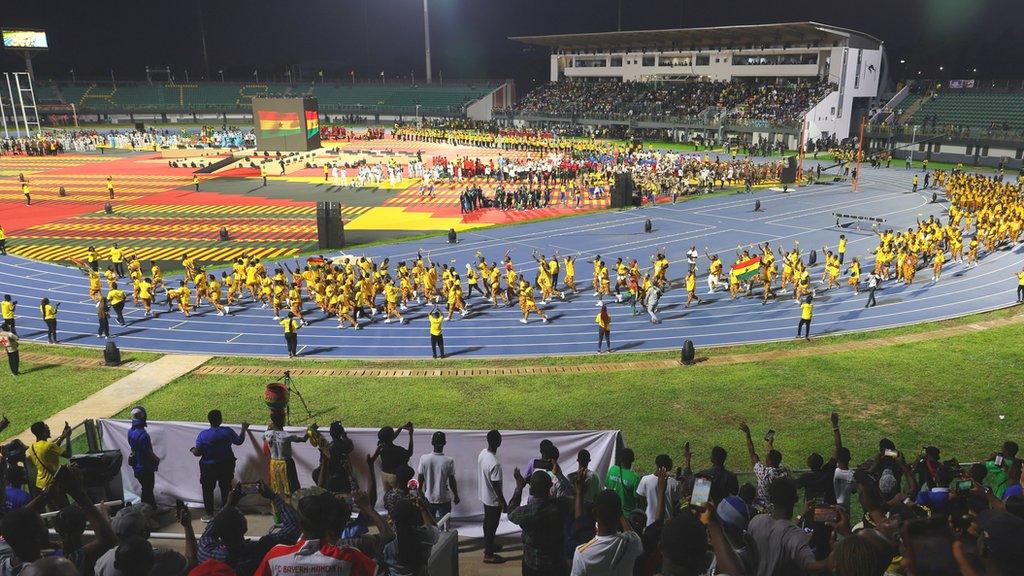
The Auditor-General’s move to initiate surcharge proceedings marks a significant escalation in accountability efforts around Ghana’s hosting of the 13th African Games. By invoking Article 187(7) of the 1992 Constitution, Johnson Akuamoah Asiedu is exercising one of the strongest powers available to the Audit Service: disallowing unlawful expenditure and directly surcharging those deemed responsible.
This means the four officials named Mustapha Ussif, William Kartey, Dr Kwaku Ofosu-Asare, and Professor Amin Alhassan could be personally liable for millions in losses tied to inflated contracts, undelivered services, and procurement breaches.
Asiedu emphasized that the Audit Service is “going after the money right away,” signaling urgency and a break from the often slow pace of accountability processes.
The Service has already recovered GH¢10.3 million from earlier audits, mostly from individuals who paid quickly to avoid formal surcharge proceedings. This shows the deterrent effect of the Auditor-General’s powers.
The broadcaster’s lack of contracts and documentation, coupled with lost potential revenue of nearly GH¢60 million, highlights how weak administrative systems can translate into massive financial losses.
Beyond individual contracts, the audit revealed GH¢336.6 million paid without verification, GH¢20.4 million in irregular cash withdrawals, and GH¢2.7 billion in sole-sourced contracts without justification. These point to structural failures in procurement and oversight.
While surcharge proceedings are underway, Parliament’s consideration of the audit report will add another layer of accountability, potentially leading to broader reforms.
This development is not just about recovering money it’s about setting a precedent that public officials can be held personally accountable for financial mismanagement. If enforced rigorously, it could reshape expectations around governance and procurement in Ghana’s public sector.
