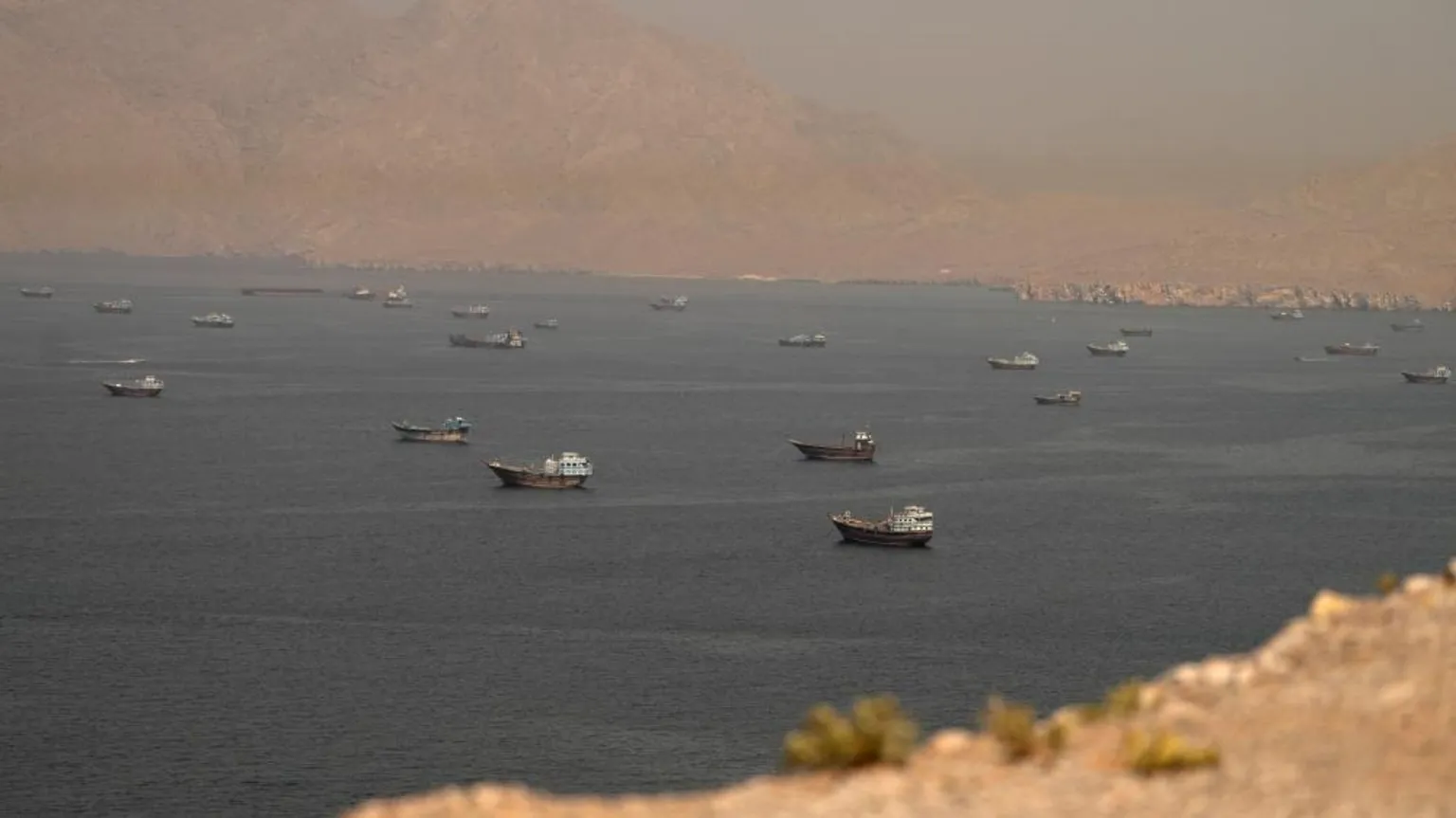
The United Nations’ International Maritime Organization (IMO) has suspended its planned evacuation of more than 11,000 sailors stranded in the Strait of Hormuz after a cargo ship came under attack in the strategic waterway.
IMO Secretary-General Arsenio Dominguez said some vessels had already been evacuated. However, the operation has been put on hold until authorities can confirm that safe navigation conditions remain in place.
Cargo ship attacked near Oman
The UK Maritime Trade Operations (UKMTO) agency reported that a cargo ship was struck by an unidentified projectile about 7.5 nautical miles southeast of Oman’s Port of Dahit on Thursday.
No injuries or fatalities were reported.
Maritime security firm Vanguard identified the vessel as the Singapore-flagged Ever Lovely. The company said the ship continued its journey through the strait despite the attack.
According to ship-tracking data reviewed by BBC Verify, the vessel was travelling along a southern route through the Strait of Hormuz. It was leading a group of four other ships.
IMO pauses evacuation plan
Following the incident, Dominguez said the ship was not operating under the IMO’s organised evacuation framework.
“I have always reiterated that the safety of the seafarers remains paramount. Therefore, to ensure a coordinated approach and navigational safety, the evacuation plan will be paused until further clarity is obtained,” he said.
The evacuation programme was announced earlier this week after the Strait of Hormuz reopened following months of disruption caused by the conflict between the United States, Israel and Iran.
Fresh tensions in the Gulf
The latest attack comes after Iran’s Islamic Revolutionary Guard Corps (IRGC) warned that ships using routes not approved by Iranian authorities would face serious risks.
The Persian Gulf Strait Authority also warned vessel owners that ships travelling outside designated routes would do so at their own risk.
US media reports, citing American officials, said Iran was responsible for firing on the cargo ship. Iranian authorities have not publicly responded to those claims.
Strait remains critical to global trade
The Strait of Hormuz is one of the world’s busiest shipping routes and a vital corridor for global oil and gas exports.
The waterway was effectively closed after the conflict between Iran, the US and Israel escalated in February. The closure disrupted energy supplies and pushed global oil prices sharply higher.
Although the strait reopened after the US and Iran signed a Memorandum of Understanding on June 17, disagreements remain over the agreement’s implementation.
Iran has indicated it plans to introduce maritime service fees for vessels using the strait, while the United States insists that international law does not permit any country to charge tolls on the waterway.
US Secretary of State Marco Rubio, currently visiting Gulf states, has repeated Washington’s opposition to any such charges.
Oil prices remain volatile
Oil prices have eased since the reopening of the strait and the announcement of the US-Iran agreement.
On Thursday, the price of Brent crude briefly fell below its level before the conflict began earlier this year before recovering slightly later in the day.
The suspension of the IMO evacuation plan highlights the fragile security situation in the Gulf, where thousands of sailors and hundreds of commercial vessels continue to face uncertainty despite the ceasefire agreement.
