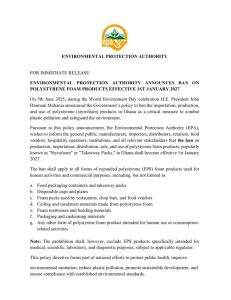
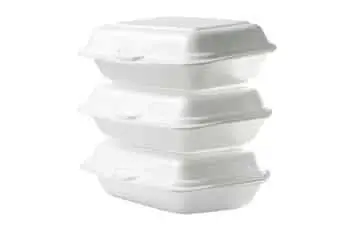
Environmental Protection Authority (Ghana) has announced a nationwide ban on the production, importation, sale, and use of polystyrene foam products, commonly known as styrofoam, effective January 1, 2027.
The directive forms part of government efforts to reduce plastic pollution, improve sanitation, and protect the environment.
In a statement issued on May 25, 2026, the Authority said the policy follows an announcement made by President John Dramani Mahama during the 2025 World Environment Day celebration.
According to the EPA, the ban will apply to all expanded polystyrene (EPS) foam products used for commercial and human activities.
The Authority listed several products that will be affected by the directive, including:
- Food packaging containers and takeaway packs
- Disposable cups and plates
- Foam packs used by restaurants and food vendors
- Ceiling and insulation materials made from polystyrene foam
- Foam mattresses and bedding materials
- Packaging and cushioning materials
The EPA explained that the restriction will also cover any other styrofoam products intended for human use or consumption-related activities.
However, the Authority clarified that EPS products specifically designed for medical, laboratory, scientific, and diagnostic purposes will be exempt, subject to regulatory approval. The
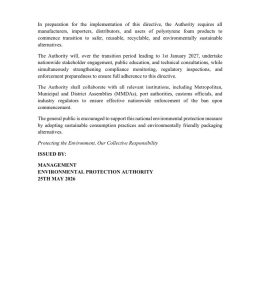
The EPA has directed manufacturers, importers, distributors, and retailers to begin transitioning to safer and environmentally sustainable alternatives before the policy takes effect in 2027.
The Authority said it will undertake nationwide stakeholder consultations, public education campaigns, and technical engagements during the transition period.
It also plans to strengthen inspections, compliance monitoring, and enforcement measures ahead of the implementation date.
According to the statement, the EPA will work with Metropolitan, Municipal, and District Assemblies, port authorities, customs officials, and industry regulators to ensure effective nationwide enforcement of the ban.
The Authority further encouraged the public to support the initiative by adopting reusable and environmentally friendly packaging alternatives.