
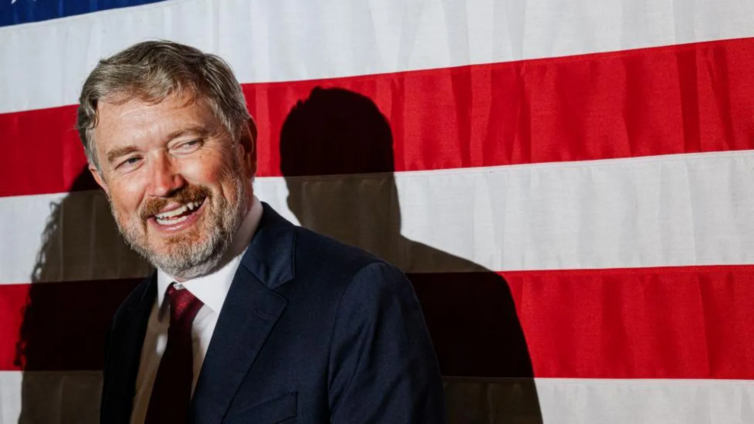
Donald Trump has tightened his control over the Republican Party after Congressman Thomas Massie lost his party’s primary race in Kentucky.
Massie, known for openly challenging Trump on key issues, lost to Trump-backed candidate Ed Gallrein, who secured about 55% of the vote.
The defeat marks another victory for Trump as he moves to remove critics from within the Republican Party ahead of the November midterm elections.
Massie had opposed several Trump-backed policies in Congress. He criticised a major tax and spending package, arguing that it would increase the federal deficit. He also supported efforts to limit US military actions in Iran and Venezuela.
The Kentucky lawmaker also pushed for the release of Justice Department files linked to disgraced financier Jeffrey Epstein.
His disagreements with Trump made him a top target for the former president and his allies, who reportedly spent millions of dollars supporting Gallrein’s campaign.
Political analyst Trey Grayson said the result showed Trump’s continued influence within the Republican Party.
According to Grayson, Gallrein relied heavily on Trump’s endorsement and financial backing rather than an active campaign.
Massie now joins other Republicans who recently lost to Trump-backed rivals, including Louisiana Senator Bill Cassidy.
Attention has also turned to Texas, where Senator John Cornyn faces pressure after Trump endorsed his rival, Texas Attorney General Ken Paxton, in an upcoming runoff election.
Cornyn had largely supported Trump in recent years. However, Trump described Paxton as a “true MAGA warrior” and suggested Cornyn had not been loyal enough during difficult periods.
The endorsement surprised several Republican senators. Senator Susan Collins publicly questioned Trump’s decision and praised Cornyn’s record in Congress.
Despite Trump’s growing influence within the party, concerns remain over his national popularity. Polls continue to show voter dissatisfaction with his handling of the economy, especially among independent voters.
Some analysts believe the removal of experienced Republican lawmakers could create challenges for Trump in Congress if the party wins control after the elections.
Several outgoing Republican senators may also oppose parts of Trump’s agenda before leaving office, including issues related to military powers and government spending.
While Trump continues to strengthen his hold on the Republican Party, some departing lawmakers could still complicate his plans in the months ahead.
