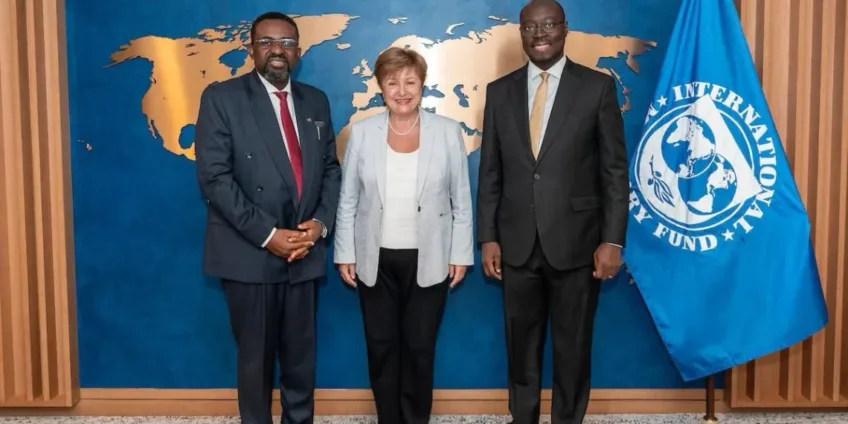
An International Monetary Fund (IMF) mission is expected in Accra from April 29, 2026, to begin Ghana’s sixth and final review under its Extended Credit Facility (ECF) programme.
The team is scheduled to spend about two weeks in the country, with formal engagements expected to start on April 30. This review marks a critical step as Ghana prepares to exit the IMF-supported programme in August 2026, following a three-year ECF arrangement approved in May 2023.
The mission will evaluate Ghana’s performance since the previous review, focusing on whether delayed targets and key structural reforms have been completed or are close to completion.
Particular attention is expected on fiscal developments, especially reforms in the energy sector and ongoing debt management efforts. The team will also assess government spending priorities, including allocations to social protection programmes.
A central component of the visit will be discussions on “prior actions” — conditions Ghana must meet to secure the final tranche of IMF support and successfully conclude the programme.
In the financial sector, the IMF is expected to review progress in resolving legacy challenges within the banking system and strengthening overall stability.
Following the Accra meetings, the team will return to Washington, D.C. to analyse findings and prepare a report for IMF management and its Executive Board. A decision on the final review is expected within two to three weeks, potentially clearing the path for Ghana’s programme completion.
The programme timeline was recently extended from May to August 2026, a move described as “purely technical” by the IMF Resident Representative in Ghana, Adrian Alter. He explained the extension allows sufficient time to assess end-2025 and first-quarter 2026 economic data, dismissing claims that it was due to missed targets.
Ghana’s ECF programme provides access to about $3 billion in financial support. At the fifth review, the IMF described the country’s performance as broadly satisfactory, noting that reforms were beginning to yield results despite earlier delays.
Economic growth has been stronger than expected, driven largely by the services and agriculture sectors, while financial sector stability has improved through ongoing bank recapitalisation efforts led by the Bank of Ghana.
The IMF projects Ghana’s economy to grow by 4.8 per cent in 2026, slightly above the regional average, with inflation expected to ease to 7.9 per cent and remain in single digits through 2027.
Speaking in Washington, D.C., Abebe Aemro Selassie said the Fund remains optimistic about Ghana’s outlook but emphasised the need for continued fiscal discipline beyond the programme.
He cautioned that sustaining recent gains will depend on policy decisions taken after the IMF programme ends.
Meanwhile, a recent IMF technical assistance mission to the Bank of Ghana reviewed the country’s macroprudential policy framework, recommending stronger oversight structures, improved risk monitoring tools, and clearer communication strategies to enhance financial system resilience.
