
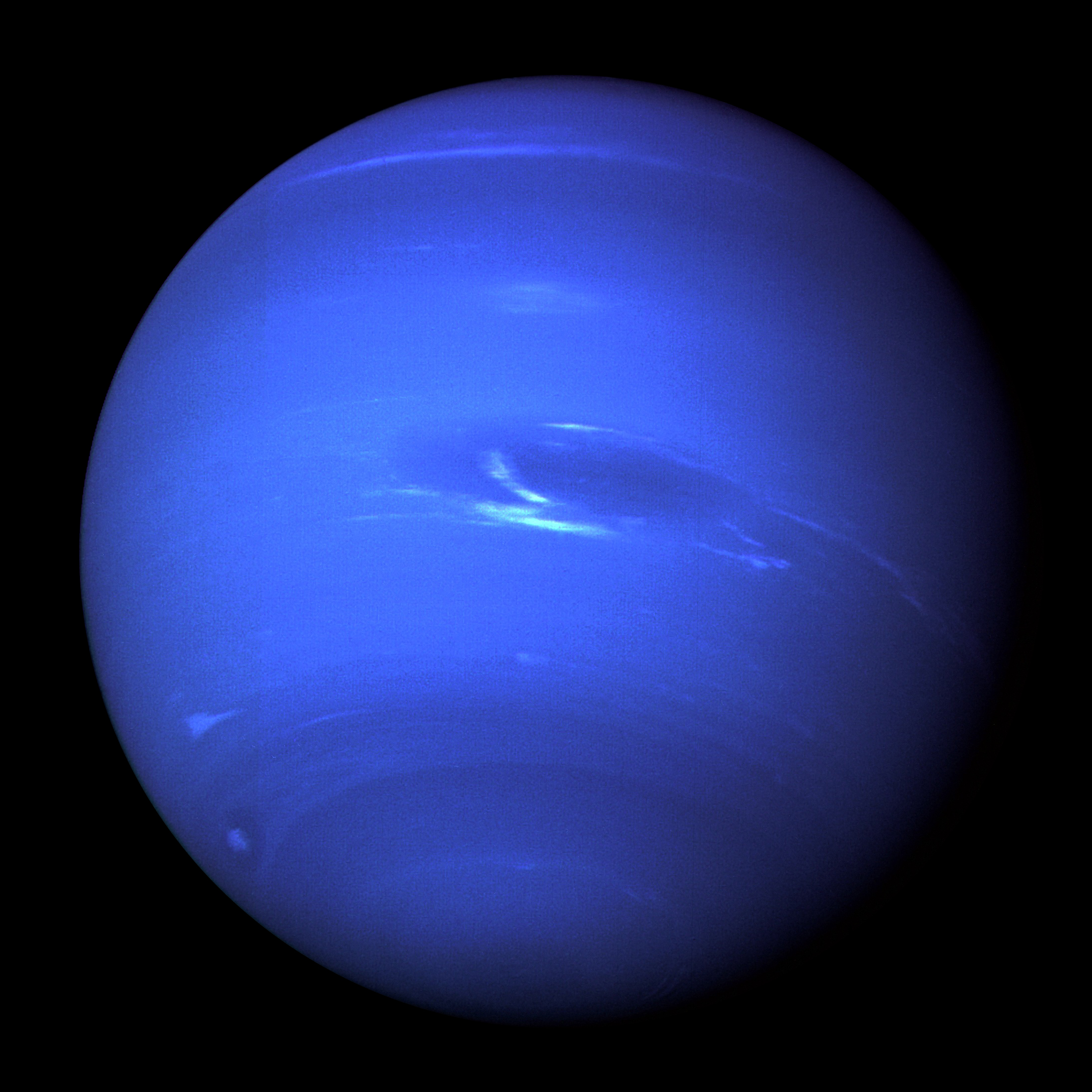
Astronomers have proposed a second hidden world in the outer solar system. They call it Planet X2. Computer simulations show that a body one and a half to two times the mass of Earth could explain some of the strangest orbits found beyond Neptune. The study appeared in the Monthly Notices of the Royal Astronomical Society. Patryk Sofia Lykawka led the team. He works at Kindai University in Japan and the University of Southern Queensland. Pedro Bernardinelli of the University of Washington and Jonti Horner of the University of Southern Queensland worked with him.
The puzzle sits in the trans-Neptunian region. This is the deep freeze past Neptune’s orbit, at about 30 astronomical units from the sun. One astronomical unit is the average distance between Earth and the sun. The Kuiper Belt lies between roughly 38 and 50 units out. It holds large numbers of icy bodies. Yet some objects farther out follow stretched, tilted orbits, detached from the rest. Sedna is the best known example. It loops far beyond the planetary region on a path that is hard to explain with the known planets alone.
Planet X2 beyond Neptune: the case for a hidden world
Lykawka’s team ran simulations covering 4.5 billion years of solar system history. They tracked how the region evolved as the giant planets settled into their present orbits. Models with only the four known giant planets did not reproduce the observed populations well. Models that added a distant planet did better. They produced groups of objects on highly tilted orbits. They also produced objects whose closest approach to the sun sits far beyond Pluto. Those patterns match what telescopes have actually found.
The best fit was a planet of roughly one to two Earth masses on a wide, elongated orbit. Its semimajor axis would be 350 to 500 astronomical units. Even at its closest, such a world would stay at least 200 astronomical units from the sun. At that distance, it would be far too distant and faint for the surveys that mapped the brighter outer bodies to pick up. The researchers stress that Planet X2 remains hypothetical. No telescope has seen it.
The proposal is separate from Planet Nine, the heavier world suggested in 2016 to explain a different set of clustered orbits. A 2025 analysis put that candidate at about 4.4 Earth masses with a semimajor axis near 290 astronomical units. Because the two ideas address different orbital patterns, the team says both could exist, one could exist, or neither could. The simulations also left some gaps between the modeled populations and the real ones. The authors acknowledge those gaps.
What the Rubin Observatory could find
The test may come from the Vera C. Rubin Observatory in Chile. Its repeated wide-field scans are designed to catch extremely faint, slow-moving objects. Rubin has already reported distant candidates this year. A survey of that depth could either find a body like Planet X2 or steadily narrow the space where it could be hiding. That is the case for Planet X2 beyond Neptune.
