
Fitch Solutions has projected that Ghana’s inflation rate will average 12.8% in 2027, up from an expected 6.0% in 2026.
The UK-based research firm said higher inflation could weaken household purchasing power and slow private consumption.
Rising prices could affect consumer spending
In its latest report on Ghana, Fitch Solutions warned that stronger inflationary pressures may reduce consumer spending and weigh on broader economic activity.
The firm noted that a tighter-than-expected monetary policy stance by the US Federal Reserve could affect global gold prices, a key source of export earnings for Ghana.
According to the report, lower gold revenues could place pressure on the cedi and lead to higher inflation than currently anticipated.
“This would put pressure on the cedi, resulting in higher inflation than we currently forecast and a corresponding drag on household consumption and broader economic activity in the second half of 2026 and throughout 2027,” the report said.
Cedi strength helped contain inflation
Fitch Solutions said one of the main reasons inflation remained low in early 2026 was the strong performance of the cedi.
The appreciation of the local currency helped reduce imported inflation and kept price increases under control.
However, the firm believes this support will weaken as the effects of the cedi’s sharp gains in early 2025 begin to fade.
“As these favourable base effects disappear, inflationary pressures are likely to increase during the second half of 2026,” the report noted.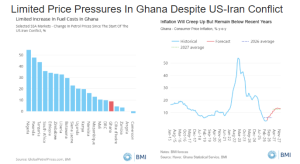
Weather conditions may worsen food prices
The report also highlighted weather-related risks that could push prices higher.
Fitch Solutions said a possible El Niño weather pattern later in 2026 could reduce rainfall and increase temperatures, affecting agricultural production.
Poor weather conditions could lower crop yields and increase food prices across the country.
The firm added that cocoa production may also suffer, while lower water levels at the Akosombo Dam could affect electricity generation.
Inflation edges up in May
Data from the Ghana Statistical Service showed that inflation increased to 3.7% in May 2026 from 3.4% in April.
The rise was mainly driven by seasonal food supply constraints and unfavourable base effects.
Despite the recent increase, inflation remains significantly lower than levels recorded in previous years.
However, Fitch Solutions expects inflationary pressures to strengthen over the medium term as currency and weather-related factors begin to take effect.
