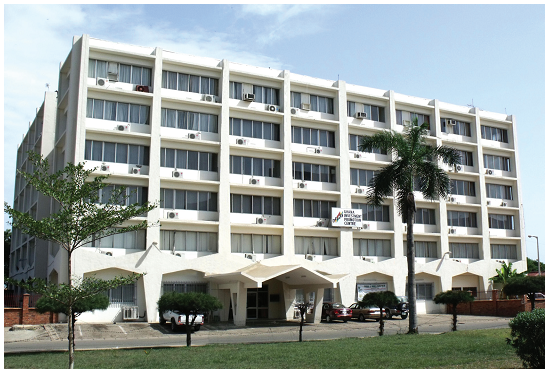
The Ghana Investment Promotion Centre (GIPC) has cautioned citizens against acting as fronts for foreign nationals seeking to operate businesses in sectors reserved exclusively for Ghanaians, amid rising concerns over foreign involvement in local retail trading.
The warning comes as the proposed Ghana Investment Promotion Authority Bill awaits presidential assent. The centre clarified that while the legislation introduces broader investment reforms, restrictions on foreign participation in certain sectors remain firmly in place.
The Ghana Investment Promotion Centre (GIPC) has cautioned citizens against acting as fronts for foreign nationals seeking to operate businesses in sectors reserved exclusively for Ghanaians, amid rising concerns over foreign involvement in local retail trading.
The warning comes as the proposed Ghana Investment Promotion Authority Bill awaits presidential assent. The centre clarified that while the legislation introduces broader investment reforms, restrictions on foreign participation in certain sectors remain firmly in place.
Speaking at a media briefing in Peduase on May 26, GIPC Chief Executive Officer Simon Madjie reiterated that foreign nationals are prohibited from operating in areas reserved for Ghanaians, including market trading, hawking, taxi services, and retail pharmaceutical businesses.
“These reserved areas are protected under the law, and regardless of the amount of money an investor brings into the country, they cannot operate in sectors exclusively reserved for citizens of Ghana,” Mr. Madjie said.
He disclosed that the GIPC is collaborating with the Ghana Immigration Service and the Ministry of the Interior to strengthen nationality verification and enforce compliance with investment regulations.
To address the issue, the centre plans to roll out a nationwide public education campaign in August. The initiative will target traders, market leaders, and the wider public to raise awareness of business activities reserved for Ghanaian citizens.
“Our best solution to this issue is public education so that we all become custodians in protecting areas reserved for citizens of Ghana,” Mr. Madjie noted.
The GIPC is also deepening engagement with trader associations and stakeholders, prioritising education and compliance enforcement over indiscriminate business closures.
While reaffirming restrictions in reserved sectors, Mr. Madjie emphasised that Ghana remains committed to attracting responsible foreign investment in open industries such as manufacturing, agribusiness, industrial development, and large-scale infrastructure projects.
He explained that ongoing reforms at the GIPC aim to boost investor confidence, simplify registration procedures, and strengthen investment facilitation services.
The briefing followed a two-day board and management retreat to review operational priorities for 2026. Board Chairman Akwasi Oppong-Fosu and CEO Simon Madjie outlined strategies to enhance investment promotion, improve investor support services, and advance Ghana’s broader investment agenda.
The GIPC reiterated that while Ghana remains open to foreign investment, protecting sectors reserved for citizens remains a fundamental pillar of the country’s investment framework and economic inclusion agenda
Speaking at a media briefing in Peduase on May 26, GIPC Chief Executive Officer Simon Madjie reiterated that foreign nationals are prohibited from operating in areas reserved for Ghanaians, including market trading, hawking, taxi services, and retail pharmaceutical businesses.
“These reserved areas are protected under the law, and regardless of the amount of money an investor brings into the country, they cannot operate in sectors exclusively reserved for citizens of Ghana,” Mr. Madjie said.
He disclosed that the GIPC is collaborating with the Ghana Immigration Service and the Ministry of the Interior to strengthen nationality verification and enforce compliance with investment regulations.
To address the issue, the centre plans to roll out a nationwide public education campaign in August. The initiative will target traders, market leaders, and the wider public to raise awareness of business activities reserved for Ghanaian citizens.
“Our best solution to this issue is public education so that we all become custodians in protecting areas reserved for citizens of Ghana,” Mr. Madjie noted.
The GIPC is also deepening engagement with trader associations and stakeholders, prioritising education and compliance enforcement over indiscriminate business closures.
While reaffirming restrictions in reserved sectors, Mr. Madjie emphasised that Ghana remains committed to attracting responsible foreign investment in open industries such as manufacturing, agribusiness, industrial development, and large-scale infrastructure projects.
He explained that ongoing reforms at the GIPC aim to boost investor confidence, simplify registration procedures, and strengthen investment facilitation services.
The briefing followed a two-day board and management retreat to review operational priorities for 2026. Board Chairman Akwasi Oppong-Fosu and CEO Simon Madjie outlined strategies to enhance investment promotion, improve investor support services, and advance Ghana’s broader investment agenda.
The GIPC reiterated that while Ghana remains open to foreign investment, protecting sectors reserved for citizens remains a fundamental pillar of the country’s investment framework and economic inclusion agenda
