
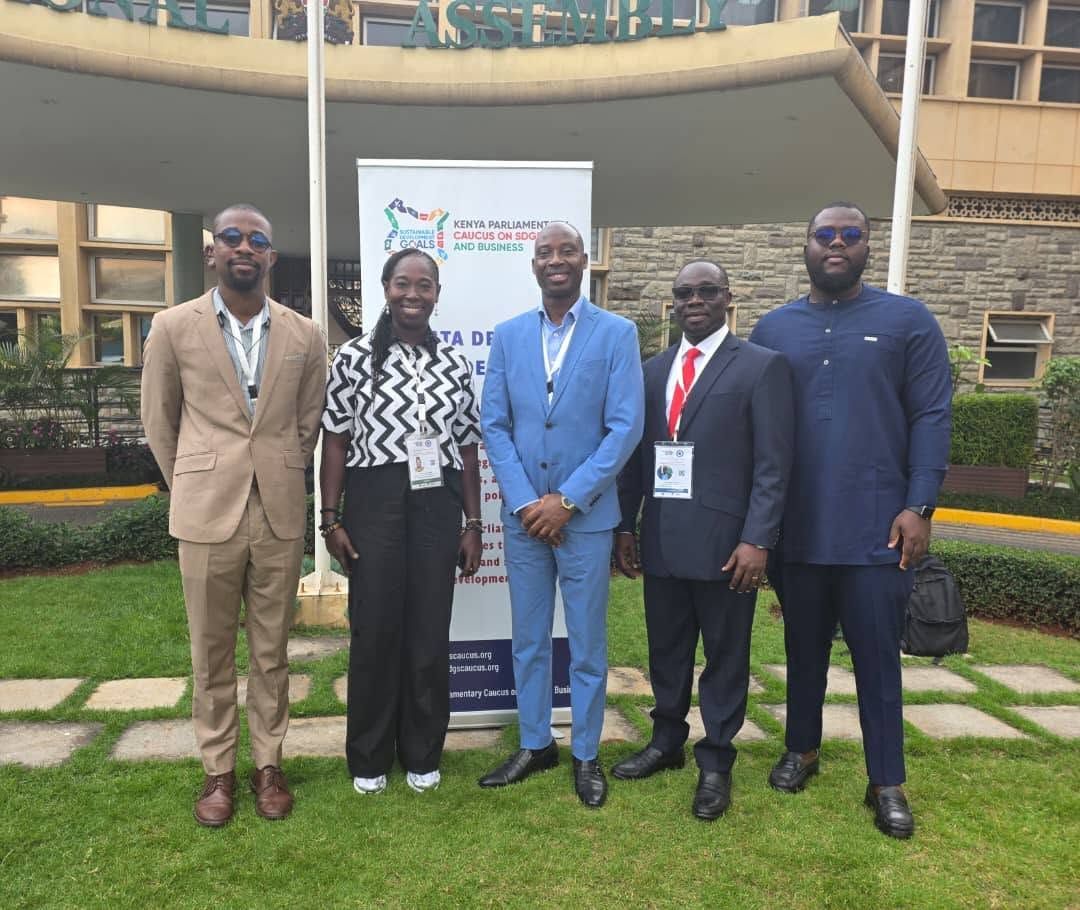
Government Statistician Dr. Alhassan Iddrisu has raised concerns about the challenges facing national statistics offices across Africa.
Speaking at the African Regional Forum on Statistical Use in Parliament during the Global Data Festival in Nairobi, Kenya, he said many statistics offices struggle with limited funding and staff shortages.
The forum explored how data and technology can help African countries become stronger, smarter and more resilient.
Dr. Iddrisu said governments and international organisations continue to demand more data from national statistics offices.
However, many institutions lack the resources needed to meet those expectations.
“Across Africa, our national statistics offices are underfunded, understaffed, and often misunderstood by the very people who need our work most,” he said.
He noted that statistics offices now support reporting on the Sustainable Development Goals, climate change, poverty, employment and gender issues.
“More demand, less money. That’s the paradox we’re living in,” he added.
Dr. Iddrisu said Ghana has worked to make official statistics more useful for decision-makers.
Since 2019, the Ghana Statistical Service has partnered with Parliament, the Alliance for Social Equity and Public Accountability (ASEPA) and the Hewlett Foundation through the Data for Accountability Project.
The initiative aims to make official statistics part of everyday parliamentary work.
“We decided to make data so helpful that no one could ignore it,” he said.
As part of the project, the Ghana Statistical Service developed constituency profiles for Members of Parliament.
The profiles provide information on poverty levels, school enrolment, flood risks and maternal mortality in each district.
Dr Iddrisu said the data has helped lawmakers better understand the needs of their communities.
“One MP told us the profiles changed how development partners treated her proposals. Another said it helped him see his constituents differently, not as voters, but as people with specific needs,” he said.
Last month, the service also released reports showing levels of multidimensional poverty across all 261 districts in Ghana.
According to him, MPs welcomed the reports because they provide detailed information to support targeted development interventions.
Dr. Iddrisu highlighted the role of technology in improving access to official data.
He said the Ghana Statistical Service developed StatsBank, a digital platform that contains more than 350 indicators.
The platform allows Parliament, researchers and members of the public to access data through phones, tablets and computers.
“We built our StatsBank, a data portal with over 350 indicators accessible by phone or tablet. Parliament and the general public no longer wait for our reports. They log in and look,” he said.
The service is also working with the Kwame Nkrumah University of Science and Technology (KNUST) to digitise parliamentary Hansards using artificial intelligence and machine learning.
Dr. Iddrisu urged governments across Africa to invest more in national statistics offices.
He said policymakers are more likely to support funding when they see how data improves decision-making.
“You can’t win the funding argument on technical grounds alone. You win it by making data real,” he said.
He called for stronger and more independent statistics institutions across the continent.
According to him, reliable data remains essential for effective laws, better budgets and fair representation.
“Evidence-based decision-making is no longer optional. It is the foundation of every law passed, every budget approved, every citizen fairly represented,” he said.
