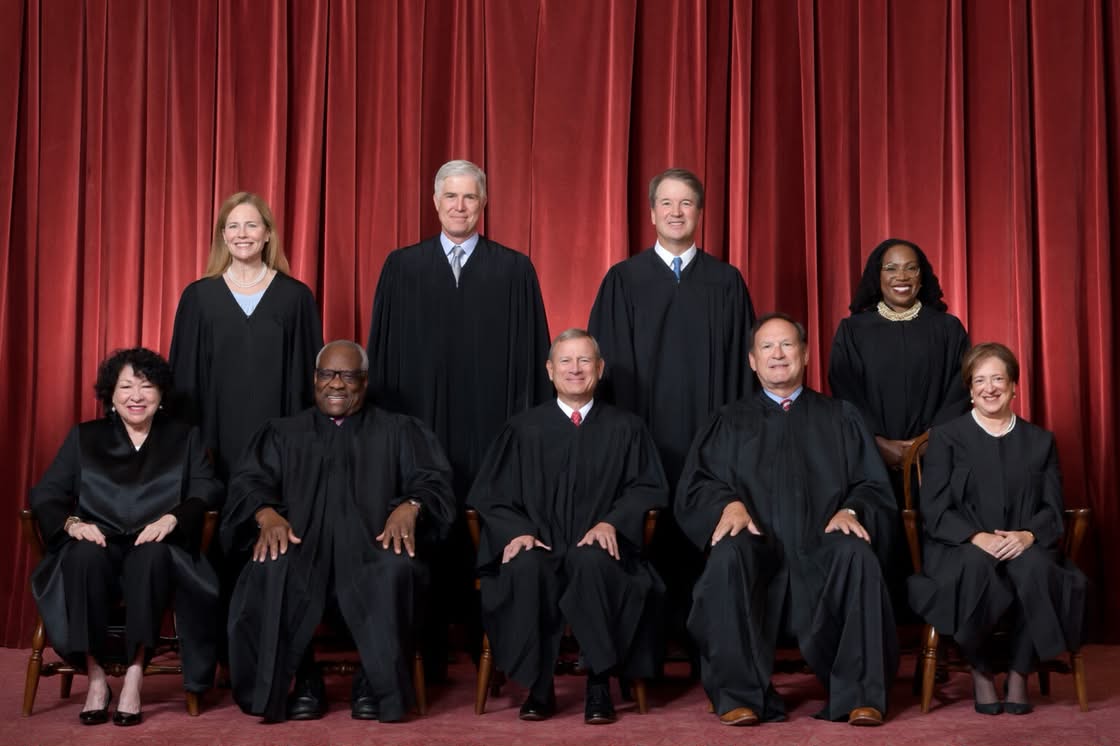
The US Supreme Court has ruled that children born in the United States are citizens at birth, rejecting President Donald Trump’s attempt to end the country’s long-standing birthright citizenship policy.
In a 6-3 decision, Chief Justice John Roberts said children born in the US to parents who are in the country unlawfully or temporarily are entitled to citizenship under the 14th Amendment of the US Constitution.
The ruling deals a significant blow to Trump’s immigration agenda and preserves a constitutional right that has existed for more than 150 years.
Court rejects Trump’s executive order
President Trump sought to restrict birthright citizenship through an executive order.
His administration argued that children born to undocumented immigrants and some temporary visitors were not “subject to the jurisdiction” of the United States and therefore should not automatically receive citizenship.
However, the Supreme Court rejected that interpretation.
Writing for the majority, Chief Justice Roberts said the 14th Amendment guarantees citizenship to people born in the United States regardless of their parents’ immigration status.
“Citizenship, then and now, was the right to have rights — to freely participate in our political community,” Roberts wrote.
“The Framers of the Fourteenth Amendment extended that promise to ‘every free-born person in this land.’ We keep that promise today.”
Trump vows to continue the fight
Reacting to the ruling on Truth Social, President Trump described the decision as disappointing.
He said he would continue pushing to end birthright citizenship through legislation rather than a constitutional amendment.
“No long and unwieldy constitutional amendment is necessary,” Trump wrote.
“Congress should today start work on ending expensive, and unfair to our country, birthright citizenship.”
Birthright citizenship dates back to 1868
The United States has recognised birthright citizenship since the adoption of the 14th Amendment in 1868, following the Civil War.
The amendment states that “all persons born or naturalised in the United States, and subject to the jurisdiction thereof, are citizens of the United States.”
The provision was originally introduced to guarantee citizenship for formerly enslaved people but has since applied broadly to people born on US soil.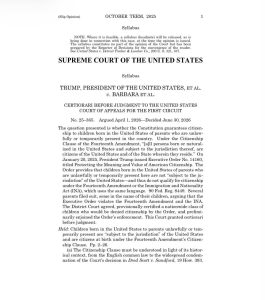
Three justices dissent
Three conservative justices dissented from the majority opinion.
Justice Clarence Thomas argued that the 14th Amendment was being interpreted beyond its original purpose and said it was intended for people who owed allegiance to the United States.
Justice Samuel Alito also criticised the ruling, describing it as a “serious mistake.”
He argued that the decision grants citizenship to almost anyone born in the country, including people who travel to the United States solely to give birth before returning home.
Supporters welcome the decision
The ruling was welcomed by civil rights organisations and immigration advocates.
House Democratic leader Hakeem Jeffries said the Supreme Court had reaffirmed a constitutional principle that has guided the country for generations.
“By applying the law and being guided by the Constitution, the court finally affirmed that all persons born in the United States are American citizens,” he said.
Dariely Rodriguez, chief counsel at the Lawyers’ Committee for Civil Rights Under Law, said the judgment confirms a long-established legal principle.
“Anyone born on American soil, regardless of the legal status of their parents, is born an American citizen,” she said.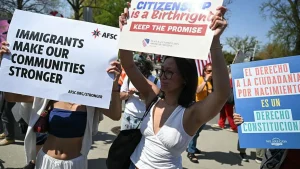
White House criticises judgment
White House Chief of Staff Stephen Miller strongly criticised the decision, calling it one of the most damaging rulings in the court’s history.
Posting on X, he argued that American citizenship should not automatically extend to everyone born in the country.
Despite the administration’s objections, the Supreme Court’s ruling leaves birthright citizenship intact and reinforces constitutional protections that have remained in place since the 19th century.
