Callistus Mahama, the Secretary to the President, has announced that Ghana plans to obtain additional aircraft for presidential travel by November this year to enhance the country’s state aviation capacity.
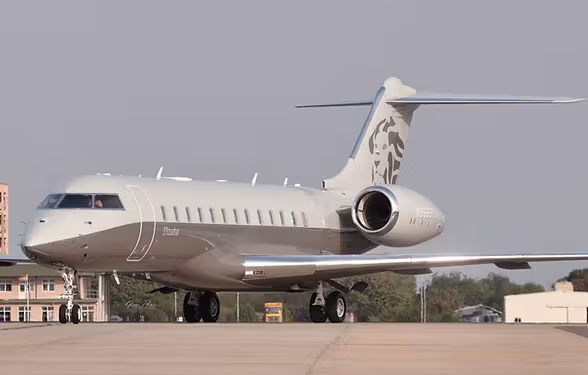
This announcement follows public discussions surrounding the President’s use of a private aircraft owned by the brother of John Dramani Mahama for official trips.
In an opinion article addressing the issue, Dr. Mahama acknowledged that concerns about a possible conflict of interest are valid and should be openly discussed. He emphasized that in a democratic society, citizens have both the right and responsibility to question such matters, noting that public oversight helps sustain trust in government.
Dr. Mahama explained that decisions regarding presidential travel are influenced by several factors, including security needs, logistical considerations, and the limitations of the country’s current aviation resources.
He stated that presidential travel requires specialized arrangements because it involves strict security measures, diplomatic responsibilities, advanced communication systems, and the need for the President to continue performing executive duties even when abroad.
According to him, some aircraft previously used for official government travel were not built for long-distance diplomatic missions, while others face operational limitations.
To address these issues, the government has begun taking steps to expand the presidential air fleet as part of a wider effort to modernize the Ghana Armed Forces.
He indicated that by November, Ghana is expected to add new aircraft to the presidential fleet, including one that will be specifically assigned for the President’s travel.
Dr. Mahama said this move will allow the country to depend entirely on state-owned aircraft for presidential trips, eliminating the need for temporary arrangements that have fueled the current debate.
He added that building stronger institutions and improving operational capacity are key components of the government’s efforts to restore public confidence and strengthen governance.
