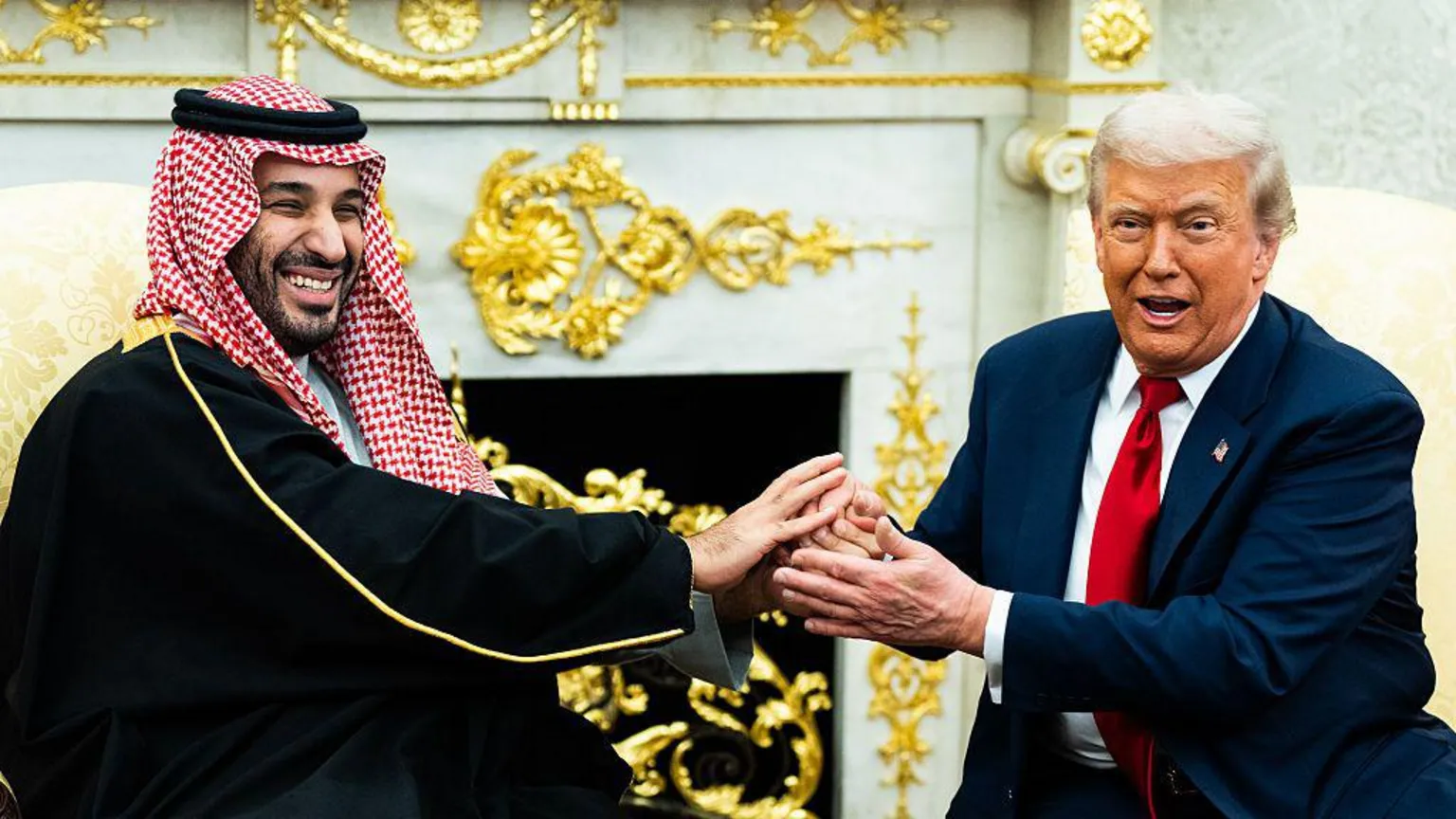
The United States and Saudi Arabia have signed a landmark agreement allowing the Gulf kingdom to develop a civilian nuclear programme, marking a significant step in energy cooperation between the two longtime allies.
The agreement, described by the US Department of Energy as a “peaceful nuclear co-operation agreement,” is expected to create multi-billion-dollar opportunities for American companies to participate in Saudi Arabia’s nuclear energy sector.
While the full text of the agreement has not been released, US media reports indicate it could eventually allow Saudi Arabia to enrich uranium domestically. Enriched uranium is used to fuel nuclear power plants but can also be processed for use in nuclear weapons, prompting concerns among non-proliferation experts.
Agreement lays foundation for long-term partnership
Alongside the cooperation agreement, the two countries also signed a bilateral safeguards agreement.
According to the US Department of Energy, the agreements establish the legal framework for a decades-long partnership that advances economic, strategic and nuclear non-proliferation objectives.
“Together, these two agreements lay the legal foundation for a decades-long, multi-billion-dollar partnership that advances several priority economic and strategic objectives, including nuclear nonproliferation,” the department said in a statement.
Saudi Arabia also welcomed the agreement, describing it as an extension of existing cooperation in the energy sector and noting that it followed the Saudi leadership’s visit to Washington last November.
US Energy Secretary Chris Wright said the agreement would uphold strict safety and non-proliferation standards.
“Rest assured, these agreements uphold the highest standards of nuclear safety and nonproliferation, while relying on the world’s best nuclear technology and scientists, designed right here in the United States,” he said.
The Energy Department added that the agreement would strengthen both US and regional security while enhancing America’s competitiveness in civilian nuclear technology.
Regional tensions fuel concerns
The announcement comes amid heightened tensions in the Middle East, where the nuclear issue remains central to the conflict involving the United States, Israel and Iran.
Washington and Israel have repeatedly said their military actions against Iran were aimed at preventing Tehran from acquiring nuclear weapons, an allegation Iran continues to deny.
Saudi Arabia has previously indicated it would reconsider its own nuclear ambitions if Iran developed a nuclear weapon.
In a 2018 interview with CBS News, Crown Prince Mohammed bin Salman said the kingdom had no plans to build a nuclear bomb but would do so if Iran acquired one.
The agreement was also announced as fighting between the United States and Iran intensifies. Saudi Arabia hosts several US military bases that have reportedly been targeted by Iranian attacks, while Yemen’s Houthi movement recently announced a maritime blockade against the kingdom.
Experts warn of proliferation risks
Although official details remain limited, earlier reports suggested Saudi Arabia could be permitted, following a joint study with the United States, to enrich uranium at a US-built facility instead of relying on imported nuclear fuel.
Such a move would be unprecedented in US nuclear cooperation agreements and has drawn criticism from some experts.
Rosemary Kelanic, Director of the Middle East Programme at the US-based Defence Priorities think tank, described the possibility as “quite shocking.”
“The US has never done that before. We have never helped another country enrich on their own soil,” she said, warning that domestic enrichment significantly increases the risk of a country eventually developing nuclear weapons.
Nuclear experts and former Israeli officials have also cautioned that the agreement could, over time, provide Saudi Arabia with the technical capability to pursue nuclear weapons, although some analysts argue that such a process would likely take decades and face significant international opposition.
Israeli Economy Minister Nir Barkat said Israel could “manage it” if Saudi Arabia’s nuclear programme remained exclusively for peaceful purposes.
Israel is widely believed to possess nuclear weapons, although it has never officially confirmed or denied doing so.
Congress to review agreement
The agreement will now be submitted to the US Congress for review.
Although some lawmakers from both political parties are expected to oppose the deal, Republicans currently control both chambers of Congress, making it unlikely that opponents will have sufficient votes to block it.
US Secretary of State Marco Rubio rejected suggestions that the agreement could enable Saudi Arabia to pursue nuclear weapons.
“The US is not going to reach any agreement with any country in the world that leads to the risk of proliferation,” Rubio said.
However, several Democratic lawmakers criticised the administration’s decision.
Senator Edward Markey accused President Donald Trump and Secretary Rubio of allowing “Saudi Arabia, a belligerent and authoritarian nation, to develop nuclear weapons technologies while starting a war with Iran under the guise of preventing an Iranian nuclear bomb.”
The agreement is expected to remain under close scrutiny as Congress debates its implications for regional security and global nuclear non-proliferation efforts.
