
The National Disaster Management Organisation (NADMO), in collaboration with key stakeholders and with support from the military, has launched a large-scale exercise in the Central Region to reduce flood risks ahead of the rainy season.
The operation involves desilting choked gutters, dredging rivers and demolishing unauthorised structures built on waterways, Ramsar sites and other flood-prone areas. It is currently underway in districts including Upper Denkyira East, Awutu Senya East, Abura Asebu Kwamankese, Ekumfi, Agona West Municipality, and the Cape Coast Metropolis.
According to NADMO, the exercise is aimed at preventing flooding, protecting lives and property, and strengthening disaster preparedness as heavy rains approach.
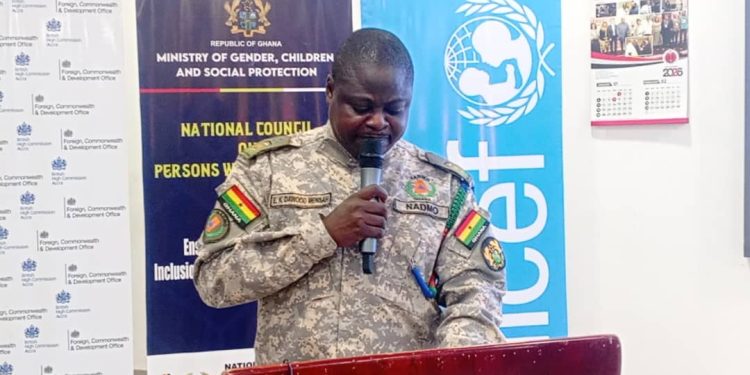
The Central Regional Director of NADMO, Emmanuel Kwesi Dawood, has urged residents and developers occupying river buffer zones or structures marked for demolition to vacate immediately or face legal action. He warned that authorities would not hesitate to remove illegal buildings that have obstructed drainage systems and turned low-lying communities into flood traps, even during moderate rainfall.
Mr Dawood made these remarks at the close of a three-day leadership and capacity-building workshop for Metropolitan, Municipal and District Directors of NADMO and their deputies, held on April 10. The training, themed “Resetting NADMO for Improved Performance in Disaster Resilience,” brought together 125 participants.
The workshop focused on strengthening operational capacity through sessions on NADMO’s updated command structures, hydrometeorological hazards, fire management, relief operations, and administrative procedures. Participants also engaged in practical exercises to enhance coordination during emergencies and received certificates upon completion.
Mr Dawood noted that the intensified preventive measures follow forecasts from the Ghana Meteorological Agency indicating that this year’s rainy season could bring heavier-than-usual rainfall.
In response, NADMO has expanded public education campaigns on disaster preparedness across the region since November 2025. Mr Dawood called on traditional and religious leaders to support these efforts by helping to mobilise communities, share early warning information, and encourage safer practices.
Participants at the workshop, including officials from Assin Fosu, Agona East and Gomoa Central, praised the training, saying it had improved their ability to respond quickly to emergencies, reduce risks and coordinate recovery efforts effectively.
