
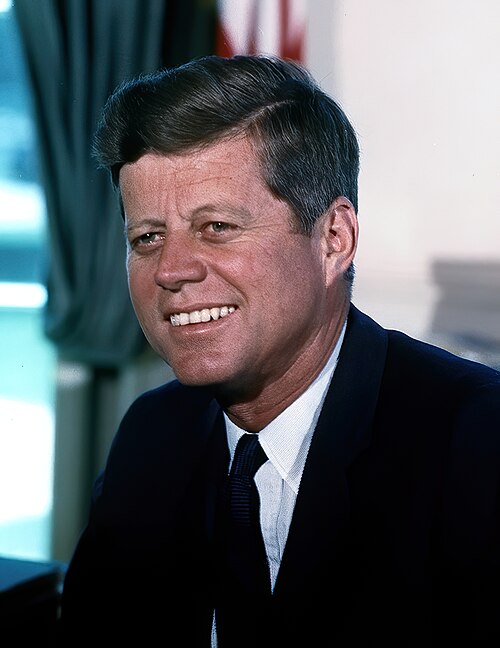
Sunday marks 63 years since President John F. Kennedy was shot in Dallas on November 22, 1963. Kennedy was riding in an open car through downtown Dallas when he was shot at about 12:30 p.m. Central time. He was 46 years old. Vice President Lyndon B. Johnson, who was riding in the third car behind Kennedy, was sworn in as the 36th president 99 minutes after Kennedy’s death. Texas Governor John Connally, riding in the same car, was severely wounded. Lee Harvey Oswald, who had once defected to the Soviet Union, was arrested by Dallas police later that day and accused of the killing.
Two federal inquiries reached different conclusions about whether Oswald acted alone. The Warren Commission, whose report was published in 1964, concluded that neither Oswald nor nightclub owner Jack Ruby was part of a wider conspiracy. The House Select Committee on Assassinations reported in 1979 that Oswald fired three shots at Kennedy, but that the president was probably assassinated as a result of a conspiracy. The gap between those two findings has kept the case in public debate for more than six decades.
The records of the assassination have also stayed in the news. President Trump signed Executive Order 14176 on January 23, 2025, saying it was in the national interest to release all records on the assassination without delay. The National Archives collection runs to more than six million pages, photographs, films, recordings and artifacts, and the Archives says the vast majority is already public. In 2025, the Archives posted about 83,600 pages in five batches between March 18 and April 3, and it posted another 11,022 pages on January 30, 2026. The Archives itself cannot declassify records; the agencies that created them decide, and the Archives posts them as they are cleared and digitized.
The Zapruder film, the home movie shot by bystander Abraham Zapruder, is the most famous record of the killing, and it remains the subject of a court fight. The government bought the original film in 1998 under the JFK Records Act for $16 million, while the Zapruder family gave the copyright to the Sixth Floor Museum at Dealey Plaza in 1999. A group called the Forum on Open Access to Government Records sued the museum and the National Archives, and a federal court in Dallas allowed its claims that the copyright had been abandoned or waived to go forward. Less than two months later, the Archives and the museum signed a license dated October 1, 2026, governing how copies of the film can be used, and the museum has since asked the court to dismiss the case. The case had not been decided as of Sunday.
Dallas station WFAA was among the first local broadcasters to report the shooting, and program director Jay Watson interrupted regular programming about 15 minutes after the shots were fired. The recordings were nearly lost in the early 1980s, when stations commonly reused or threw away older videotapes, until WFAA employee John Sparks found they had been marked for disposal and intervened to save them. The collection was donated to the Sixth Floor Museum at Dealey Plaza in 1998, and the museum now holds more than 220 hours of professional news footage, video and audio from WFAA and other Dallas stations.
