
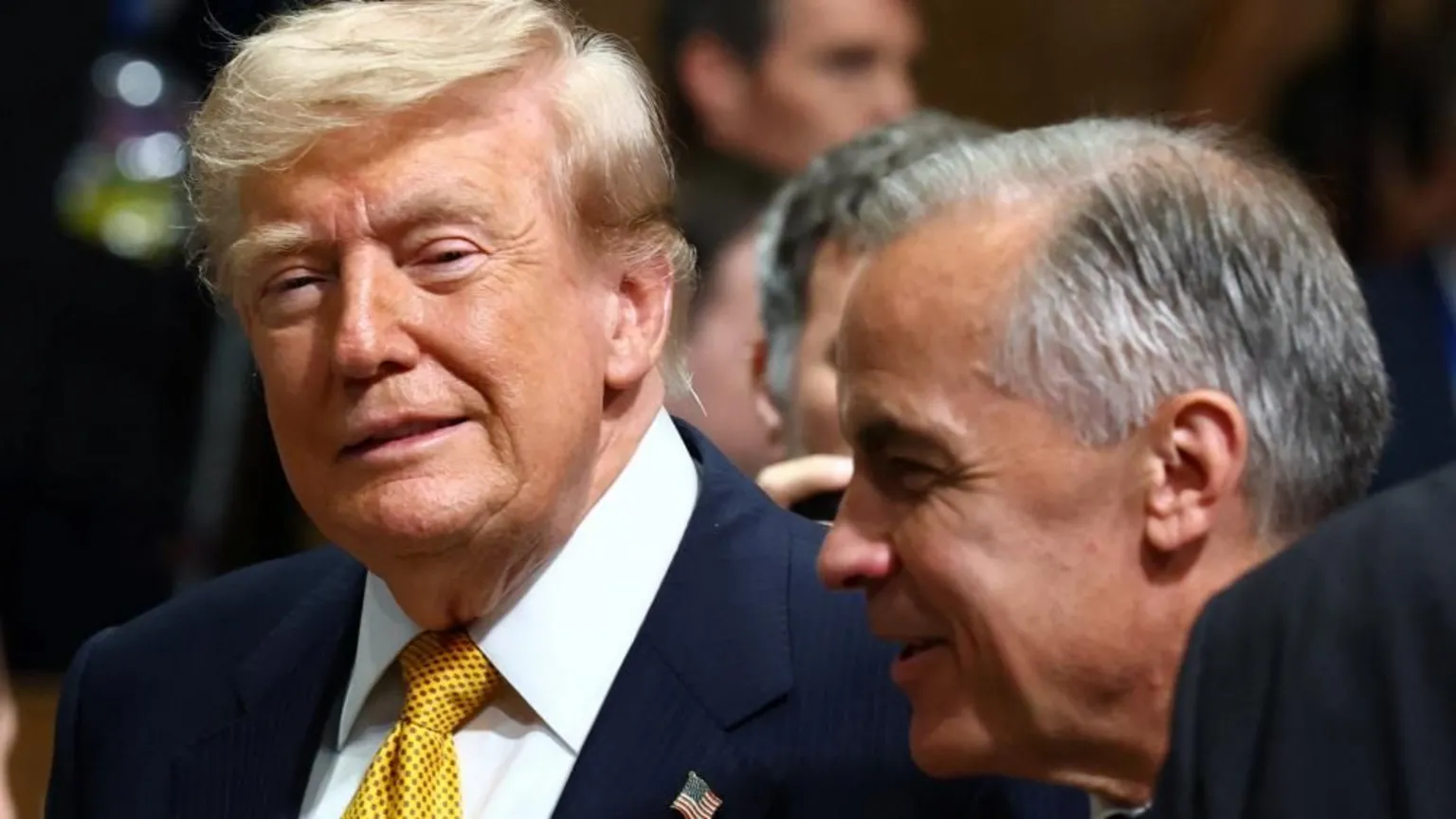
US President Donald Trump has announced a 50% tariff on a wide range of goods imported from Canada, escalating trade tensions between the two neighbouring countries.
The new duties target several consumer and industrial products, including wine, hockey sticks and cement. However, key Canadian exports such as energy products, potash, critical minerals and fish have been exempted.
The White House said the tariffs will take effect in 30 days.
Canadian Prime Minister Mark Carney responded by saying his government is prepared to intensify trade negotiations with the United States in the coming weeks.
In a statement, Carney described the move as the latest in a series of unilateral trade actions by Washington, arguing that the measures undermine the Canada-United States-Mexico Agreement (USMCA).
He also referred to what he described as continuing threats to Canada’s sovereignty, an apparent reference to President Trump’s repeated remarks about making Canada the 51st US state.
The latest tariffs mark a significant escalation in trade disputes that have persisted since President Trump returned to office in January 2025 and introduced sweeping tariff measures on imports from several countries.
Tariffs are taxes imposed on imported goods and are paid by businesses bringing foreign products into a country.
Although the US Supreme Court ruled earlier this year that several of Trump’s previous tariffs imposed under emergency powers were unlawful, the latest action relies on a separate legal provision that has not yet been tested in court.
Canada remains one of the United States’ largest trading partners but has also responded to previous US tariffs with its own countermeasures.
Ottawa previously imposed a 25% tariff on approximately C$30 billion worth of American goods, although some of those measures were later eased by Prime Minister Carney.
The United States continues to impose tariffs ranging from 15% to 50% on Canadian steel, aluminium and copper. It also maintains a 35% tariff on Canadian softwood lumber and a 25% levy on non-US parts used in vehicles.
Canada, in turn, continues to apply a 25% counter-tariff on selected imports of US steel, aluminium and vehicles.
Ontario Premier Doug Ford urged Canada to respond firmly if the tariffs take effect.
“If these tariffs proceed, Canada should respond tariff for tariff, dollar for dollar,” Ford said in a post on X.
The White House has said the new tariffs will apply regardless of whether products qualify for duty-free treatment under the USMCA, adding another layer of uncertainty to trade relations between the two countries.
