
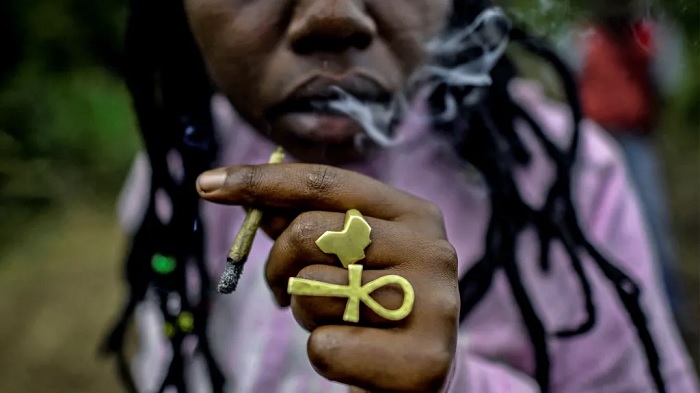
Kenya’s High Court has dismissed a petition by the Rastafari Society of Kenya seeking to legalise the use of cannabis for religious purposes.
The court ruled that the group failed to prove that Kenya’s drug laws violate the constitutional rights to freedom of religion and belief, although it acknowledged the need for a wider national conversation on cannabis policy.
Court upholds cannabis ban
Delivering what has been described as a landmark judgment, Justice Bahati Mwamuye ruled that the evidence presented by the Rastafarian community was insufficient to justify a religious exemption.
The group argued that cannabis is a sacred sacrament in the Rastafari faith and sought permission for members to grow, possess and use the plant privately in their homes and designated places of worship without fear of arrest.
They stressed that they were not seeking the full legalisation of cannabis but only a limited exemption for religious practices.
State opposed exemption
The Kenyan government opposed the petition, arguing that creating a religious exemption would weaken the enforcement of anti-drug laws and create loopholes for illegal cannabis trafficking.
Justice Mwamuye also found that the evidence presented on the importance of cannabis to the Rastafari faith was inconsistent and did not establish that its use was an essential religious practice.
He upheld the constitutionality of laws prohibiting the cultivation, possession and use of cannabis, ending the group’s six-year legal challenge.
Judge calls for national debate
Despite dismissing the petition, Justice Mwamuye said Kenya should have an open discussion about the future of cannabis laws.
“We ought to have frank conversations on cannabis and which directions we should take,” he said.
“This is not a question for the Rastafarian community only. It is a national question that cuts across the entire spectrum of our society.”
Appeal planned
The Rastafari Society’s lawyer, Danstan Omari, said the group would appeal the ruling.
“Kenya cannot be the only country that is harassing the Rastafarian people. We are determined to reverse that court’s ruling and bring back the dignity and respect of the Rastafarians in Kenya,” he said.
Kenya maintains strict drug laws
Under Kenya’s Narcotic Drugs and Psychotropic Substances (Control) Act, possession of cannabis remains a criminal offence.
A person convicted of possessing cannabis for personal use faces up to five years in prison or a fine of up to $800.
Those convicted of cultivating cannabis can be fined $1,900 or three times the market value of the plants, whichever is higher, and may also face up to 20 years in prison. More severe penalties apply to drug trafficking and related offences.
The ruling comes seven years after another High Court decision recognised Rastafarianism as a protected religion in Kenya after a school expelled a student for wearing dreadlocks. The movement is believed to be growing in the country, particularly among young people.
