
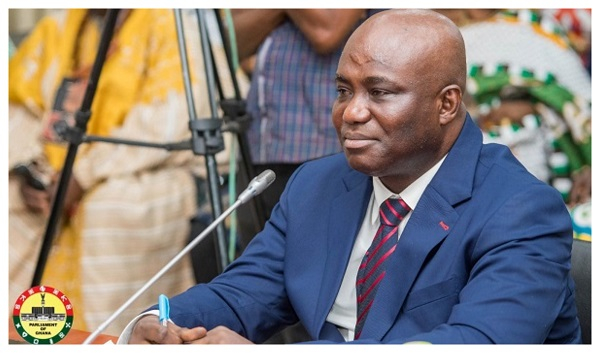
The Minister for Food and Agriculture, Eric Opoku, has revealed that Ghana needs at least GH¢1.5 billion to effectively manage the growing food glut across the country, warning that inadequate funding and limited storage infrastructure are threatening efforts to support farmers.
Speaking to JoyNews on Friday, June 19, Mr Opoku said the government anticipated increased agricultural output when preparing the 2025 Budget and initially allocated GH¢100 million to purchase excess produce from farmers.
According to him, the allocation was intended to help absorb surplus food production and stabilise market prices following investments and nationwide campaigns aimed at boosting agricultural productivity.
Initial Allocation Proved Inadequate
Mr Opoku explained that government expected a bumper harvest and planned ahead by setting aside funds to mop up excess produce.
“In the preparation of the 2025 Budget, we envisaged that, looking at the investment and the campaign and advocacy we have embarked upon, there’s the likelihood that Ghana is going to experience gluts,” he said.
He noted that the original GH¢100 million allocation quickly proved insufficient as production levels exceeded expectations.
“When the year ended, we realised that the GH¢100 million was woefully inadequate to be able to do that,” the minister stated.
Following discussions with President John Mahama, government increased the allocation by an additional GH¢200 million, bringing the total to GH¢300 million.
However, Mr. Opoku said even the revised amount falls far short of what is required.
“Our technical team assessed the situation and reported that we need at least GH¢1.5 billion to contain the excess food currently being produced,” he said.
Storage Facilities Present Another Major Challenge
Beyond funding constraints, the minister identified the lack of adequate storage facilities as a critical obstacle.
“Even if you have the funds today, we don’t have the storage facilities. That’s also another matter,” he said.
Mr Opoku explained that Ghana has not previously experienced food surpluses on the current scale and therefore lacks the infrastructure needed to preserve large quantities of produce.
He noted that existing government warehouses are already operating at full capacity, forcing authorities to seek private storage facilities at high costs.
“Our warehouses are already full. We are now looking for private warehouses to rent, and the prices being quoted are becoming unbearable,” he said.
Government Pursues Long-Term Solution
The minister said government is working on a long-term strategy to address the recurring challenge by expanding storage infrastructure nationwide.
According to him, President Mahama has directed the Ministry of Food and Agriculture to construct storage facilities in strategic locations across the country.
“The President has given us clear directives to build storage facilities in strategic areas,” Mr Opoku disclosed.
The ministry has also assessed storage facilities constructed during the era of Ghana’s first President, Osagyefo Dr Kwame Nkrumah, to determine whether they could be rehabilitated.
However, the assessment found that most of the facilities are no longer fit for use.
“Those built by Nkrumah were inspected, but we realised that all of them cannot be used,” the minister said.
Farmers Continue to Feel the Impact
The food glut has left many farmers struggling to sell their produce, raising concerns about post-harvest losses and reduced incomes.
Mr. Opoku acknowledged the difficulties facing farmers and stressed that government remains committed to finding sustainable solutions to improve food storage, reduce waste and protect agricultural investments.
He expressed optimism that planned investments in storage infrastructure will help Ghana better manage future harvests and strengthen the country’s food security system.
