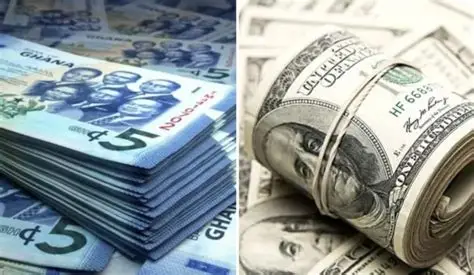
The cedi’s latest slide paints a picture of a currency caught between heavy demand and limited supply. Despite the Bank of Ghana’s interventions over US$1.1 billion in May the depreciation accelerated, with the retail market showing sharper losses against the pound and euro.
In the interbank market, the cedi weakened against the US dollar, British pound and euro. The dollar rose to GH¢11.85 from GH¢11.63, while the pound strengthened to GH¢15.85 from GH¢15.62. The euro also appreciated to GH¢13.66 from GH¢13.49.
The losses were mirrored in the retail market, where the cedi shed 0.81 per cent against the US dollar, 1.83 per cent against the pound sterling and 1.40 per cent against the euro, closing at average mid-rates of GH¢12.30 to the dollar, GH¢16.35 to the pound and GH¢14.30 to the euro.
On a month-on-month basis, the local currency depreciated by an average of 4.18 per cent between April and May 2026, compared to the 3.23 per cent depreciation recorded at the end of April. This represents a deterioration of 0.95 percentage points despite foreign exchange interventions estimated at approximately US$1.1 billion during May.
Databank’s analysis makes clear that this isn’t just speculation; it’s structural. Corporate repatriation flows, high import costs, and persistently elevated refined crude oil prices are all squeezing the cedi at once.
Central banks liquidating non-dollar assets to cover import bills is intensifying pressure. Multinationals sending profits abroad in Q2 traditionally spikes demand, and we’re entering that window now.
Eleated refined crude costs keep Ghana’s import bill high, fueling FX demand. The government’s announced US$1.2 billion monthly support for June may slow the pace of depreciation, but analysts expect continued weakness.
This is a classic case of intervention versus fundamentals. Short-term injections can stabilize sentiment, but unless Ghana reduces import dependency and diversifies FX inflows, the cedi will remain vulnerable.
