
British passengers returning from the MV Hondius cruise ship following a hantavirus outbreak could be asked to self-isolate for up to 45 days, according to UK health authorities.
Professor Robin May, chief scientific officer at the UK Health Security Agency (UKHSA), told the BBC that returning passengers would likely self-isolate at home depending on individual circumstances.
The outbreak has already claimed three lives either on board or after passengers left the vessel, which departed Argentina about a month ago.
Health authorities across several countries, including the UK, Switzerland and the Netherlands, are conducting contact tracing for passengers who disembarked before the outbreak was detected.
Two British passengers are currently self-isolating at home in the UK after possible exposure to the virus. The pair left the MV Hondius at St Helena in late April and travelled back to the UK through Johannesburg.
Neither person has shown symptoms but contacted health officials after learning about the outbreak.
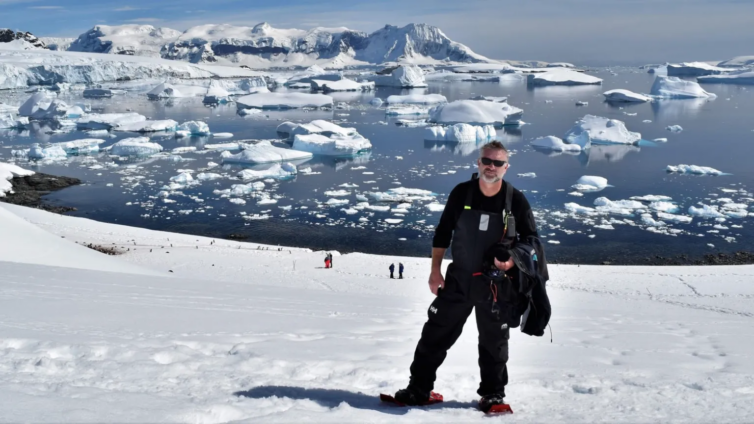
A third Briton, 56-year-old Martin Anstee, is in stable condition after being medically evacuated from the ship to a hospital in the Netherlands.
Anstee, a retired police officer and expedition guide, told the BBC he was “fine”, while his wife described the past few days as “very dramatic”.
“He’s relieved to be off the ship. He had it quite mild then it got a bit more serious and now he’s stable again,” she told the Daily Telegraph.
Professor May said he was pleased the Briton was now receiving medical care in hospital.
According to the World Health Organization, eight hantavirus cases linked to the cruise ship have been identified so far, including three confirmed and five suspected infections.
Authorities are still investigating the source of the outbreak. Officials in Argentina are reportedly examining whether the virus may have originated from Dutch passengers who had travelled through southern Argentina and Chile before boarding the ship.
One confirmed case involved a Swiss passenger who tested positive after returning home and is currently receiving treatment in Zurich.
Meanwhile, authorities in Singapore and the United States are monitoring former passengers who may have been exposed to the virus.
Hantavirus is usually spread through contact with infected rodents. However, health experts believe the Andes strain detected in some passengers may have spread between humans through close contact, although such transmission is considered extremely rare.
Health officials say symptoms can appear between one and eight weeks after exposure, with experts increasingly agreeing on an incubation period of about six weeks.
Despite the outbreak, both the WHO and UKHSA say the risk to the wider public remains low.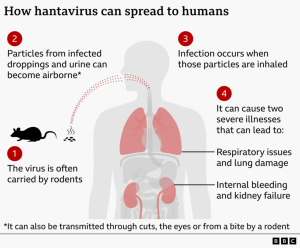
About 150 people from 23 countries remain on board the MV Hondius under strict precautionary measures.
Oceanwide Expeditions, the ship’s operator, said there were currently no symptomatic individuals on board.
Spanish authorities have granted permission for the vessel to dock in the Canary Islands, where passengers will undergo medical assessments before being repatriated.
British passengers without symptoms are expected to return home on a charter flight, likely departing from the Canary Islands.
UK authorities said returning passengers could be required to self-isolate or enter quarantine depending on the timing of their last exposure to the virus.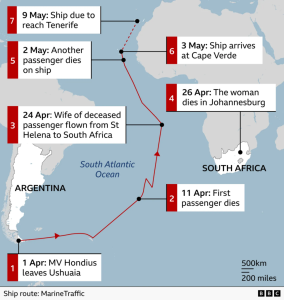
Some former passengers have criticised the ship’s initial response to illnesses on board.
Travel blogger Ruhi Cenet told the BBC the crew initially believed the illness was not infectious.
“I was very unhappy because they did not take the right precautions for the first couple of weeks,” he said.
A video shared by Cenet reportedly showed the ship’s captain informing passengers on 12 April that a death on board was due to “natural causes” and was “not infectious”.
Oceanwide Expeditions later stated that the first confirmed hantavirus report only emerged after the vessel stopped at St Helena on 24 April.
The UK Foreign Office said it was working urgently with international partners and health authorities to return British nationals home safely.
