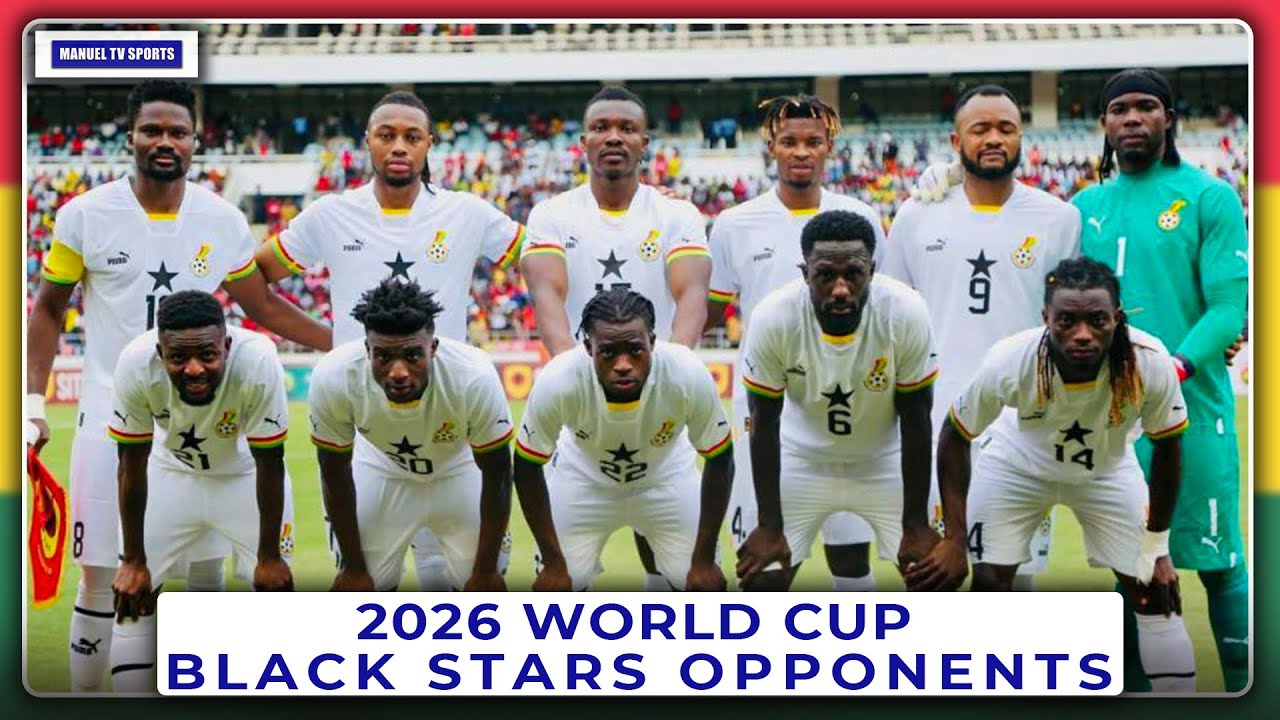
Ghana’s senior national team, the Ghana national football team, has long been a symbol of pride, resilience, and football excellence across Africa. From historic FIFA World Cup runs to AFCON triumphs, the Black Stars have built a legacy that commands respect. However, recent performances have left fans asking a tough but necessary question: can Ghana rebuild a dominant squad by 2026?
Over the past few years, the Black Stars have been going through a transition phase. The departure or decline of experienced players has created space for a new generation to step in. While this shift is necessary, it has also exposed inconsistencies in performance, team chemistry, and leadership.
Players like Thomas Partey and Jordan Ayew have provided experience, but injuries and form fluctuations have occasionally limited their impact. Meanwhile, younger talents are still finding their footing on the international stage.
Despite recent struggles, Ghana’s future is far from bleak. A wave of young, dynamic players is beginning to shape the next chapter of the Black Stars.
Footballers like Mohammed Kudus have shown flashes of brilliance, combining technical skill with confidence on the ball. Others, including Ernest Nuamah and Antoine Semenyo, are steadily gaining experience in top European leagues.
If properly nurtured, this new generation could form the backbone of a competitive squad heading into major tournaments like AFCON 2027 and the 2026 FIFA World Cup.
One of the key challenges facing Ghana is the lack of a consistent tactical identity. In recent matches, the team has struggled to maintain a clear style of play, sometimes appearing overly defensive, and at other times lacking cohesion in attack.
To rebuild dominance, Ghana must establish a defined playing philosophy, consistency in team selection and a strong midfield control and creativity
Modern football demands structure and adaptability, and the Black Stars must evolve to keep up with global standards.
The role of leadership cannot be overstated. Coaching decisions, player selection, and long-term planning will determine how quickly Ghana returns to the top.
There have been debates among fans and analysts about whether the current technical team is the right fit for the rebuilding process. Stability in coaching, combined with a clear vision, will be crucial in developing a winning squad.
African football has become increasingly competitive. Teams like Senegal national football team, Morocco national football team, and Nigeria national football team have raised the bar with strong squads and tactical discipline.
For Ghana to reclaim its place among Africa’s elite, it must not only improve internally but also match the intensity and organization of these top teams.
Ghanaian fans are among the most passionate in the world. Expectations are always high, and rightfully so. The Black Stars are more than just a football team; they represent national unity and pride.
However, rebuilding requires patience. Supporters will need to balance their expectations with the reality of a team in transition.
Looking ahead to 2026, Ghana’s chances of rebuilding a dominant squad depend on a few critical factors:
- Development of young players
- Strong leadership on and off the pitch
- Tactical consistency
- Investment in football infrastructure
If these elements align, the Black Stars could once again become a formidable force, not just in Africa, but on the global stage.
The journey to rebuilding the Black Stars will not happen overnight. It requires vision, discipline, and a commitment to long-term success. While challenges remain, the presence of emerging talent and the country’s rich football history provide reasons for optimism.
The question is no longer whether Ghana can rebuild, but how quickly and effectively it can return to dominance.
