
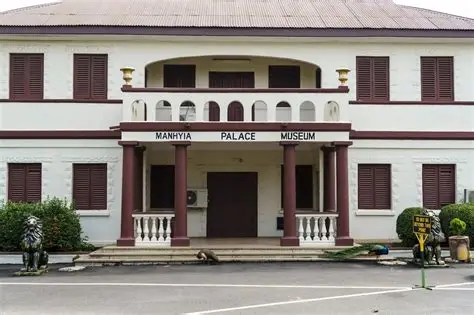
The Manhyia Palace Museum has emerged as the leading tourist attraction in the Ashanti Region in early 2026, overtaking the long-dominant Kumasi Zoo.
The zoo, which has enjoyed strong patronage in recent years, was ranked fourth nationally and first within the region in 2025, attracting 118,764 visitors last year and recording more than 20,000 visits in 2026.
However, new data indicates a shift in visitor preference.
The Ashanti Regional Director of the Ghana Tourism Authority, Fredrick Adjei Rudolph, revealed that the Manhyia Palace Museum has taken the lead by a margin of approximately 2,000 visitors.
“This year, Manhyia Museum is beating Kumasi Zoo,” he noted. “Manhyia Museum has so far recorded 120,000 visitors, while Kumasi Zoo stands at 118,000.”
Mr. Rudolph attributed the strong performance of both sites largely to domestic tourism, highlighting the significant role of local visitors in sustaining the region’s attractions.
In 2025, the Manhyia Palace Museum recorded about 102,000 Ghanaian visitors compared to 17,900 international tourists.
Similarly, the Kumasi Zoo welcomed approximately 117,000 local visitors, while foreign arrivals remained relatively low at 933.
Turning attention to Lake Bosomtwe, he expressed concern that the site remains underutilized despite its immense tourism potential. He outlined a range of strategies to reposition the lake as a premier destination.
Including the development of ecotourism, educational and scientific tourism, cultural festivals, and water-based recreational activities.
According to him, the lake could support activities such as birdwatching, hiking, cycling, and community-based tourism initiatives, including local craft markets, traditional storytelling, and guesthouse accommodations.
Mr. Rudolph further suggested that, with proper development and management, Lake Bosomtwe could generate more revenue than the Kwame Nkrumah Mausoleum.
“The Kwame Nkrumah Museum focuses primarily on one historical figure. But with multiple tourism streams at Lake Bosomtwe, the revenue potential could exceed that benchmark,” he explained.
Despite its promise, he identified several key challenges hindering the lake’s growth, including poor road access, environmental concerns such as waste management and pollution, and incidents of extortion.
These issues, he noted, have contributed to a decline in visitor numbers and must be addressed to unlock the site’s full potential.
