
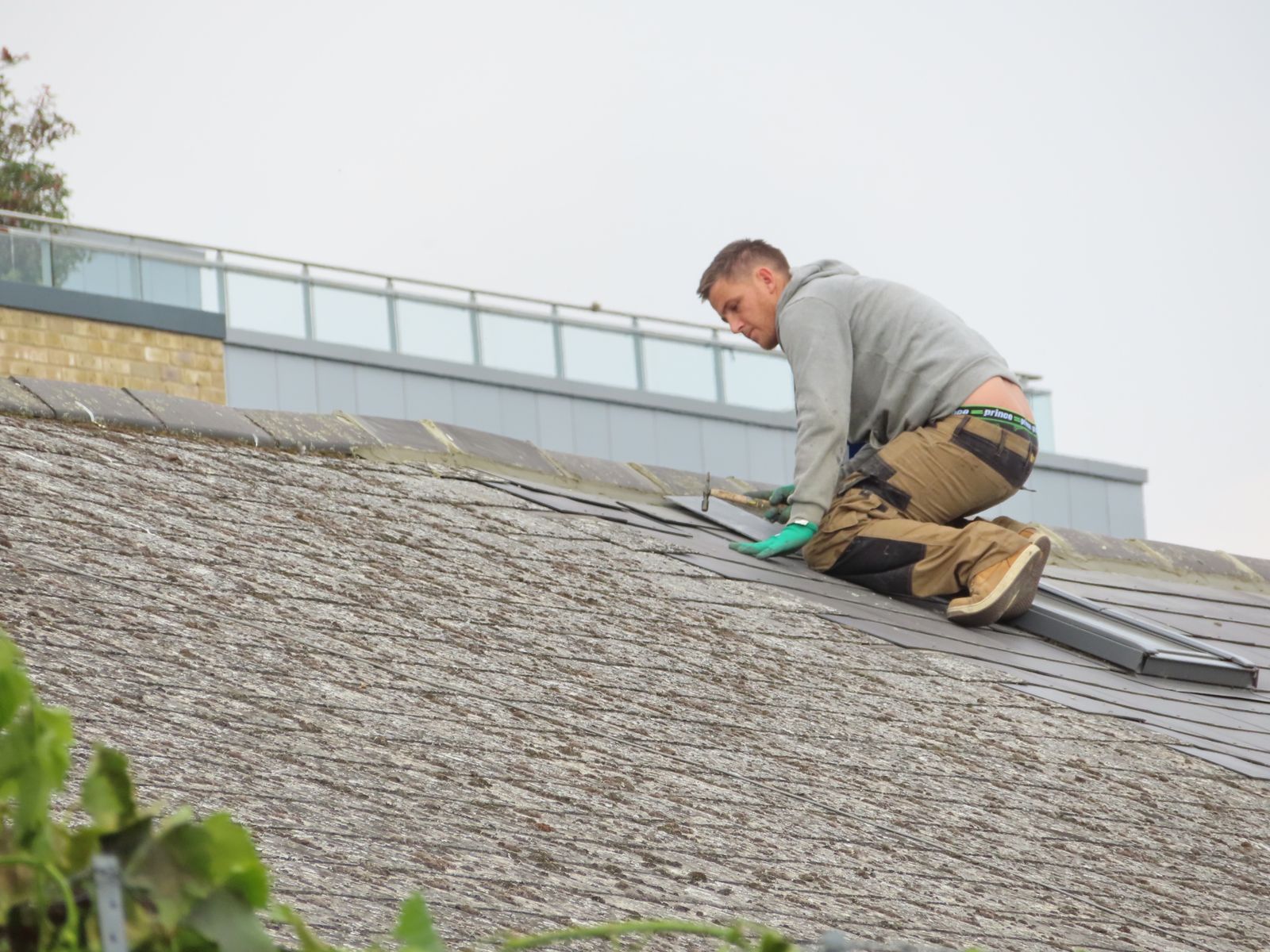
The average cost to replace a roof in the US in 2026 is about $9,600, according to HomeAdvisor. Its typical range runs from $5,902 to $13,378, or roughly $4 to $11 per square foot installed. This Old House data points to a similar figure. It puts a typical 1,600-square-foot home at $9,343 on average. Most homeowners replace a roof with asphalt shingles. That choice keeps the national average near $10,000. Premium materials can double or triple the bill.
Roof prices by material
Material is the biggest single factor in the price. This Old House puts asphalt at $7,182 for an average home, metal at $14,096, clay at $23,666 and slate at $23,784. HomeAdvisor’s per-square-foot figures tell the same story. Asphalt shingles run $3 to $7 installed, architectural shingles $4 to $6, metal $7 to $13, tile $10 to $20, and slate $15 to $30. Roofing Scout’s 2026 guide gives installed ranges of $8,000 to $18,000 for asphalt, $15,000 to $45,000 for metal, and $20,000 to $50,000 for tile on an average single-family home.
House size sets the starting point for every quote. Roofers price work by the square, which is 100 square feet of roof area. An average home carries about 17 to 22 squares. This Old House data shows a 1,500-square-foot home averaging $9,313 across materials, a 2,000-square-foot home averaging $9,476, and a 2,500-square-foot home averaging $10,000. The roof area is larger than the floor area, because pitch and overhangs add surface. A steep roof also costs more to work on, since crews move more slowly and need extra safety equipment. As a result, the cost to replace a roof depends on size as well as material.
Lifespan explains why owners pay more for some materials. Basic asphalt shingles last about 15 to 30 years. Metal roofs last 40 to 70 years. Tile and slate can last 50 to 100 years or more. A metal roof costs roughly twice an asphalt roof at installation. Spread over its working life, though, the cost per year can be similar. Climate matters in that calculation. Metal handles hail and high winds well, while tile suits hot, dry regions and can crack under heavy impact.
Other costs, timing and insurance
Several other items move a quote up or down. Tearing off the old roof adds labor and disposal fees. A second layer costs more to remove than one. Damaged decking underneath adds repair costs that only appear once work starts. Complex roofs with valleys, chimneys and skylights need more flashing and more labor hours. Permits, underlayment and ventilation work also sit inside most quotes. Regional labor rates matter too. The same roof costs more in a high-cost metro area than in a rural market.
Timing can change the price as well. Roofers book up in spring and after major storms. Storm damage can push local prices up when demand spikes. Insurance sometimes covers replacement after a covered event such as wind or hail damage. As with car insurance, the policy terms decide what is covered. It does not cover a roof that simply wore out. Homeowners usually get at least three written quotes before signing. Each quote should list materials, tear-off, disposal and warranty terms separately. Setting money aside in a high-yield savings account can help build the fund for a roof replacement.
A new roof is one of the largest single costs in home ownership. For 2026, a realistic budget for an average home with asphalt shingles sits between about $6,000 and $14,000. Metal, tile and slate move the budget well above that range. The material, the size of the roof and the condition of the decking underneath decide the final number. Renters, by contrast, usually rely on renters insurance rather than a roof replacement budget.
