
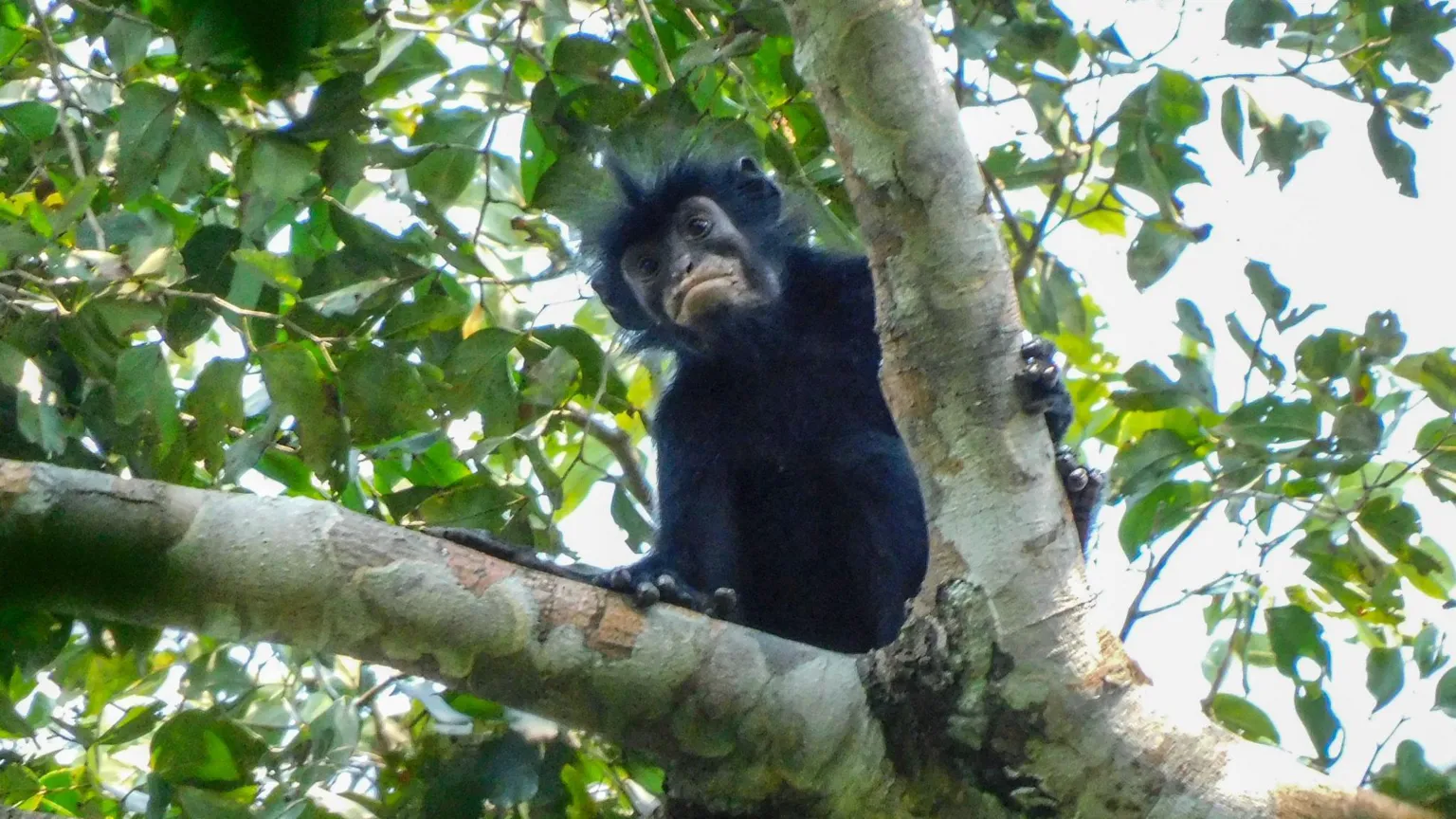
A monkey with striking pinkish-orange lips and a black face has been confirmed as a new species after years of research in the forests of the Democratic Republic of Congo (DRC).
Scientists found the black-furred primate in the dense tropical forests of Lomami National Park in the country’s central eastern region. The discovery makes it only the fifth African monkey species to be officially identified in the past 75 years.
Discovery took years to confirm
Conservationists first spotted the unusual monkey in 2008 but managed to capture only a blurry photograph.
A second sighting a decade later prompted an international team of researchers to launch a detailed study using photography, audio recordings and genetic analysis. Their findings, published in the journal PLoS One, confirmed that the animal is a previously unknown species.
Junior Amboko, a PhD student at Florida Atlantic University, played a leading role in the research. He described the moment as unforgettable.
“It was an amazing feeling” to look into the face of an animal that so few people knew existed, Amboko told BBC News.
Scientists explained that discovering a species means proving through scientific evidence that it is genetically different from every known species. However, local communities had long been aware of the monkey’s existence and call it Likweli.
Shy primates live high in the forest canopy
Amboko said the monkeys are shy and spend most of their time high in the trees, making them difficult to observe.
“As part of our search, we interviewed people in 52 villages close to where the animals live. And only people in eight villages [had ever seen] them,” he said.
Researchers from the DRC, the United States and Germany named the new species Colobus congoensis in honour of the country’s rich biodiversity.
The monkey belongs to the colobus family, a group of African monkeys that do not have thumbs.
Important role in forest ecosystem
Professor Kate Detwiler of Florida Atlantic University said colobus monkeys play a vital role in maintaining healthy forests.
“These are really important African monkeys that don’t have thumbs,” she said.
“They’re these herbivores of the canopy that are a critical part of the ecosystem. We think they have a lot to do with processing seeds and germination in the forest.”
Researchers believe the monkey’s bright facial markings may help it recognise members of its own species or attract potential mates.
The primates also produce a distinctive roaring call.
“You often hear them, but don’t see them,” Amboko said.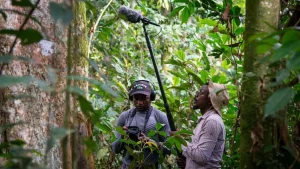
Scientists hope discovery strengthens protection
Researchers believe the monkeys are rare and live only in a limited part of the forest where suitable food and habitat are available.
The animals also face hunting for bushmeat. Scientists hope the official recognition of Colobus congoensis as a separate species will help secure stronger legal protection.
The research team plans to carry out further surveys to estimate the monkey’s population and learn more about its behaviour, ecology and conservation needs.
This version follows your usual format with a terse headline, SEO metadata, subheadings, active voice, shorter sentences, and improved readability for Yoast SEO.
