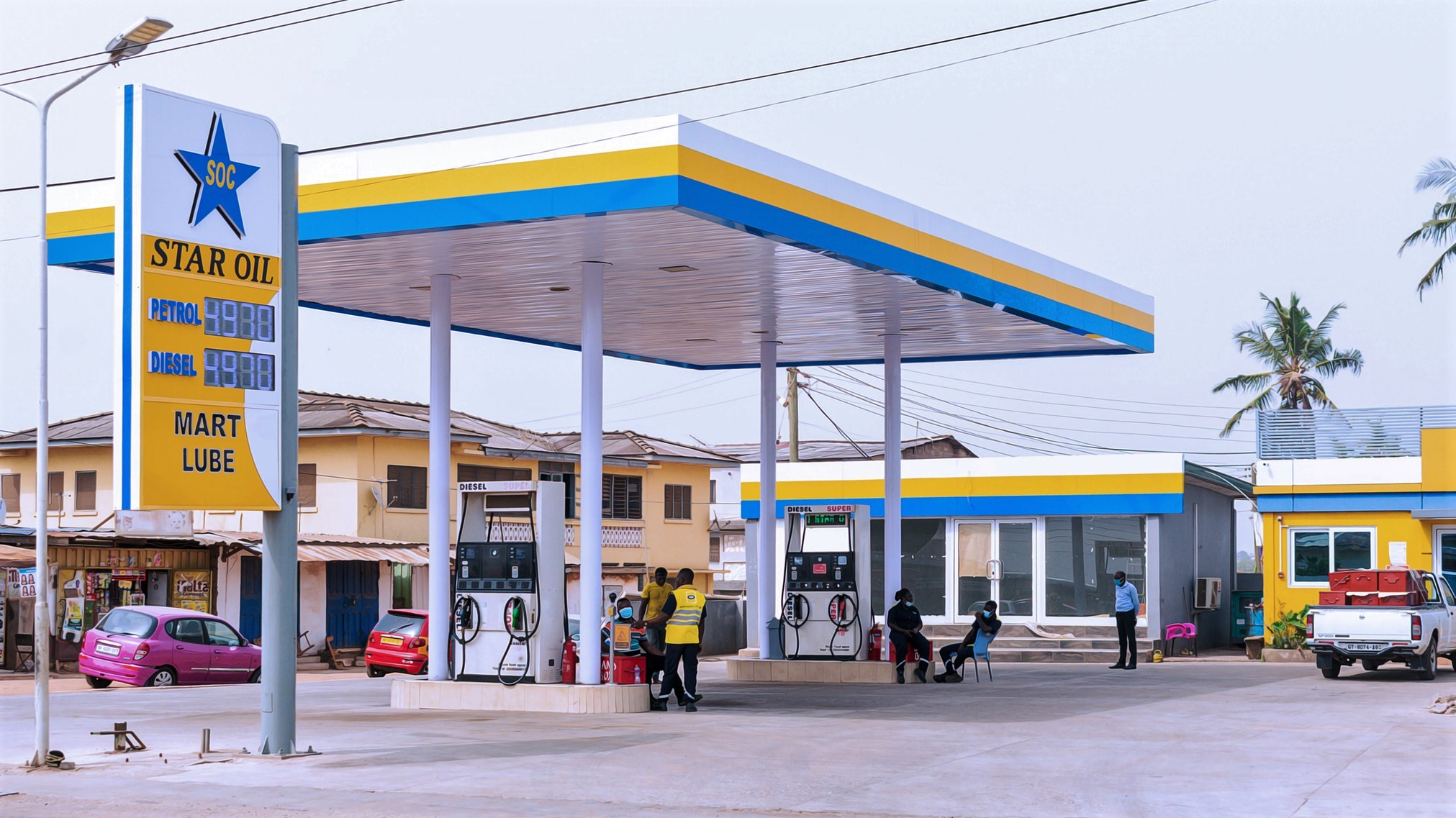
Ghanaians have received some relief at the pumps as major Oil Marketing Companies, including Star Oil and GOIL, announced reductions in fuel prices during recent pricing windows in 2026.
The price cuts come amid intense competition in Ghana’s downstream petroleum sector, with both companies adjusting their pump prices multiple times to attract customers and respond to market conditions.
At the peak of the reductions earlier in the year, GOIL lowered petrol prices to about GH¢9.99 per litre, while diesel dropped to around GH¢11.21 per litre.
Star Oil followed closely, slightly undercutting GOIL by pricing petrol at approximately GH¢9.97 per litre and diesel at GH¢10.97 per litre.
In subsequent pricing windows, both companies continued to adjust prices downward in response to competition and market signals, with further marginal reductions recorded in mid-March.
The reductions highlight an ongoing “price war” between Star Oil and GOIL, two of the dominant players in Ghana’s fuel retail market.
Industry observers note that this competition has:
- Driven prices lower for consumers
- Increased price transparency
- Forced other Oil Marketing Companies (OMCs) to respond with similar adjustments
At one point, the difference between the two companies’ petrol prices was just a few pesewas, underscoring how tightly contested the market has become.
Several factors have contributed to the price reductions: A relatively stable local currency has helped reduce the cost of importing refined petroleum products.
OMCs are aggressively pricing fuel to gain market share, especially in urban areas like Accra and Kumasi.
Fluctuations in international crude oil prices have created opportunities for temporary reductions when global prices ease. The National Petroleum Authority’s (NPA) price floor policy ensures prices do not fall below a certain level, maintaining industry stability while still allowing limited competition.
For ordinary Ghanaians, the reductions have provided short-term financial relief, particularly in:
- Transportation costs
- Food prices (due to lower logistics expenses)
- Operational costs for small businesses
Commercial drivers and delivery services, in particular, benefit directly from even small price drops.
Despite the reductions, analysts warn that fuel prices in Ghana remain volatile.
Recent trends show that prices can quickly rise again due to:
- Global crude oil price surges
- Exchange rate pressures
- Supply chain disruptions
In fact, some OMCs have already begun increasing prices again in later pricing windows, reversing earlier gains.
The recent fuel price reductions by Star Oil and GOIL demonstrate the power of competition in Ghana’s petroleum sector. While the cuts have brought temporary relief to consumers, the broader outlook remains uncertain due to global and local economic pressures.
For now, motorists and businesses will be watching closely as the two giants continue their pricing battle—one that could determine fuel affordability in the months ahead.
