

A stab-proof vest worn by Stormzy during his historic Glastonbury headline performance has gone on display as part of a groundbreaking exhibition celebrating 125 years of Black British music.
The exhibition, The Music Is Black: A British Story, marks the opening showcase at V&A East, launching this weekend in London.
Designed by Banksy and emblazoned with the Union Jack, Stormzy’s vest is positioned as a powerful symbol of how music intersects with identity, social justice, and contemporary issues such as street violence and inequality.
Curated by Jacqueline Springer, the exhibition explores how genres including jazz, reggae, and blues rooted in African and Caribbean traditions evolved in Britain into distinctive sounds like grime, UK garage, trip hop, and Two Tone.
Among the standout artefacts are a childhood guitar belonging to Joan Armatrading, stage outfits from Seal and Poly Styrene, and handwritten lyrics to Michael Jackson’s Thriller.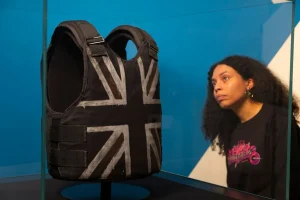
The exhibition places Stormzy’s Glastonbury moment where he became the first British rapper to headline the festival within a broader legacy of protest, resistance, and cultural expression.
Visitors are taken on a journey tracing the movement of music from Africa and the Caribbean to the UK, shaped by colonial history and social change, before transforming into uniquely British genres.
A highlight includes the battle-worn piano of Winifred Atwell, used to compose Let’s Have Another Party, the first UK number one single by a Black artist in 1954.
The exhibition also showcases the rise of British reggae through bands like Aswad, whose members drew on their experiences as children of the Windrush generation to create a distinctly local sound.
From reggae emerged a wave of influential British genres, including lovers rock, drum and bass, and UK garage many of which continue to shape global music today.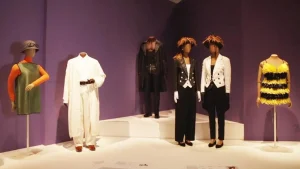
According to industry insights, Black music has driven a significant share of the UK music industry’s growth over the past decades, influencing everything from pop to electronic music.
Artists like Omar highlight the uniquely British fusion of sounds, blending cultural traditions into genres that resonate worldwide.
For many contributors, the exhibition is more than a retrospective it is a long-overdue recognition of Black music’s foundational role in British culture and its enduring legacy for future generations.
