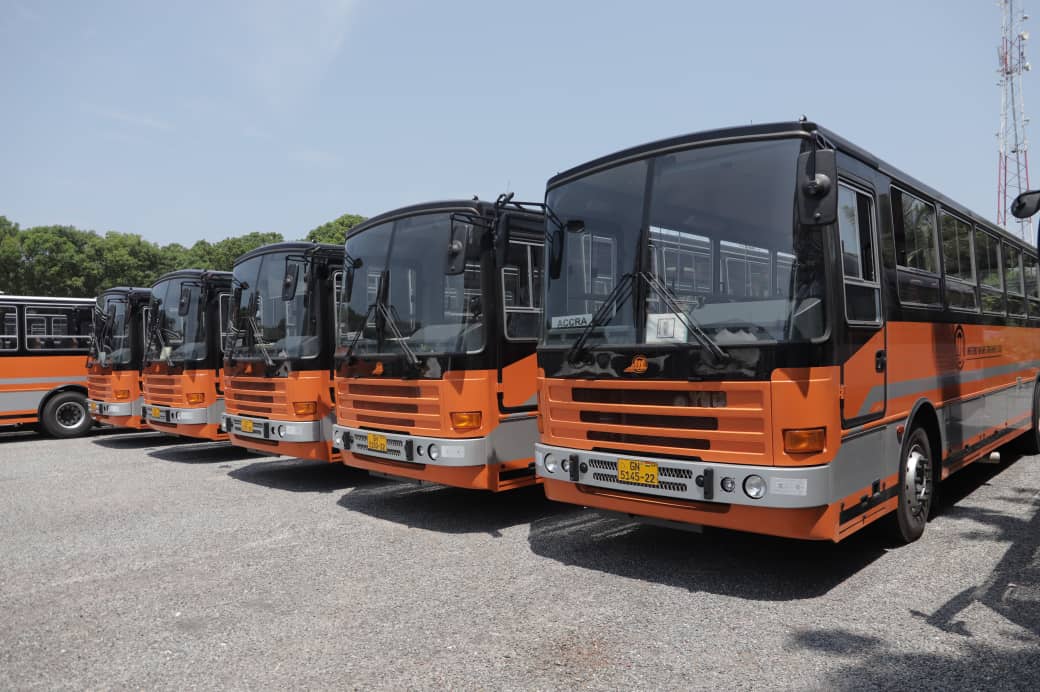
 (MMT): Metro Mass Transit has announced a reduction in some of its intercity transport services as part of a broader strategy to ease worsening rush-hour congestion in Accra.
The decision, according to management of the state-owned transport operator, is aimed at freeing buses and drivers to strengthen heavily congested urban routes during peak morning and evening hours, when thousands of commuters struggle to get to and from work.
Accra’s rapid population growth, coupled with limited road expansion and rising vehicle numbers, has placed enormous pressure on public transport systems. MMT says the reallocation of buses from long-distance routes to inner-city services will help reduce waiting times at major terminals and improve reliability for daily commuters.
The Head of Communications at MMT, Mohammed Mubarak Watara, said the decision followed directives from the Minister for Transport, Mr. Joseph Bukari Nikpe, for the company to support private transport operators during peak hours.
Speaking on the Citi Breakfast Show on Thursday, January 15, 2026, Mr. Watara confirmed that the Minister had met with the management of Metro Mass and its sister company to ensure that additional buses were deployed to manage rush-hour congestion.
So, Metro Mass, we can do that even though at the moment our fleet of buses is very low. We have been able to adjust. What we did is that we have extended our working hours and, most importantly, even though we do more intracity transport, we have had to increase our routes, not to every place because of our limited fleet,” he explained.
He said Metro Mass had intensified services on key intracity routes, particularly those with high passenger demand.“For example, on the route to Adenta, we use the EV buses. All 10 of them have been working from 4:30 a.m., and even after 8:30 p.m., our buses are still running on the routes,” he said. Mr Watara said additional arrangements had also been made for commuters along the Kasoa corridor.
We also have Kaneshie to Kasoa. We have created another station in our yard for Kasoa commuters. Also, we have Circle to Amasaman and Nsawam, he added.
Under the new arrangement, selected intercity routes linking Accra to regional capitals and nearby towns will either operate fewer trips or be temporarily suspended. Priority will instead be given to high-demand corridors within the capital, including routes serving central business districts, industrial areas, and densely populated suburbs.
MMT officials insist the move is not a permanent withdrawal from intercity transport but a strategic adjustment based on operational realities. “Our immediate responsibility is to address the severe pressure on Accra’s rush-hour transport system,” a source within the company said. “Once fleet capacity improves, intercity services will be reviewed.”
The decision has drawn mixed reactions. While many Accra commuters have welcomed the move, hoping it will reduce long queues and overcrowding at bus stops, some intercity passengers have expressed concern about limited travel options and potential fare increases on alternative transport services.
Transport analysts note that the situation highlights deeper structural challenges within Ghana’s public transport sector, including ageing fleets, funding constraints, and growing urbanization. They argue that while the MMT move may offer short-term relief, long-term solutions will require sustained investment in mass transit infrastructure, dedicated bus lanes, and improved traffic management.
For now, Metro Mass Transit says it will continue to monitor commuter demand and traffic conditions, urging the public to cooperate as the company works to stabilize urban transport during Accra’s most congested hours.
