

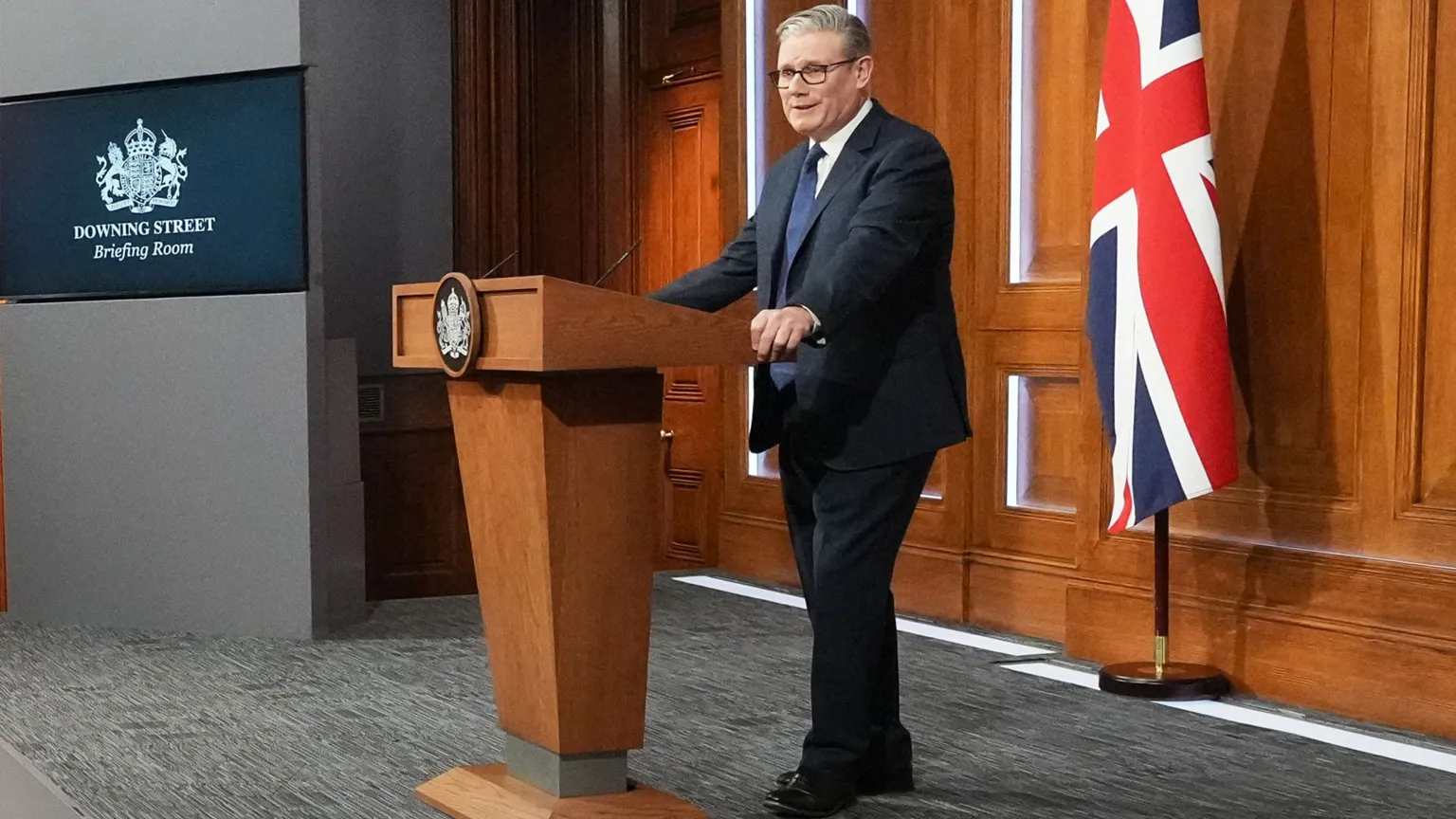
Keir Starmer has welcomed a newly agreed ceasefire between Iran and the United States as he travels to meet Gulf leaders, saying the deal offers a moment of relief after weeks of escalating conflict.
Downing Street said the prime minister will use the trip to discuss how international partners can help maintain and strengthen the ceasefire. He is expected to return to the UK on Friday.
The agreement follows a stark warning from Donald Trump, who said “a whole civilisation will die” if Iran refused to end hostilities and reopen the vital Strait of Hormuz. In response, UK officials had reiterated calls for de-escalation.
Starmer said the ceasefire should now be turned into a lasting settlement: “Together with our partners, we must do all we can to support and sustain this agreement and ensure the Strait of Hormuz is reopened.”
As part of his visit, he is also expected to meet British military personnel stationed in the region. The trip had been planned before the ceasefire was announced.
From the opposition, James Cleverly described the pause in fighting as a critical opportunity for Iran to reconsider its actions domestically and internationally. He stressed that preventing Iran from developing nuclear weapons remains a top priority and said the two-week ceasefire period “must not be wasted.”
The UK has already been working with allies on post-conflict security in the region. Last week, it hosted a virtual summit involving representatives from over 40 countries to begin forming a coalition to safeguard the Strait after the fighting ends. A military planning conference followed on Tuesday.
Iran and the US reached the conditional agreement just over an hour before a deadline set by Trump. Posting on Truth Social, he said the ceasefire depends on Iran ensuring the “complete, immediate, and safe” reopening of the Strait.
Iran’s foreign minister, Abbas Araghchi, confirmed Tehran would honour the ceasefire provided attacks against Iran stop. He added that safe passage through the Strait of Hormuz would be guaranteed for two weeks.
The conflict began in February when the United States and Israel carried out coordinated strikes on Iran, citing concerns that Tehran was accelerating efforts to develop nuclear weapons.
